
By Charlie Pogacar
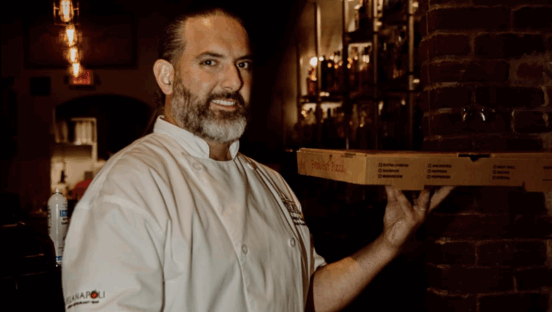
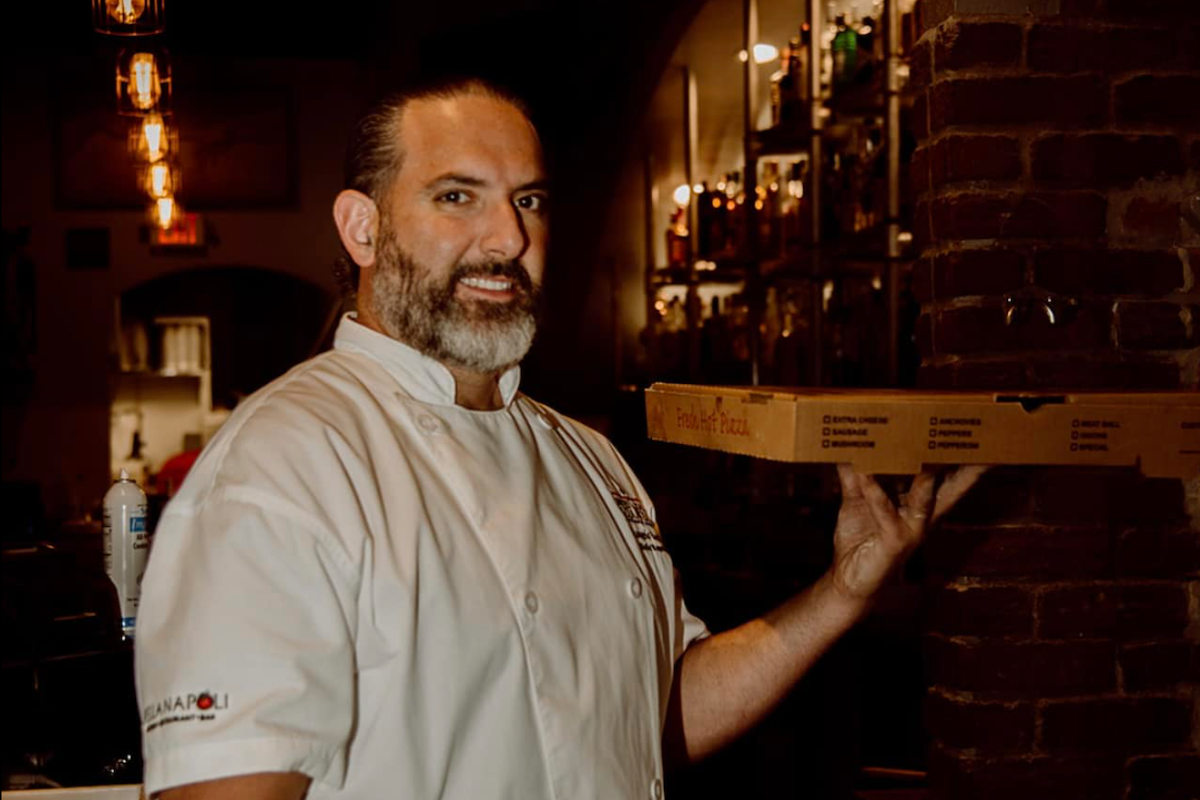
At first blush, Vitangelo Recchia’s pizza journey may not seem all that unusual. His father owned pizza shops—including PMQ Pizza Hall of Fame institution Dino’s Italian Restaurant—and Recchia worked in them growing up in Northeastern Pennsylvania. It wouldn’t take a rocket scientist to guess how Recchia went on to become a certified master pizzaiolo, a member of PMQ’s U.S. Pizza Team and owner/operator of his own pizza restaurant: Bella Napoli Pizzeria & Restaurant in Port Charlotte, Florida.
He was even crowned the best U.S. pizza maker two years in a row at the World Pizza Championship in Parma, Italy. So he must have grown up making pizza, right?
Wrong.
Recchia’s story is more complex—and much more interesting. Recchia made his first pizza at age 30. He’d spent a lifetime around his dad’s shop, where he learned a great deal about hard work and business. But what he internalized from watching his father work around the clock was that he never wanted to be in the pizza business.
“Out of the whole 365 days [in a year], my Dad would work like 361 days,” Recchia said on the latest episode of Peel: A PMQ Pizza Podcast. “So yeah, you’re like…‘I’m not doing that!’”
So off to Penn State University Recchia went, where he studied hotel and restaurant management. He considered pursuing a career in finance or accounting, fields he felt he understood well. But when it came time to take a test, he would struggle.
It was a year abroad in Italy that changed Recchia’s trajectory. He spoke the language fluently and felt at home. Living in Rome, he fell in love with the cuisine of the country where his parents had grown up. The food’s combination of simplicity and artisanship spoke to him and sent him on a new path—eventually to culinary school at Alma Scuola Cucina Italiana in Parma, Italy, where he graduated first in his class.
Recchia began training in Michelin-starred restaurants and honing his craft. The experience was eye-opening. He saw how the Michelin system prized not just the food, but the totality of the dining experience—the wine pairings, the choreography of service, the pacing of each course.
He also, of course, learned a lot about gastronomy in those kitchens. Some of those lessons are evident in Recchia’s approach to dough. Rather than relying solely on white flour, Recchia blends in grains like rye, spelt and semolina to create layers of flavor and improve digestibility. He experiments with fermentation, too, sometimes using long cold ferments, but other times relying on shorter, carefully controlled warm ferments. “It’s about understanding the variables,” he said. “Knowledge and technique are what matter—not myths.”

When he eventually returned to the U.S. and opened Bella Napoli in Port Charlotte, Florida, Recchia faced a new challenge: meeting his market where it is. His community is full of retirees, many on fixed incomes, who may not initially see the value in upgraded flour blends or artisan fermentation techniques. So Recchia adapts. His menu features Italian-American favorites like Chicken Marsala and Baked Ziti, but he quietly elevates them with better ingredients and sharper technique.
“You can’t scare people away,” he said. “You elevate the food they already love.”
The combination has worked. Bella Napoli has built a loyal following while allowing Recchia to keep pushing his craft forward. He’s still competing, still learning, still perfecting his dough formulas. And though his journey into pizza began later than most, he’s already carved out a reputation that many pizzaioli spend a lifetime chasing.
In 2023, Recchia was back in Parma, Italy, competing for the U.S. Pizza Team at the World Pizza Championships. There, he took second place for his Roman-style Pan Pizza and was the top U.S. competitor in the Teglia Romana division, earning the recognition of “Best American Pizza Maker.” In 2024, he repeated as Best American Pizza Maker at the competition. For someone who once swore off the family business, it was a fitting twist—but a twist that is aligned with a journey based on ongoing education and curiosity.
“Competition teaches you quickly where you stand,” Recchia said. “It forces you to grow.”
Check out this week’s podcast with Vitangelo Recchia at one of the following links: