
By Tracy Morin
Photos by Jacquelina Paiva Photography
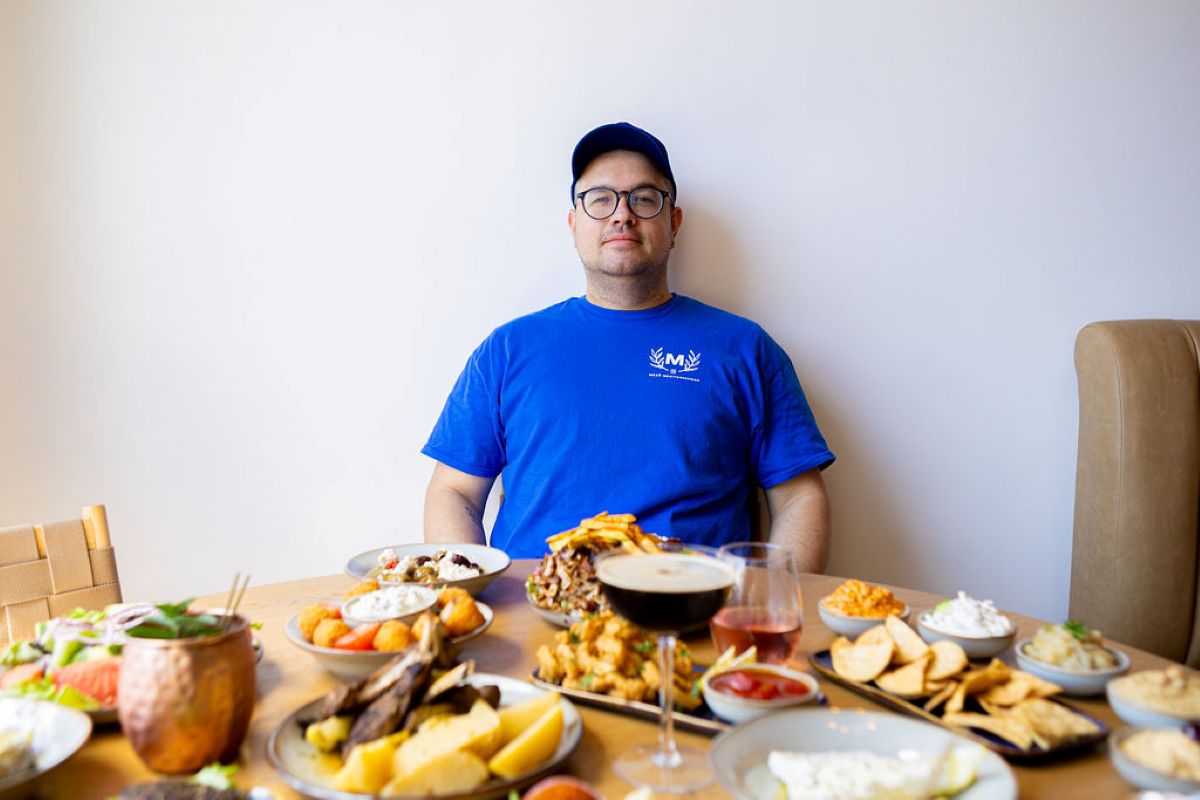
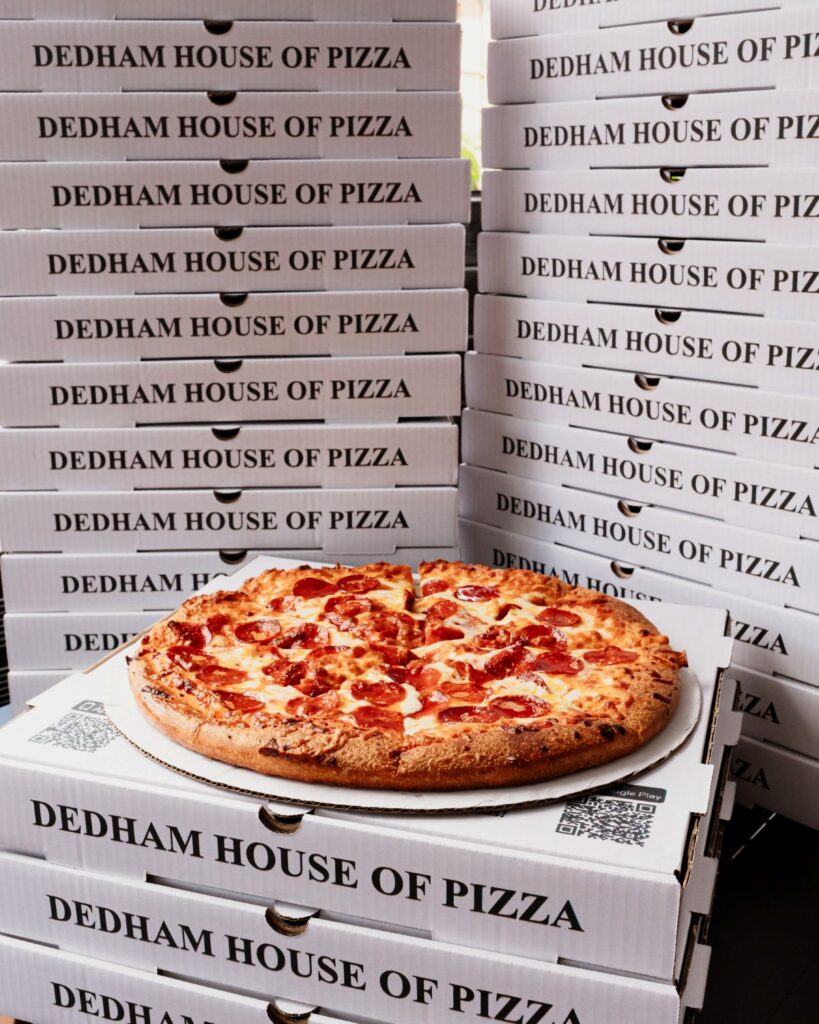
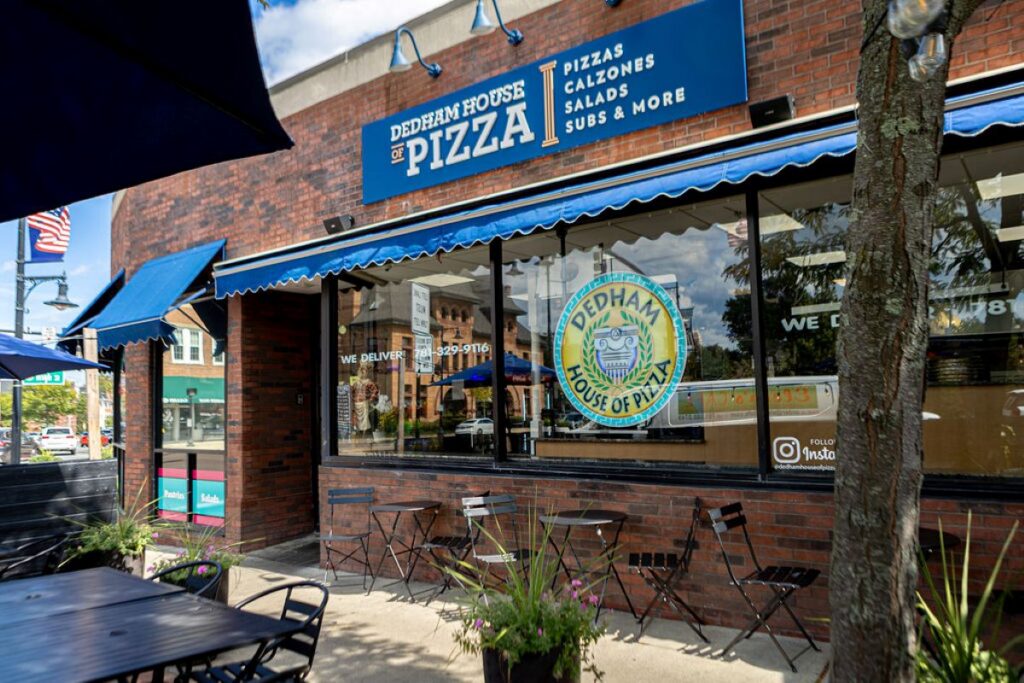
A member of PMQ’s Pizza Hall of Fame, Dedham House of Pizza (DHOP) in Dedham, Massachusetts, has been thriving for decades. Now overseen by second-generation owner and executive chef George Panagopoulos, the business is forging a new path with the addition of Carlos Vasquez as head chef and general manager of DHOP and its sister business, MEZŌ Mediterranean.
Vasquez has an illustrious history in restaurants, with a career that’s taken him through a diverse range of culinary environments—from baking and pastry to Japanese-Latin cuisine to Peruvian cuisine; from luxury hospitality to large-scale banquets; from high-volume restaurant operations to French-inspired hospitality. In his new role, he will oversee culinary operations, kitchen management, menu execution and day-to-day restaurant operations at both MEZŌ Mediterranean and Dedham House of Pizza.
In this exclusive interview with PMQ, Vasquez talks about how his experience will shape decisions at DHOP—and how he plans to innovate while also respecting the pizzeria’s longtime traditions and history. (For the owner’s perspective on a new chef entering his family’s historic business, see our interview with Panagopoulos.)
PMQ: How has your range of experience shaped the way you approach pizza and restaurant management?
Carlos Vasquez: Working in such different kitchens taught me that there isn’t just one way to build a great operation. Each experience added something to the way I work. Japanese cuisine reinforced precision and respect for the product. Peruvian and Latin American kitchens expanded the way I think about balance and building flavor. French technique and my background in baking gave me a strong discipline around process. And high-volume American operations taught me how to bring all of that into a kitchen that has to execute quickly and consistently.
Today, I apply that combination at Dedham House of Pizza. Pizza looks simple, because we all recognize its components. But that simplicity also makes it very honest. There isn’t much room to hide a poorly made dough, inconsistent fermentation, an ingredient that wasn’t prepared properly or weak execution.
And, at a restaurant like DHOP, consistency isn’t measured only against a recipe. It’s also measured against the customer’s memory. I look at the product as a chef and at the operation as a manager. I’m not interested in making one excellent pizza once. I’m interested in building a team that can reproduce that standard again and again, regardless of who is working the station or how much volume we’re handling. To me, that’s where culinary technique becomes leadership.
PMQ: What are you bringing from your experience in high-volume, highly structured kitchens to the day-to-day operation at Dedham House of Pizza?
Vasquez: Working at high volume forces you to recognize very quickly where time is being lost, where work is being duplicated and where a small breakdown can turn into a much bigger problem during service.
Since taking on this role, that’s how I’ve been looking at DHOP. We’re reorganizing processes around the actual flow of the kitchen: how product moves, how the team moves, where bottlenecks develop, what each station needs and where too much knowledge still depends on one person.
We’re also bringing more structure to execution. When the standard is clear, training becomes easier, performance can be evaluated more fairly and corrections stop being based on personal opinion. At the same time, I don’t want to fill a kitchen with procedures nobody understands. A system should make it easier for people to do their jobs well, not add bureaucracy.
One of my priorities has been transferring knowledge. If only one person knows how to solve something, we have a vulnerability. When that knowledge becomes part of the team, we have a stronger operation. To me, that’s one of the signs of a mature operation: Knowledge stops living only in one person’s head and starts living within the team.
PMQ: How do you approach operational or culinary improvements in a legacy pizzeria while respecting what already works? What are you learning from the DHOP team and its existing customers? What changes or opportunities are you exploring?
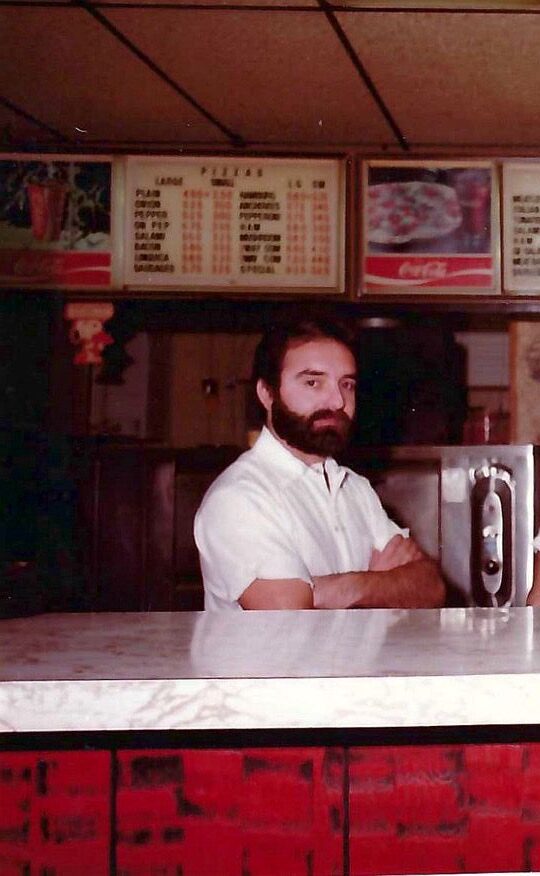
Vasquez: Fifty years [of history] changes the way you walk into a restaurant. I didn’t come into DHOP assuming that my experience automatically gave me all the answers. I believe experience should make you more curious when you enter a new kitchen, not more convinced that you already know everything. So one of the first things I did was listen and observe.
There are people here who have known this operation much longer than I have. They know its rhythms, its customers, and details that will never appear in a manual. It wouldn’t make sense to ignore that knowledge.
Before I change a process, I try to understand why it exists, what problem it was originally designed to solve and whether it is still the best way to achieve that result. That also helps separate two things that can easily get confused: identity and inefficiency. Identity deserves protection. Inefficiency deserves a solution.
We’re already identifying opportunities in kitchen flow, training, prep, consistency, dough management and menu execution. Some improvements will be visible to customers. Many others, they’ll probably never see. And that’s fine. I don’t need the customer to see the change. I need them to feel the result.
DHOP has something you can’t buy or build quickly: a sense of belonging. It is part of the memory of this community. Our job is to strengthen the operation around that value, not replace it. Preserving a legacy doesn’t mean repeating exactly the way it was built. It means understanding what made it valuable and giving it the structure it needs to continue.
PMQ: How does your background in baking and pastry influence the way you think about dough, preparation and consistency at Dedham House of Pizza?
Vasquez: Baking changes your relationship with time. When you work with dough, you learn very quickly that following a recipe alone doesn’t guarantee the result. Temperature, fermentation, hydration, flour, storage, handling and time are constantly interacting. That’s why I look at dough as a complete process, not simply a formula.
At DHOP, we’re paying attention to those variables and to how the dough behaves throughout the operation. When we see an inconsistency, I don’t want to simply correct the final result. I want to understand which variable caused it. In a high-volume pizzeria, that matters tremendously. A small difference may seem insignificant across a few pizzas, but it multiplies when you’re producing hundreds.
My baking background also taught me that standardization doesn’t mean removing the craft. It’s actually the opposite: The better you understand fermentation and the behavior of dough, the better you can control the conditions that allow different people to consistently achieve the result you’re looking for.
I didn’t walk into DHOP thinking, “I’m a baker, so I’m going to change this dough.” I came in asking, “What makes this pizza recognizable, and how do we make the process that produces it more consistent?” To me, that distinction is fundamental.
PMQ: For an independent pizzeria dealing with challenges related to labor, consistency and high-volume service, what kitchen systems or leadership practices can make the biggest difference?
Vasquez: One thing I’ve learned is that many problems that look like employee problems are really problems of clarity, training or the system itself. If a mistake happens once, you correct it. If it keeps happening, I stop asking only who made the mistake and start asking what we’re doing as an operation that allows it to keep happening.
That principle guides a lot of what we’re doing at DHOP. We’re making the definition of correct execution clearer, improving how knowledge is transferred between employees and identifying where the operation itself creates confusion or unnecessary work.
But there’s one part no manual or checklist can solve: leadership. My job as chef and general manager isn’t to prove that I can work every station better than everyone else. It’s to develop people who can do their jobs well without needing me constantly standing behind them. I teach, I correct, I explain the why, and then I give people room to take responsibility. That requires trust in both directions. I don’t want to build a kitchen that depends on Carlos. I want to build a team that understands the standard, can maintain it and can eventually teach it to the next person.
We’re establishing a baseline so we can responsibly measure waste, prep efficiency, consistency and performance during service. Data should help us make better decisions.
PMQ: What’s next for DHOP in terms of menu offerings, growth plans, marketing and other developments?
Vasquez: Right now, we’re doing something I consider essential before talking about growth: Understanding very clearly what DHOP does best and where we can elevate the execution. Greek-style pizza remains at the center of the restaurant’s identity. Around that, we’re reviewing preparation, ingredients, execution and the rest of the menu to identify where we can simplify and where something deserves more attention. We’re also reviewing kitchen flow and how the operation responds to volume and digital orders.
To me, growth doesn’t necessarily mean adding more. Sometimes growth means doing fewer things, but doing them exceptionally well. A more disciplined operation creates possibilities. It allows us to train better, control costs, reduce waste, handle greater volume and explore new opportunities without compromising quality.
That’s why I don’t separate growth from operations. First, we build a foundation capable of supporting it. DHOP doesn’t need to become a different restaurant in order to evolve. It has its own identity, its own history and its own place within Dedham. What we’re doing is building an increasingly stronger operation behind all of that.
PMQ: Is there anything else you’d like to add about your new role?
Vasquez: There’s something I’ve thought about quite a bit since taking on this role. When you open a new restaurant, a big part of the work is creating an identity and convincing a community to give you a chance.
I came into a place where that work began more than half a century ago. An immigrant family built this restaurant, one generation carried that work for decades, and the community responded by making it part of everyday life. That has a value that goes far beyond the equipment, the inventory or the walls of the building. And it also comes with responsibility.
To me, honoring a history like this doesn’t mean asking the next generation to make exactly the same sacrifices as the one before it. That’s where leadership, systems and trust come in. A restaurant becomes stronger when its knowledge is shared, when its employees grow, when new leaders emerge and when its success no longer depends on one person being permanently exhausted.
George is trusting me with a part of something that is deeply important to his family. I don’t take that trust lightly. My responsibility is to bring everything I’ve learned as a chef and operator, develop the team and help DHOP move forward without losing what made this community choose it for so many years. We can’t manufacture another 50 years of history, but we can decide what we do with the 50 we already have.
Tracy Morin is PMQ’s associate editor.