By Tracy Morin
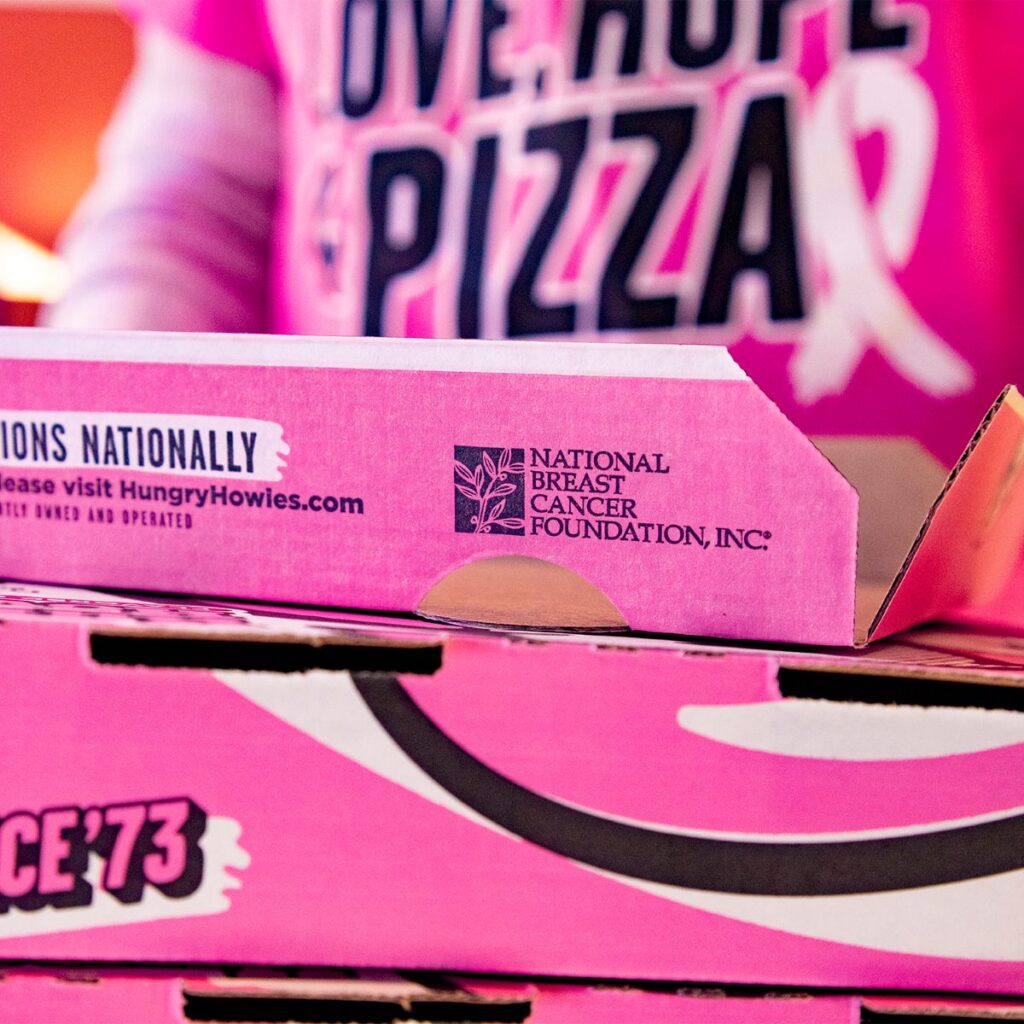
Since its start in 1973, Madison Heights, Michigan-based Hungry Howie’s has grown from humble beginnings to about 500 locations across the United States. But establishing a nationwide footprint isn’t the brand’s only area of success—one of its most impressive accomplishments is the Love, Hope & Pizza campaign, which raises money year-round for the National Breast Cancer Foundation (NBCF).
Since its start in 2009, this campaign has raked in more than $5 million for the cause. And it’s designed to be simple for franchisees, requiring only some pink boxes, a portion of pizza proceeds donated, and the option for customers to round up their bills to donate.
Hungry Howie’s could give a masterclass on pulling off a charitable effort—and how to keep it going over the long haul. That kind of longevity, as Love, Hope & Pizza enters its 18th year, is something all operators can learn from. Recently, Jeff Rinke, vice president of marketing and product development, and Jennifer Jackson, vice president of public relations, talked with PMQ about how operators can create their own successful give-back efforts, as well as why this campaign remains a cornerstone of Hungry Howie’s—supporting a cause that has touched just about everyone.
PMQ: Love, Hope & Pizza is now in its 18th year. What have you learned about keeping a cause-based marketing campaign fresh and meaningful for both franchisees and customers over such a long period?
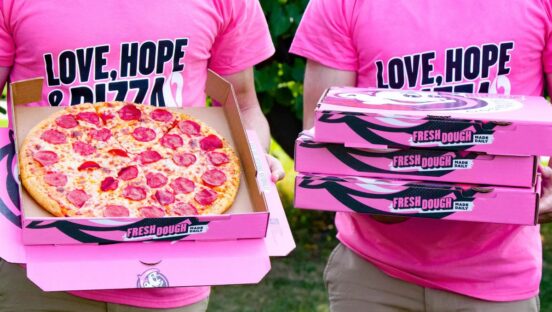
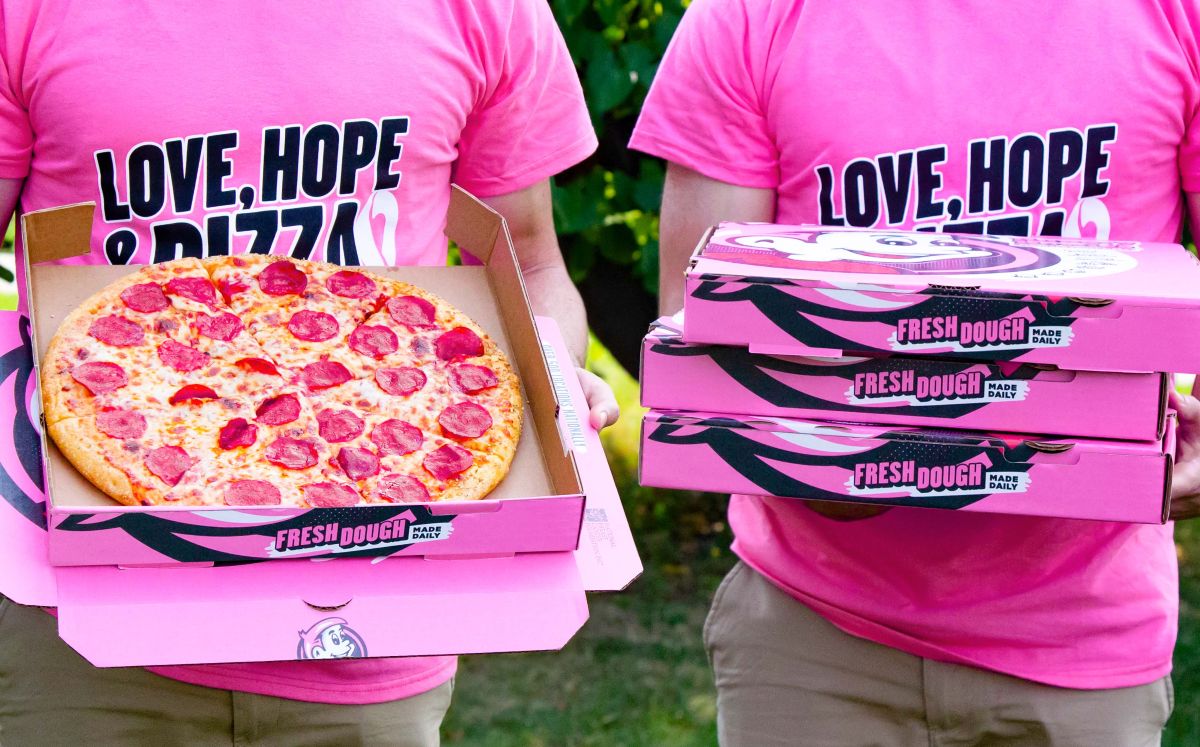
Jeff Rinke: When we started Love, Hope & Pizza in 2009, we incorporated pink boxes and a donation for every pizza and raised $100,000 that first October. We didn’t know then that it would become such a big part of who we are. The core of the campaign has stayed the same over the years, and we’ve kept it fresh by changing up how our guests can participate. We’ve added wristbands, social media giving where every new fan, shared story or #lovehopepizza post meant a donation, a Pink Pizza on our Secret Menu, round-up at checkout and free mammogram events. Through all of it, the pink pizza box has been the constant. Our guests look for it every October, and our franchisees are always very excited to take part.
The bigger lesson is to never lose sight of why you’re doing it. Most of us know someone who has been impacted by breast cancer, whether it’s a mom, sister, friend or coworker, and that’s what keeps this so meaningful every year. Our franchisees and guests can feel that and see the campaign as a way to help people. Buying a pizza becomes part of something much bigger.
PMQ: What advice would you give other pizza chains looking to build a cause-related program that has real staying power?
Rinke: Pick a cause that genuinely matters to your team and your guests, commit to it for the long haul and make it simple to execute.
Authenticity is so important. People can tell when a brand is doing something for the right reasons, and the longer you stick with it, the more it becomes part of who you are. Our pink boxes have shown up every October since 2009, and over time, guests have come to connect them with Hungry Howie’s.

I’d suggest that brands choose a partner they trust and stay with them, because a long-term relationship like ours with NBCF lets you see the impact and grow the program together. As a member of the NBCF Advisory Board, I get to see in even greater detail the impact this has on so many people affected by the disease. Also, give your guests more than one way to take part, whether that’s buying a pizza, rounding up a check or showing up at a community event. Keep finding ways to make the impact important and local. When franchisees and guests can see who they’re helping, the program keeps its meaning every year.
PMQ: As you mentioned, simplicity is key when you’re rolling out a national initiative across about 500 restaurants. Do you have advice on designing simple giving-back efforts?
Rinke: Simplicity is so important, and I say that as someone who owns and operates Hungry Howie’s restaurants myself. I know what a busy weekend looks like in one of our stores, and when nearly 500 restaurants in 19 states are running the same program at the same time, the easiest thing for operators is a program that fits into what they’re already doing.
Swapping a yellow box for a pink one doesn’t change a step on the line, the per-pizza donation doesn’t require stores to track something extra, and bill round-up happens at checkout without any change to operations.
My advice to other operators is to build an opportunity to give back into something that’s already happening, like packaging, checkout or a menu item. That way, participation is easy, and your teams can stay focused on taking care of guests and selling the product, which ends up driving more donations. Keep the ask for guests to one clear choice and make the visual impossible to miss. A pink box shared on social generates far more awareness than a sign in the store ever could.
PMQ: How do you get franchisees and their teams engaged in Love, Hope & Pizza? What works best to promote engagement?
Rinke: It starts with making sure franchisees have everything ready to go before October. We send every store a Love, Hope & Pizza kit with what they need for the campaign, and our marketing for the month centers on it, so what guests see on social, across digital channels and in the store all tells the same story.
The thing that has made the biggest difference, though, is the personal connection. Early on, we asked our team members to share their own stories, and it was truly eye-opening how many people had someone close to them who’d been through breast cancer. This disease touches so many families. Once a team member is thinking about their mom, sister or a friend, that pink pizza box means something different. Our best stores really make it their own by encouraging round-up, sharing the campaign on their local social pages and getting involved in community events to spread the word.
PMQ: The campaign has raised more than $5 million for the National Breast Cancer Foundation since 2009. How has the program evolved as the fundraising has grown, and what are its biggest wins?
Jennifer Jackson: Our goal that first year was $100,000, and we hit it. By 2012, we were raising $275,000 in a single October, and we passed $1 million within our first five years. Last year, we raised more than $412,000, and we’ve now topped $5 million for NBCF. That’s something everyone in our system should absolutely be proud of.
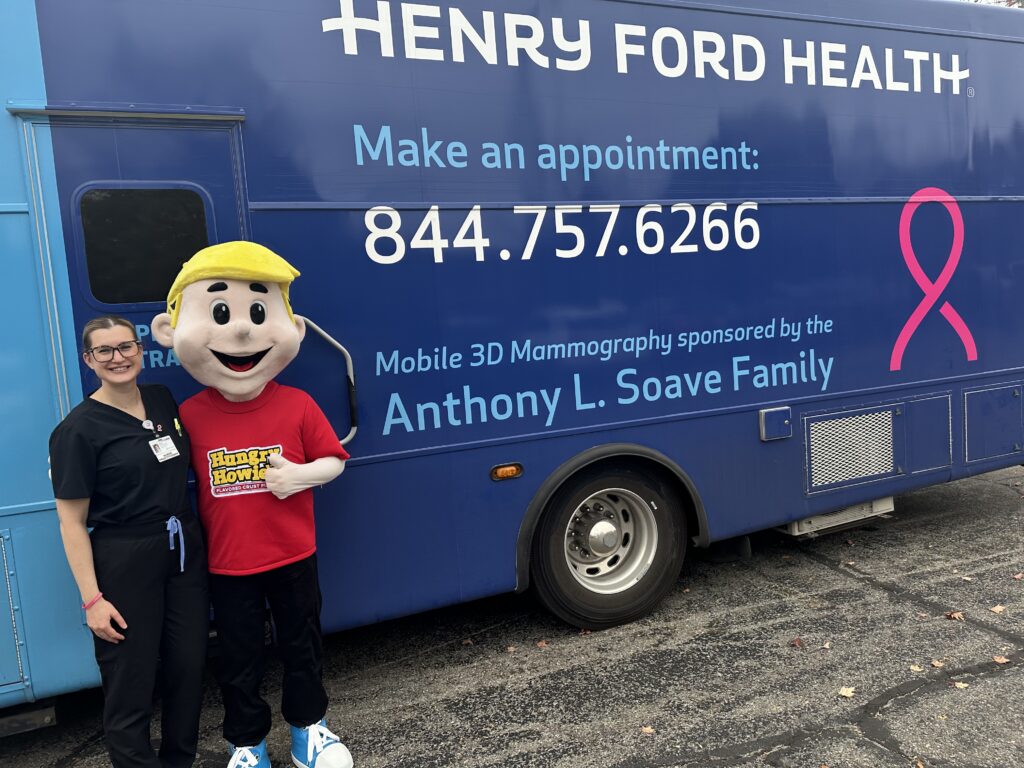
The donations grew, which also impacted how we were able to expand our contribution. The program moved from raising money and awareness to also more directly helping women get access to care, starting with free mammogram events for uninsured women and continuing today with our event at SAY Detroit with the Henry Ford Mobile Mammogram Unit. We also made giving a year-round option through check round-up.
The biggest wins are about what those donations do. NBCF puts them toward free mammograms, patient navigation and education, and we see firsthand how that reaches women who might not otherwise get screened.
PMQ: Why was it important to make breast-cancer support a year-round part of the customer experience via the round-up program? How do customers react or thank you for the efforts?
Jackson: Breast cancer doesn’t follow a calendar, and neither do the women who need screenings, so it made sense to keep round-up going after October ends. October is when people are paying the most attention to breast cancer awareness, which makes it the right moment for us to rally around the cause, and a year-round round-up program gives guests an easy way to keep supporting NBCF every time they order. It also keeps this cause part of who we are as a brand the rest of the year, which is how it should be.
The response from guests has been really heartwarming. We’re constantly hearing from guests and fans who share how breast cancer has affected their lives or the lives of people they love. Nearly everyone has been touched by this disease in some way, and those messages are a big reason we keep doing this.
PMQ: Jeff, as you noted, you operate Hungry Howie’s locations yourself. Does being a franchisee change the way you think about corporate initiatives like this?
Rinke: It absolutely does. Owning restaurants helps keep me grounded, because every idea we come up with on the franchisor side eventually has to work in a store and at scale. When we’re deciding what to roll out across the system, we’re looking at it from both sides. We ask whether it adds steps for the crew or slows down service, and if guests will feel good about it—those are the things I’d be dealing with in my own stores.
That perspective has helped shape Love, Hope & Pizza from the beginning. As a brand, we want to commit to a cause that’s important and authentic to who we are, and as an operator, I know we must be mindful of the complexity we’re asking franchisees to take on. The pink box doesn’t change how we make or deliver the pizza, round-up is often as simple as a quick question at checkout, and guests appreciate being part of it. A program turns into a burden when it asks operators to carry the load without a clear benefit to them or their community. When it’s built into what the store already does well and gives the team something to be proud of, franchisees embrace it, and we see that across our system every October.
PMQ: The mobile mammogram event in Detroit brings the mission directly into the community. What does Hungry Howie’s learn from that event that you couldn’t necessarily learn from looking at fundraising numbers?
Jackson: The fundraising numbers tell us how much we’ve raised, and they’re important, but the mammogram event shows us what that support looks like for a woman in our community. Last year, 36 women were screened at the SAY Detroit Family Health Clinic, and one of them needed further care, which the clinic covered. That’s someone who got the follow-up she needed because a mobile unit showed up in her neighborhood, and that’s what early detection is all about. It’s a moment that really stays with you.
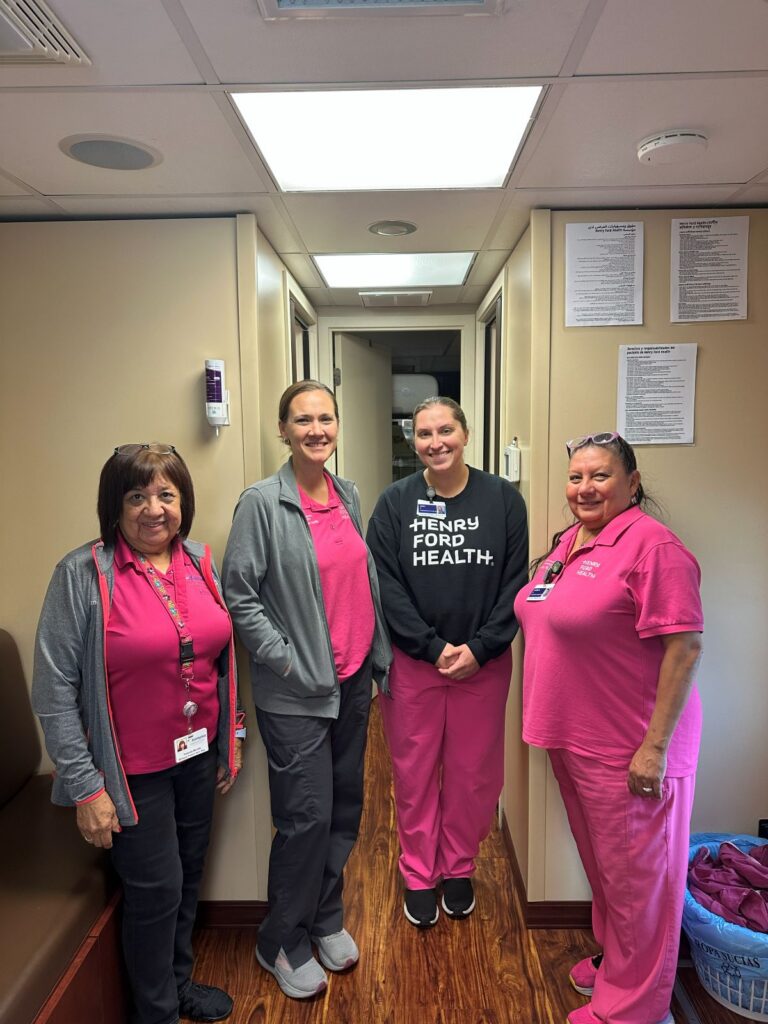
We also learned how much access matters. So many women know they should get a mammogram but face real barriers, including time, transportation, insurance or simply not having a provider nearby. Bringing the Henry Ford Mobile Mammogram Unit to a community clinic people already trust takes a lot of those barriers away. Partners like SAY Detroit have been incredibly important, because they’ve built that trust over years. This is the third year of the event, and for our team, it’s become one of the most meaningful parts of the entire campaign.
Tracy Morin is PMQ’s associate editor.