

Story by Rick Hynum | Photos by Faith Davila / Pizzabilities
After graduating from high school two years ago, Grace Baker couldn’t wait to prove herself in the working world. She had the drive, work ethic and people skills that most employers are looking for. Yet her job prospects were bleak: She was born with Down syndrome, and employers wouldn’t give her a chance.
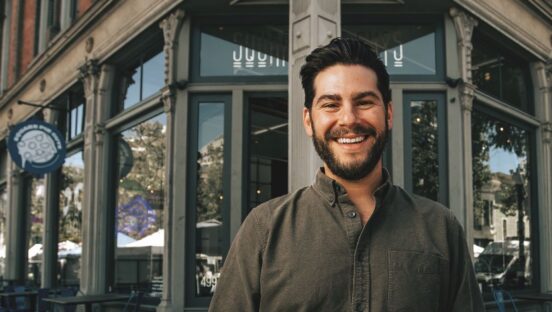
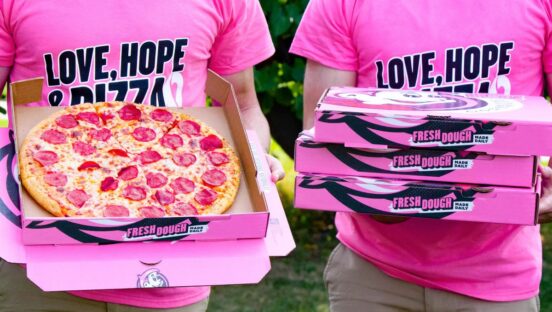
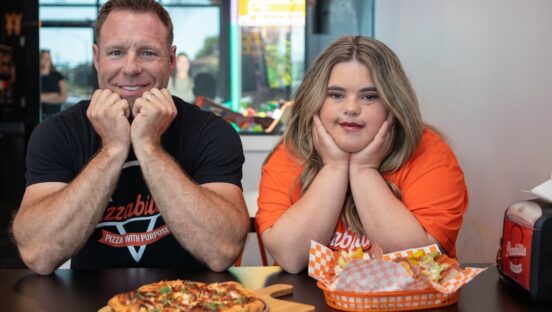
It’s a problem that shouldn’t exist. Just ask Grace’s father, Josh Baker. He knows exactly what his daughter—and others with special needs—are capable of. They demonstrate their value and work ethic every day at Pizzabilities, which debuted in Alpine, California, last July. About 60% of Pizzabilities’ team members have physical or mental challenges, and as co-founder of the fast-casual restaurant concept, Baker plans to hire a lot more of them.
That’s why he founded Pizzabilities in the first place. Well, it’s one reason, anyway. It’s also a business model with long, sturdy legs. In fact, just three months after the first Pizzabilities store opened in a former Pizza Hut location, Baker and partner Ron Burner, the former owner of Nicolosi’s Italian Restaurant in San Diego and a pizza industry veteran, opened a second location in Santee, California. That site previously housed a Nicolosi’s restaurant, so it was ready-made for Pizzabilities. A third location is set to open later this year in San Diego’s Miramar neighborhood.
And there’s one problem these stores will probably never have to worry about: finding workers. The Centers for Disease Control and Prevention estimates that more than 1 in 4 adult Americans—at least 70 million—have a disability. But only 22.7% of people with special needs were employed in 2024, according to the Bureau of Labor Statistics.
Pizzabilities could change all that, especially if other pizzeria owners rethink long-held biases and follow the brand’s lead. Many people with special needs are go-getters, Baker says. “They want to work. At our Alpine location, we hired about 30 employees. And every day I still get emails—20 a day sometimes—from people with special needs asking if they can work here. They just want to be involved and to be part of something bigger. They want to show up.”
A People Person
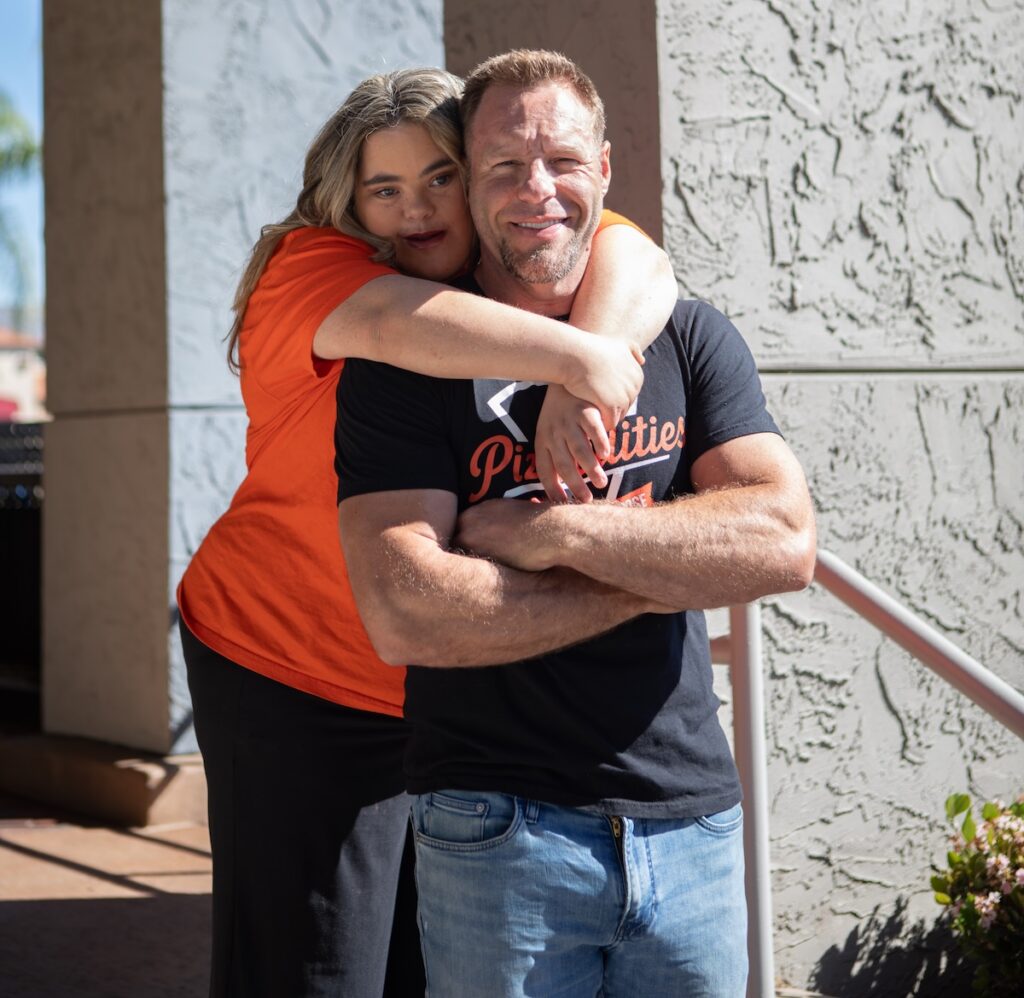
Grace has always been a people person: She’s a greeter in her church and active in its children’s ministry. “She’s the heartbeat of our family,” her dad says. “Everybody loves her.” Unfortunately, he notes, “A lot of people with special needs graduate from high school and that’s it—the system shuts down for them. After that, they’re often just sitting at home with nothing to do.”
But not because they’re lazy. Grace had ambitions yet found herself bereft of opportunities. Baker recalls, “My wife and I kept asking, ‘Man, what are we going to do?’ Eventually, we said, ‘What if we build something ourselves?’ Our first thought was, ‘What does Grace actually want to do? What does she like to do?’ And she absolutely loves pizza. She could eat it for every single meal every day and never get tired of it. That’s when we started thinking, ‘Maybe we could start a pizza place.’”
So Baker reached out to Burner, his former high school baseball coach and longtime friend. “His family has been in the pizza business for more than 70 years,” Baker says. Burner had his heart set on retirement at the time, but he saw that Baker’s proposition made good sense. Even so, he gave Baker fair warning. “He said, ‘Are you sure you want to get into the restaurant business? It’s not easy. You don’t really know what you’re getting into.’ But I told him, ‘This is for Grace. If we just break even and make a little money, that’s great.’ I just wanted something [meaningful] for her.”

The Ideal Business Model
For his part, Baker owns a large escrow business in San Diego. He was contemplating the prospect of early retirement himself before the idea for Pizzabilities took hold and steered him in a different direction. Now he has his hands full again.
Pizzabilities’ Santee store is twice as large as the one in Alpine. Combined, they’re providing jobs for between 50 and 60 employees, the majority of whom have some kind of special need. The next store, Baker says, “will be our biggest one yet….What started as something small for Grace just exploded.”
Pizzabilities’ fast-casual model is ideal for team members with differing abilities. “If this was a full sit-down restaurant, it wouldn’t work,” Baker notes. “With fast casual, it’s an assembly line. One person presses the dough, the next adds toppings, the next adds cheese, then it goes to the cashier and into the oven. Anyone can be trained on any part of that line. We use conveyor ovens. There’s no wood-fired cooking or anything complicated. Once the pizza goes in, it comes out done. That takes a lot of guesswork and stress out of the process.”
Baker adds, “We don’t have anything on the menu that requires a chef or complex cooking. It’s pizza, salads, cookies—simple things. That’s intentional. It’s not because we can’t do more. It’s because we want this to be accessible for everyone. And everything we do is designed to be repeatable. That’s what makes it franchisable. A family like mine—one that might have the means to do something for their child but doesn’t know how—can actually do this with the right training and support.”

Rallying for the Cause
The Pizzabilities brand, with its warm, distinctive orange and black color palette, merchandise line (from shirts, caps and sneakers to tote bags and cooler bags) and fun, uplifting social media presence, is, indeed, tailor-made for franchising. It can be replicated in any town or city around the country, and reliable employees will never be hard to find. Better yet, as Baker has discovered, local schools, colleges and universities will rally behind businesses that help the special-needs community.
“One of the biggest things for us has been school lunches,” he says. “We now do pizzas for multiple school districts every Friday. It’s been a great way to get our foot in the door with schools, because they want to support what we’re doing. They see the mission, and they want to be part of it.” In fact, he points out, “The first school district actually came to us. We had donated backpacks filled with school supplies, and when they heard our story…there were tears in the room. They asked us, ‘Do you want to do lunches for us on Fridays?’ And that’s how it all started.”
School lunches alone now generate between $10,000 and $15,000 per month for Pizzabilities. Baker expects that dollar figure to grow as word of the concept spreads. San Diego State University has already enlisted Pizzabilities as a caterer for football, basketball and other athletic programs. Those orders can total $6,000 to $8,000 in a single night.
“People want to align with our mission,” Baker says. “Schools, churches, colleges—they like supporting a local business that’s doing something meaningful. It makes them look good, but it also just feels good to be part of something like this.”

Go-Getters in Action
And how do special-needs employees feel about working at Pizzabilities? That’s the beauty of this concept: Baker says his team members are fired up to go into the restaurant every day—no one’s calling out with a hangover or something better to do with their time. They want to be there—because they often feel they have something to prove.
The paycheck is secondary. Their work is valued and useful, and that’s what motivates them. “They show up every day, every shift,” Baker says. “They want to work. They’re not clock-watching. They’re not trying to leave early. They take pride in what they do. They want to do a great job.”
As for Grace, the inspiration behind Pizzabilities? From the day the first location opened, the young go-getter was in her element. “Grace is super social and funny,” Baker says. “She loves people and loves to include people. She’s always right in the middle of everything. This job is perfect for her, because she gets to be out there talking to customers and interacting with people….She wakes up in the morning excited to go to work. She’ll already have her uniform on, ready to go, even when it’s not time yet.
“Grace loves pressing pizzas,” Baker adds. “We use a pizza press, similar to Blaze or MOD Pizza. Customers order at the counter, choose their dough, and she presses it, lays it out on the tray, and sends it down the line. She loves making boxes, too. She’s one of the fastest box makers we have. She can sit back there for two hours making boxes and be perfectly happy. She loves bussing the tables, greeting the customers and seeing if they need anything else.”
Not Just a Feel-Good Story
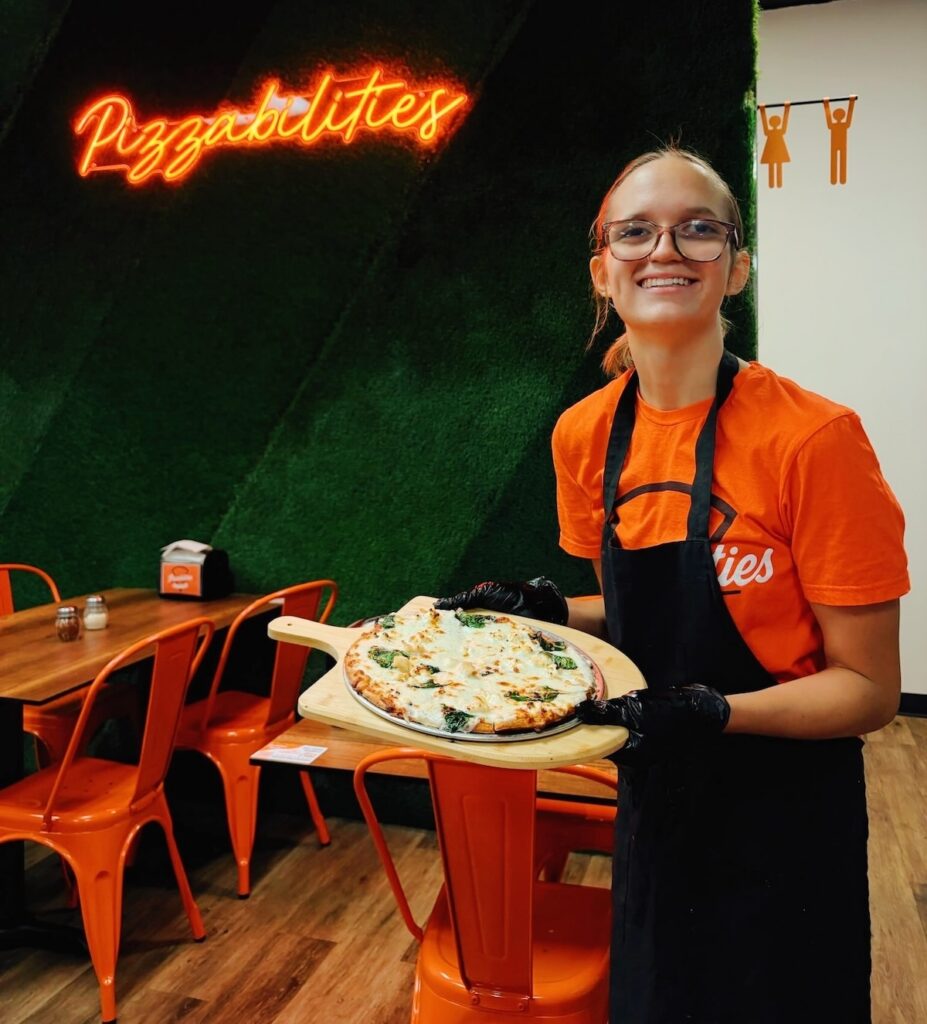
In other words, Grace Baker is the ideal employee in many respects. So are team members like Kelly, a pizza maker and talented young artist with cerebral palsy who has emerged as a social media star for Pizzabilities. A viral video featuring Kelly last summer garnered more than 845,000 views and 101,600 likes on TikTok. On Instagram, it pulled in 54,000 likes, 3,335 comments and 438 shares. “I’m most excited about working here,” Kelly explains in the video, “because it gives me an opportunity to work at a place that not only shows my disability but also my ability and what I can do versus what I can’t do.”
Kelly designed a Christmas sweatshirt for Pizzabilities last year and led a Valentine’s Day-themed painting class at the shop on February 2. She even has a pizza named after her—The Kelly, featuring spinach and feta, her favorite combo.
Baker sums it up: “I talk to other restaurant owners all the time who say they can’t find people to work. They finally hire someone, and that person doesn’t show up on the first day—or they work for a week and disappear. We have the opposite problem. I have people banging on the door asking for more hours or asking if they can work.”And as the Pizzabilities concept takes off, it could spark a transformative movement that proves, at last, that people with special needs have a place in the restaurant industry. “I want to show this idea off and tell people there are a lot of advantages to it,” Baker says. “It’s not just a feel-good story. There’s a lot of business smarts to it.”
SIDEBAR:
All-Inclusive
“A lot of people talk about inclusion, but you don’t always see it play out in real life,” says Pizzabilities co-founder Josh Baker. “In our restaurants, you see it happening. Our employees who don’t have special needs have a heart for those who do.” Others, he says, “might come in a little unsure at first. They don’t know how to talk to or manage someone with special needs. But soon they realize they’re just like everyone else. If they need to do something in a specific way, just tell them and they’ll do it.”
Pizzabilities’ more technical or safety-sensitive roles, such as running the cash register and ovens, are handled by team members who don’t have special needs. But the keyword is “team,” he says. “We see real friendships form. They go out to lunch together on their days off. Someone without special needs will pick up a coworker with special needs. It’s not forced. It just happens. And that’s been one of the coolest things to watch.”