
By Tracy Morin
Frank’s Ristorante & Pizzeria in Richmond, Virginia, celebrated 35 years in 2026, but second-generation owner Giuseppe Carollo isn’t afraid to keep up with the times. He’s ensuring the pizzeria remains successful for the next generation of owners—because, decades after taking naps on flour bags as a child, he’s now passing pizza skills to his own young sons.
“My parents, Frank and Elizabeth Carollo, are originally from Sicily and met in Brooklyn, where my Dad learned the art of pizza,” Giuseppe explains. “They opened Frank’s in 1991. I took over in 2013, and I’m proud to carry on what they started while continuing to bring new ideas to the restaurant.”
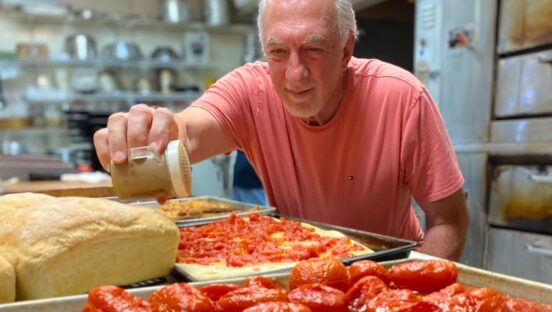
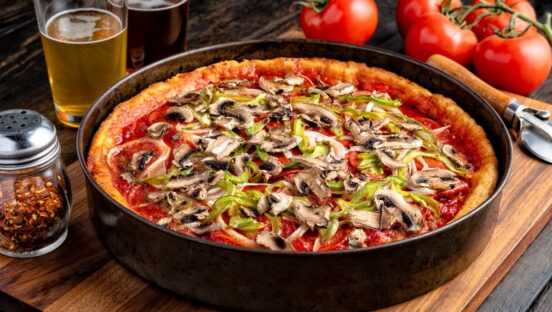
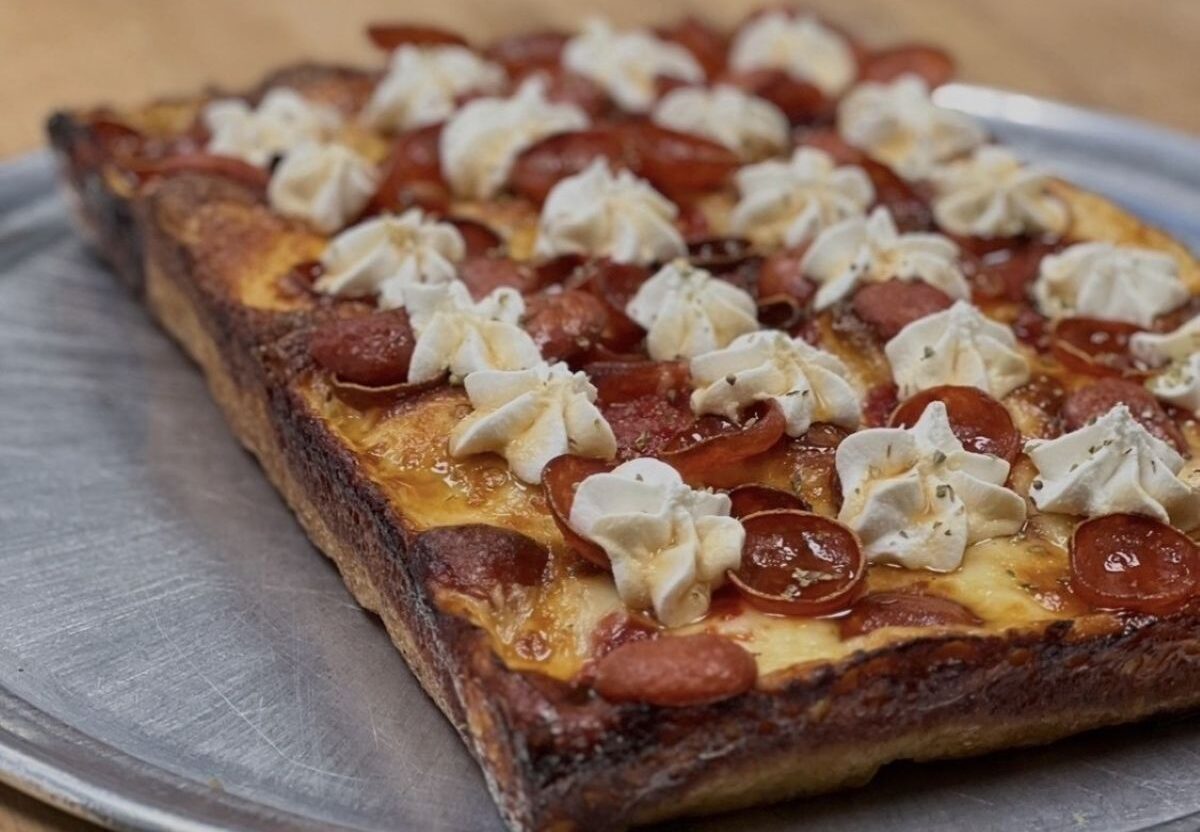
Though New York-style pizza remains the heart of the family business—alongside Sicilian pizza and classic Italian dishes—Giuseppe has started plenty of new traditions (and operational systems) to bring the pizzeria into the modern day. One shining example is his Thursday Detroit-Style Pizza Night. “With crispy edges and sauce on top, it gives us a chance to showcase another style of pizza and gives customers a reason to make Thursday a night at Frank’s,” Giuseppe explains. “That balance—keeping the food and traditions people know us for while giving them something new—is a big part of our story…while passing a pizzeria from one generation to the next, preserving its identity and finding ways to keep growing.”
In this three-part series based on an in-depth interview with Giuseppe, we’ll explore this pizzeria’s beginnings, adaptations and what moves have been most successful for the business. With 35 years under its belt, Frank’s has a long history of perseverance—and a lot to share about how it’s moving to meet the times.
Here, in Part One, Giuseppe explains how innovations like his Detroit-style pizza nights and scratch-made bread program are helping keep this business top of mind for both new and longtime customers.
PMQ: Tell us about your Thursday Detroit-Style Pizza Night and how that got started at Frank’s.
Carollo: Probably toward the tail end of COVID, I was on social media one night, and I saw someone post a picture of a Detroit pizza. I’d heard of it, but I didn’t really know that much about it, and I thought, “That’s kind of cool.” I started to learn a little bit of its history, and I spent three or four weeks working on the dough recipe. My wife would say, “Stop bringing pizza home every night, we’re running out of space here. It tastes the same as the one you made the day before!”
After about a month, we decided to try it on a Thursday night. We had 10 trays, so we made 10 pizzas. They went pretty quick, and then the next week, it was the same thing. We posted about it on social media, and then we bought another 10 trays. Then we sold the 20. It just really started to gain traction, far more than I ever anticipated. I think we do up to 55 pizzas now on Thursdays, and they still sell out.
PMQ: And your typical pizza is a New York style?
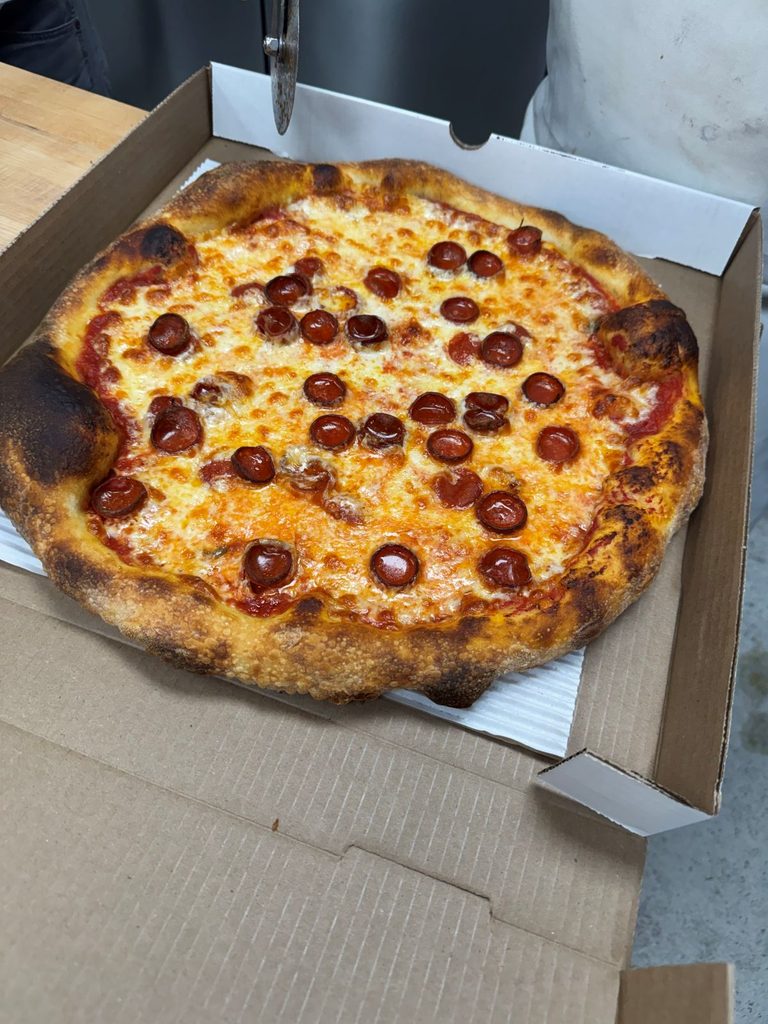
Carollo: We do a New York style. We do Sicilian. We do calzones and stromboli. We played around a little bit with Roman style. We were doing Roman style on Wednesdays, and everybody who tried it really liked it. But I think it was one of those things where it was too close to Thursday night. And so it was just pizza overload for people. We’ll do it on a random Saturday now, and I definitely want to get back to it. I just gotta figure out a better way to do it, I guess on a different night.
PMQ: Are the Detroit-Style Thursdays bringing in existing customers as well as attracting new customers?
Carollo: Yes, I think both. Business definitely picked up when people started to see it on social media. We’ve gotten a lot of new customers, and we’ll have people randomly call us and say, “What night is the pan pizza?” We also won awards for best pizza and best chef, so that also got people curious about the Detroit. I would say, on a Thursday night, our business increased by probably 20%.
PMQ: Wow, that’s a healthy increase.
Carollo: We have a lot of people come in, sit at the bar for happy hour, and then go into the dining room, eat dinner. Or for takeout, they’ll order Detroit pizza and mozzarella sticks, which are housemade also. So Thursday became one of our best nights.
And I think it’s sort of like Chick-fil-A closing on a Sunday. People are like, “Why don’t you do it every night?” But I think there’s something special about people knowing that they can only get it on Thursday. It’s also a lot of work, because we don’t parbake, so there’s literally pans everywhere!
PMQ: What are some of the other best sellers on your menu? Do you have other specialty pies or rotating/seasonal items?
Carollo: Well, we’re a full restaurant, too, so we have things like veal and seafood on the menu. We also have a “Secret Pizza Menu.” There’s one named after my son, who’s Leo, but when he was little, some people at the restaurant would call him Leon. And then we do a Sicilian upside-down vodka, we call it The Bear, because that’s what my wife used to call my oldest son. We’re getting ready to introduce a burrata pie, which will be just like a tomato pie, and then we throw some hot honey and burrata on top, with some basil. So we definitely get creative with the Secret Pizza Menu.
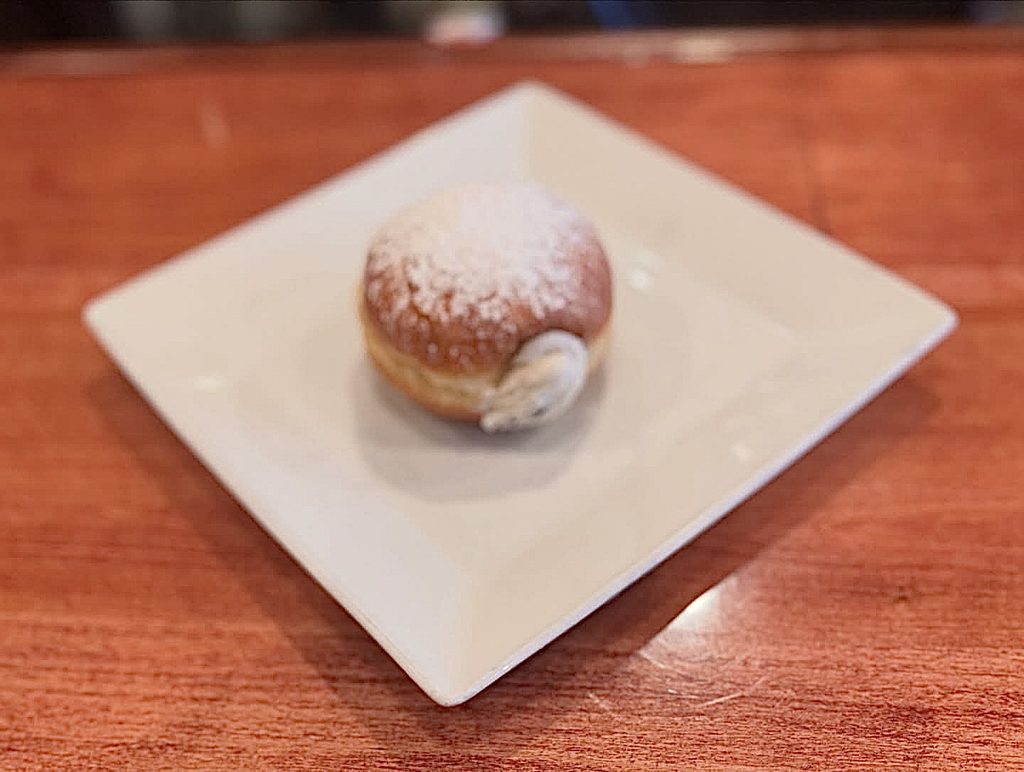
We also have our Veal Conca D’Oro, which is our version of Veal Francese, and we’re pretty famous for that. Frank’s is one of those places where you can come in one night and just get a pizza, but you can also come in for date night and have a 16-ounce veal chop. We make some of our desserts, like the cannoli cream we make in-house. We use it to make cannoli cream donuts. But we also buy desserts from Shyndigz, which is a really popular bakery in Richmond.
PMQ: Tell us about the new bread program and how it started.
Carollo: My uncle in Italy’s brother has Sal & Jerry’s Bakery, which was in Brooklyn and now is in Long Island, and he’s been a huge mentor to me. My thought process was always like, “We need to start making all our bread in-house.” At the time, we were making dinner rolls.
He bought a house in Florida, and my parents hadn’t seen him in a long time, but they reconnected on social media. He said, “We’re driving to Florida. We’re gonna stop by for a couple days.” And my mom was like, “Oh, Giuseppe will be so excited, because he wants to pick your brain.” And he was like, “Whatever he wants to learn, just tell me what, and I’ll tell him what ingredients to buy, and we’ll do it.”
So, on a Monday, I went and picked them up at like 8:00 in the morning, and we worked until 5:30 at night. We baked all day. I was trying to take notes, and I’m recording on my phone, and I have my iPad set up, and I’m trying to take in as much as I can.
I had the idea that, as soon as we had pizza ovens with steam induction, we were gonna switch [to making bread in-house]. One day, I was looking at the bread from the bakery, and there were all these dots in the bread. I couldn’t figure it out. So I FaceTimed him, and he was like, “I’m coming up next week. I’ll stop by, and we’ll talk about it.”
When he looked at it, he was like, “Oh, they put a lot of preservatives in this bread to make it last longer.” And I was like, “Well, I’m not gonna eat that, and if I’m not gonna eat it, I’m also not gonna give it to my customers.”
I’m really proud of the bread that we’re making. There’s no preservatives. It’s fresh. People just absolutely love it.
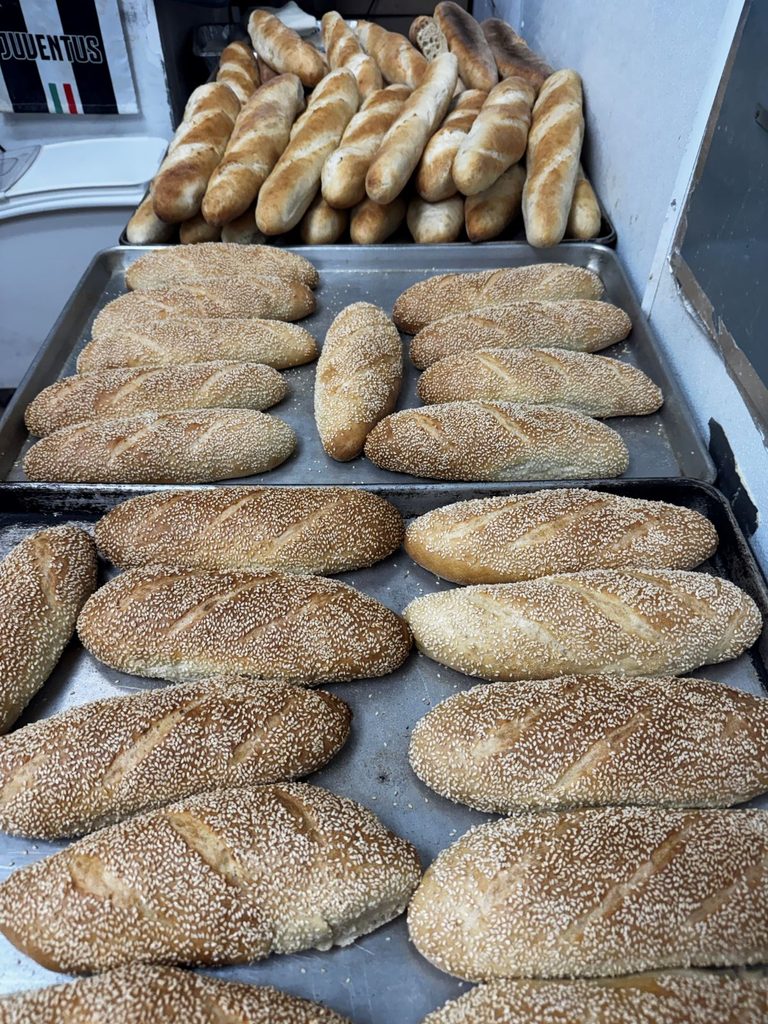
We make semolina loaves, and people will call me and say, “Hey, can you put two to the side for me?” So that increases sales, too, because people know that they can get good bread, and that it’s fresh bread. It’s not full of crap; we don’t use any bromated or bleached flour in our restaurant. We like to use poolish and all that stuff, so I do feel like we really stepped it up.
PMQ: Does the bread program add a lot of extra labor?
Carollo: A guy that I used to play soccer with came on staff about eight months ago as a pizza man, and I was like, “Listen, if you want to learn, I’ll teach you.” So he’s taken over most of the responsibilities of the bread. During the day, all he does is make bread dough, pizza dough, baguettes, all that stuff—and then in the evening he helps the pizza man. It’s been great having him there to help, because it is a lot of work!
In Part Two of this three-part series, Giuseppe discusses the history of Frank’s, what practices he changed when taking over the family business in 2013, and what values will always stay the same.
Tracy Morin is PMQ’s associate editor.