

By Tracy Morin
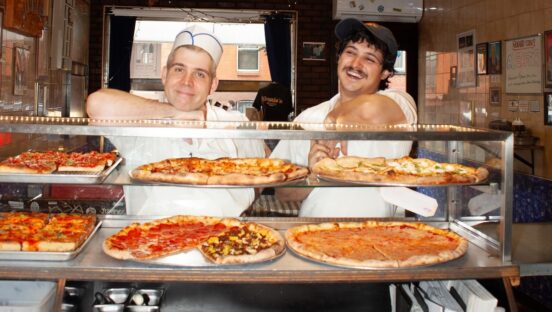
When Frank Kabatas, owner and operator of East Village Pizza in New York City, started at East Village Pizza as a delivery driver in 1997, he didn’t know he’d eventually own the place. But in 2003, this immigrant from Turkey didn’t just end up taking over operations. He has commandeered its continued success into, and through, the Internet age—amassing 1.6 million Instagram followers along the way.
In this exclusive interview, Kabatas reflects on how a delivery driver went on to oversee an iconic neighborhood slice shop, what his decades of serving NYC customers has taught him, and how innovations like the Original Double Stacked Pizza have helped him solidify a 4.5 rating on Google in perhaps the most competitive pizza city on the planet.
PMQ: Tell us about your move from delivery driver to pizzeria ownership. Did starting in that position affect how you run your business today?
Kabatas: I started at East Village Pizza as a delivery driver in 1997 after moving from Turkey and knowing very little English, so I really learned this business from the ground up. I eventually moved into making pizza and later management, where I started learning the operational side of the restaurant. When the opportunity came to buy East Village Pizza in 2003, I took it and was lucky to have a loan from my aunt in Turkey.
Starting as a delivery driver still affects the way I run the business today, because I’ve done many of the jobs I’m asking other people to do. I understand how each one affects the customer experience, even if the customer never sees it.
I also learned that knowing how to make great pizza and knowing how to run a successful pizzeria are two very different skills. As an owner, I had to learn food costs, labor, inventory, purchasing, marketing and how to build a team. I’m still learning, and I think that’s one of the reasons I’ve been able to do this for so long.
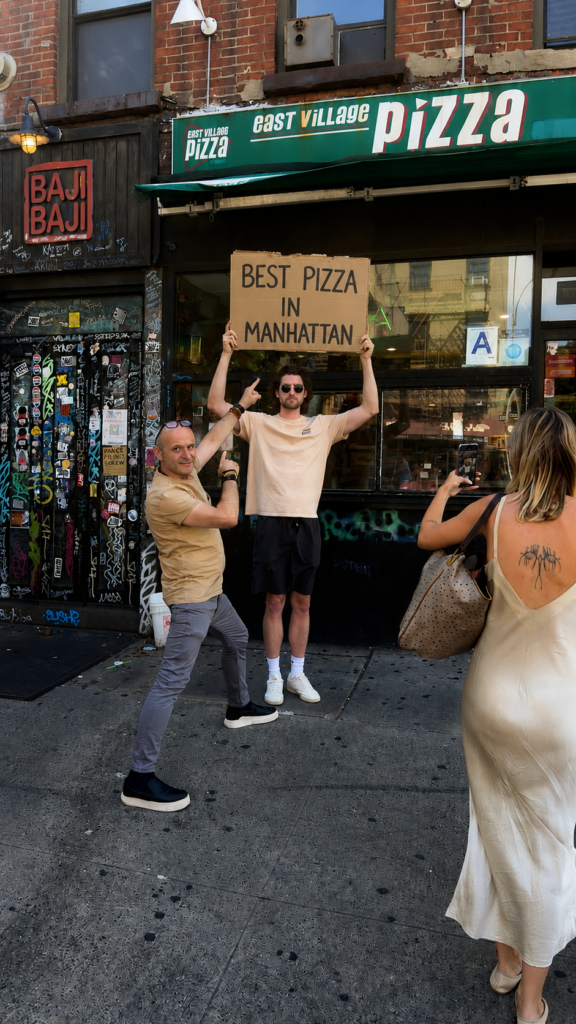
PMQ: East Village Pizza has been in business since 1997 in a notoriously competitive pizza city. What do you think has helped your New York neighborhood pizzeria thrive for decades?
Kabatas: New York customers have too many choices for you to be inconsistent. Someone can love the slice they get from you on Monday, but if the one they get on Friday isn’t as good, there are plenty of other pizzerias they can try. That’s kept me very focused on the details every day.
At the same time, the East Village has changed tremendously since I’ve been here. We’ve served different generations of residents, students, restaurant workers, nightlife crowds and visitors from around the world. You have to evolve with your customers without losing the reason they came to you in the first place.
I think that’s been a big part of our longevity. East Village Pizza is still a neighborhood slice shop. We haven’t tried to become something we’re not, but we’re always asking what we can improve. I think that combination of consistency and curiosity has helped us last. We’re still a neighborhood slice shop, but we’re always trying to make every bite and moment better.
PMQ: Tell us about your dough. What does that process contribute to the finished pizza, and how do you balance a longer fermentation with the demands of a busy, late-night operation?
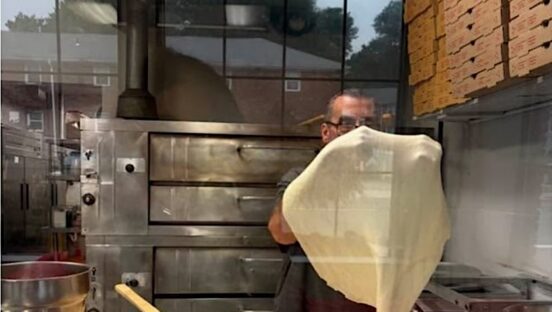
Kabatas: We make our dough 100% in-house, but the dough we make today isn’t the dough we’re serving today. We give it a 72-hour cold fermentation. That time is important to the finished pizza. You can’t rush dough and expect the same result. Fermentation affects the flavor, texture and how the crust cooks. The hydration, oven temperature, cooking time and toppings all work together, so I’m paying attention to the entire process rather than just following a recipe.
Operationally, the key is planning. We’re making dough every single day, so there is always dough moving through different stages of the 72-hour process. When you’re open until 3 a.m. during the week and 5 a.m. on Fridays and Saturdays, you have to know your volume and prepare ahead—anticipate it several days in advance. If you realize at midnight that you’re running short, you can’t suddenly make more 72-hour dough.
We also make as much as possible ourselves, including our sauce, and grate our cheese in-house. I like knowing exactly what is going into the pizza we’re serving, and so do our customers.
PMQ: Tell us about the Original Double Stacked Pizza. How did you come up with the idea, and how has it helped your business?
Kabatas: The Double Stacked Pizza came from what a lot of my ideas come from: spending time in the kitchen and experimenting. It’s essentially two pizza experiences in one. Our original version has Buffalo chicken inside and pepperoni on top, with cheese between the layers. Getting it right took experimentation, because you still need the dough to cook correctly, and you don’t want the inside to become soggy or too heavy.
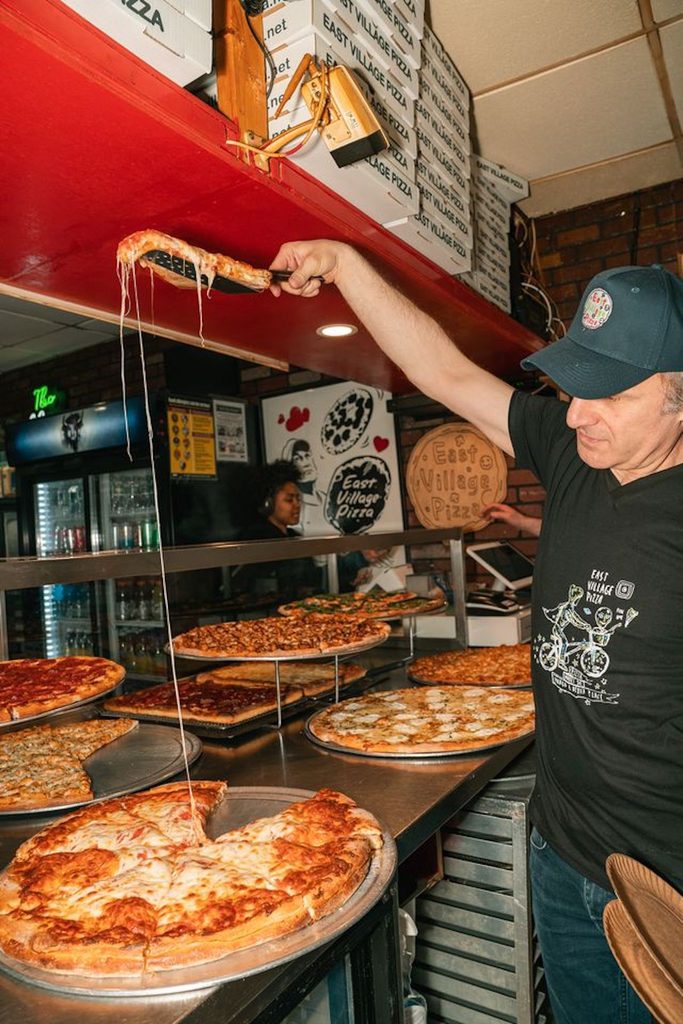
Once people saw it, the reaction was incredible. It became one of those pizzas that people wanted to photograph, film and share. Social media helped it reach people far beyond the East Village, and it led to television and media attention as well.
The Double Stacked also taught me something about creating food in the social media era. Being visually interesting can get a pizza a lot of attention, but that attention only helps the business if people actually enjoy eating it. We never want to create something just for a video. It still has to be a pizza people want to order again.
PMQ: What other efforts have paid off for your business?
Kabatas: Our heart-shaped pizzas are a great example. We introduced them in 2019, and they were immediately popular, especially around Valentine’s Day. We now offer them year-round, because customers started ordering them for birthdays, anniversaries, proposals and other celebrations.
The heart-shaped pizza showed us how powerful it can be when you give customers a way to make your product part of an occasion. People aren’t only ordering a pizza; sometimes they’re using it to celebrate.
From a business perspective, ideas like that can work on several levels. They drive sales, give customers something memorable and are naturally shareable on social media. Most importantly, we don’t have to change who we are to do it. It’s still our dough, ingredients and pizza, just presented in a way that gives people another reason to order it.
That’s generally how I think about marketing. The best ideas don’t feel like marketing to the customer. They give people something they actually want to participate in and share.
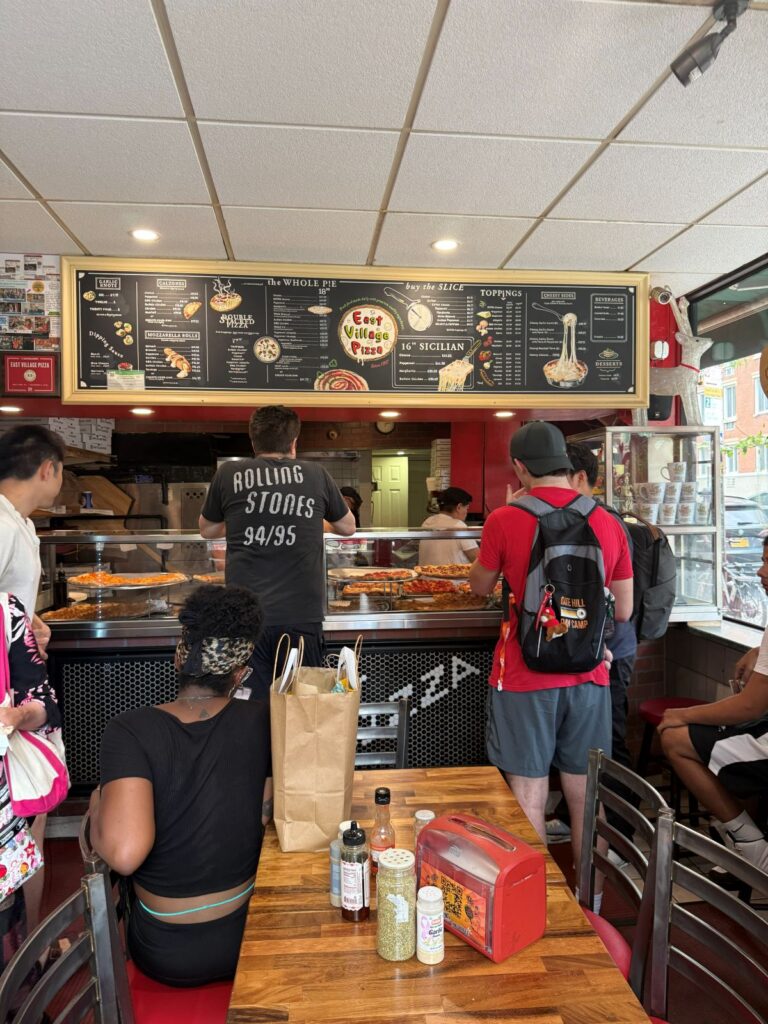
PMQ: What has serving pizza deep into the night taught you?
Kabatas: The East Village changes throughout the day. At lunch, you have one crowd; at dinner, another; and after midnight, it becomes something completely different.
That’s one of the things I love about pizza in New York. It fits into people’s lives at almost any hour. You can have someone grabbing a slice because they’re working late, someone coming out of a bar or club, a student, a restaurant worker finishing a shift, or somebody visiting New York who just wants a real New York slice at 2 a.m.
Being open until 3 a.m. during the week and 5 a.m. on weekends means we’ve seen almost everything over the years. Operationally, late night also teaches you how important consistency and speed are. Someone ordering at 4 a.m. should get the same quality pizza as someone ordering at 4 p.m.
PMQ: How have NYC customers and their buying habits evolved since the ’90s? Do you try to keep up with the times or embrace an old-school approach—or a little bit of both?
Kabatas: It’s definitely a mix of both. The fundamentals are old-school: We make our own dough. We give it 72 hours. We use a traditional gas pizza oven. I’m still in the kitchen working on recipes and watching how the pizzas come out and how customers react. I don’t think something needs to change just because new technology exists. If the traditional way produces a better pizza, that’s what we’re going to use.
But the way customers discover restaurants and order food has completely changed. When I started, people walked by and wandered in, heard about you from a friend or called the store. Now, they find us on Instagram, TikTok, Google and delivery apps. We use online ordering, third-party delivery and a POS system that lets us understand what’s selling and adjust when needed.
Technology should make the business more efficient, but I don’t want technology to replace the craftsmanship or the neighborhood experience. You should still be able to walk into East Village Pizza at 1 a.m., order a slice at the counter and feel like you’re in a New York pizzeria.
PMQ: How do you preserve that classic neighborhood pizza experience while continuing to innovate?
Kabatas: I think the key is knowing what you’re willing to change and what you’re not. Our foundation stays the same: New York-style pizza, good ingredients, homemade dough and consistency. That’s not something I want to reinvent.
Where we can have fun is with what we build around that foundation. The Double Stacked Pizza, heart-shaped pizzas and other things we’ve created all started with experimentation, but I give myself one rule: It still has to make sense coming from East Village Pizza.
We’re not going to chase every food trend just because it’s popular online. The question I ask is: What can we do with pizza that feels new, tastes good and gives someone a reason to talk about it?
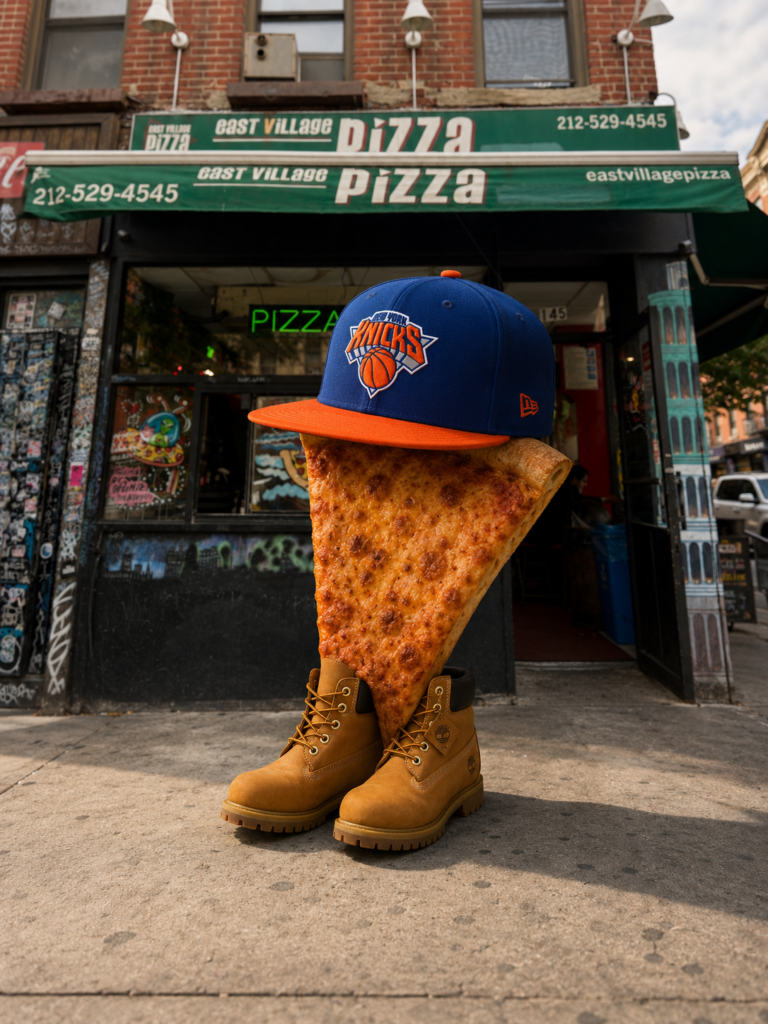
We have a new store opening internationally and will be making a special pizza for that market—be on the lookout for it!
PMQ: What challenges and successes have you had in your decades of business? What advice would you pass on to beginner pizzeria operators?
Kabatas: The challenges change depending on where you are in the business. In the beginning, I was learning how to survive and understand the numbers. Today, we’re dealing with things like rising costs, labor, delivery platforms, changing technology and customers whose expectations are constantly evolving.
One thing I’ve learned is that you can’t control most of those things. You can control the quality of the pizza you serve, how you treat your customers and employees, how closely you watch your operation and how willing you are to adapt.
I’m proud that after all these years we’re still here, still busy and still reaching new customers. We’ve had people who first came to East Village Pizza when they were young and now come back with their families, while other customers walk in because they discovered us on social media that morning. To me, having both is success.
My advice to new operators is to pay attention to the boring things. Everyone wants to talk about the food, the concept and the marketing, but you need to understand your food costs, labor, waste, inventory and volume. A busy restaurant isn’t necessarily a profitable restaurant. Know your numbers, stay close to your product and listen to your customers.
PMQ: What else have you learned in your pizza journey?
Kabatas: After doing this for more than 20 years, I’m probably more curious about pizza today than I was when I started. There’s always something you can improve, whether it’s the dough, an ingredient, the way you organize the kitchen or how you connect with customers.
That’s one of the things I love about this business. Pizza seems very simple, but you can spend your whole career trying to make it better.
I’m proud that East Village Pizza has become known beyond our neighborhood, but I never want to lose what made the business work in the first place. At the end of the day, someone walks through the door, orders a slice and decides whether it’s good. Everything else comes after that.
Tracy Morin is PMQ’s associate editor.