
By Tracy Morin
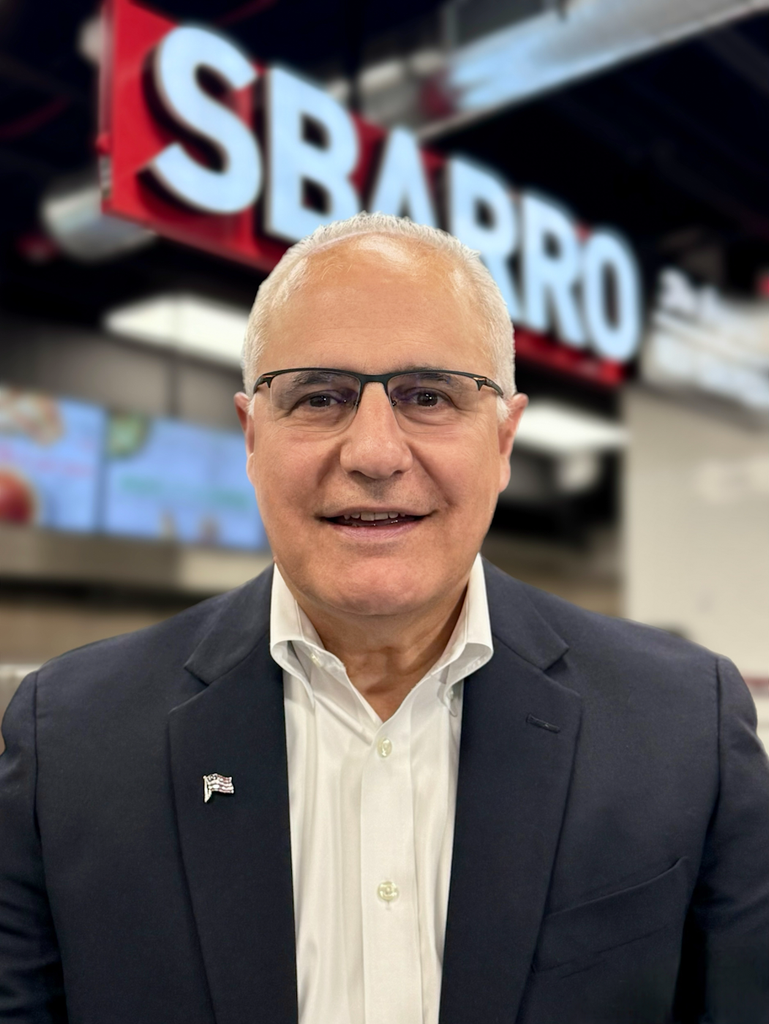
From the brink of two bankruptcies, Columbus, Ohio-based Sbarro has made a legendary comeback, growing to more than 850 locations worldwide from a low of 566 in 2020. Behind that transformation is CEO David Karam, who before joining Sbarro had already created a standout career at Wendy’s, the then-fledgling brand he joined as a teenager. “I spent so much of my career in Wendy’s, but as the years continue to roll on, it seems like this brand [Sbarro], this segment, will be my defining work,” Karam tells PMQ in an exclusive interview. “It’s been a good, long journey.”
Joining the board of Sbarro in 2012, then taking over as CEO in 2013, Karam faced a difficult task, but he has since shepherded the once-struggling brand to success. More than 100 new Sbarro restaurants have opened annually for the past four years, with 2026 on pace to make five. And U.S. locations are only part of the equation; the shopping-mall staple (now opening in a diverse variety of venues) has also made recent entries into global markets, including Chile, Panama, Colombia and Poland.
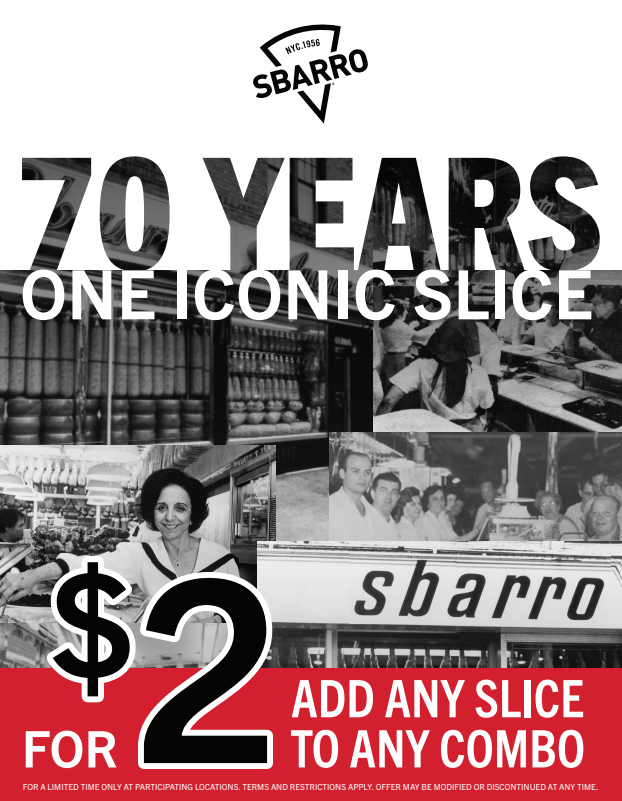
Founded in 1956 by Gennaro and Carmela Sbarro, the brand began as a neighborhood Italian salumeria in Brooklyn, New York. Now, as Sbarro celebrates 70 years, Karam recently talked with PMQ about the keys to its turnaround, why it’s well-positioned to maintain its momentum in the years to come, and what key trends in foodservice are shaping the way businesses must now compete to be successful.
PMQ: What was it like entering the pizza industry after such a successful career with Wendy’s?
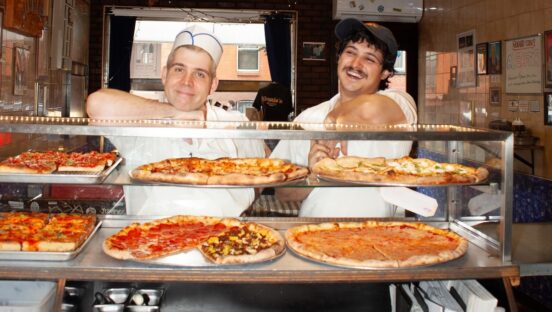
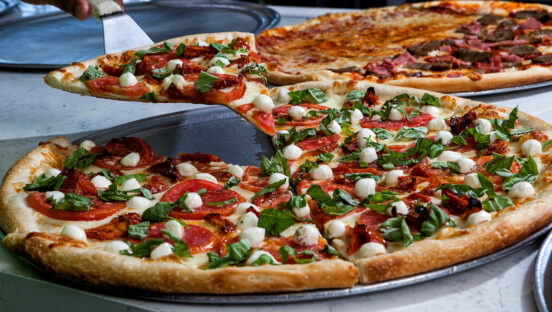
David Karam: There are similarities for sure, but a lot of what makes the comparison more stark for me is that Sbarro is somewhat unique within pizza. If you look at most of the pizza and QSR pizza segment, it relies upon delivery, and that’s a minor part of the Sbarro business. Our positioning is serving the impulse pizza occasion. We specialize in New York pizza by the slice that both creates and satiates customers’ pizza cravings.
So we kind of behave a lot more like a bakery than we do a traditional pizzeria, or even a QSR hamburger concept. At Wendy’s, customers who pulled onto the lot had already made the decision to eat at Wendy’s, obviously.
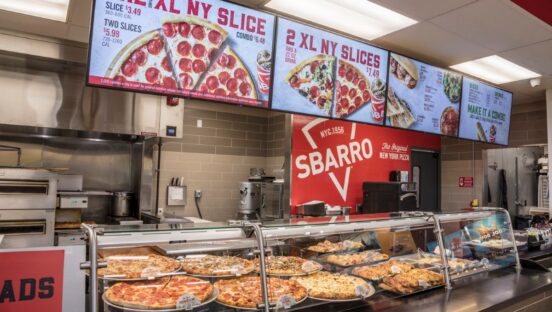
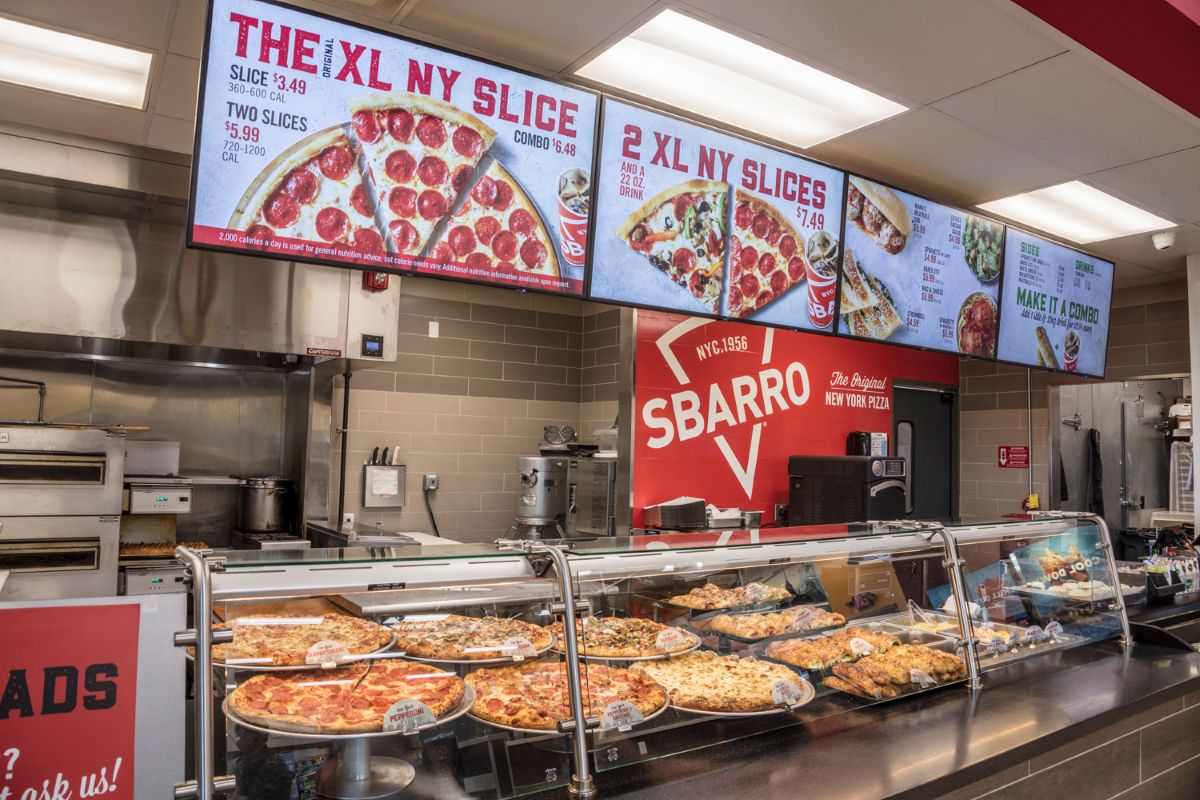
At Sbarro, it’s really more about capturing the eye of a consumer that you hope is hungry with beautiful merchandising of our food. Then we have to deliver on that promise with great-quality food, great production of the food, as well as how we hold it and reheat the slices, etc.
With Wendy’s, I was more focused on managing execution of production and throughput, and ensuring good, consistent quality and order accuracy. With Sbarro, we really have to engage the customer more—unlike a traditional QSR that has three-quarters of their transactions occurring through either the pickup window or a mobile app.
Most of our sales are through direct customer engagement. So customer engagement, merchandising, and what we refer to as “delivered product quality” are the cornerstones of our concept.
PMQ: Considering that unique approach, how do you think Sbarro has fared amid all of the upheaval in foodservice in recent years?
Karam: I’ll be honest with you: It took me some time to really learn not only the Sbarro brand, but this segment. My bias was based upon my experience with Wendy’s. So the things I just articulated to you, to a large degree, were learned through the education of associates who had been with the brand a long time, and then through me making mistakes.
But once we learned our true position, we’ve had a great deal of success. This will be our fifth year in a row with 100 new store openings. Now, that’s not net—we have a decent number of closures, because the leases tend to be short, and investment isn’t as enormous as a Wendy’s or McDonald’s; if you’ve got a bad store, you move on.
But we have a lot of sustained interest, both company development as well as franchise development. I think our performance has been pretty solid. We’re not at a record level of stores in operation, because back in the prime of the brand, they had over a thousand stores, but we’re at about 840 now. Every year, we’re adding 50, 60, 70 net new stores. So we feel pretty good about where the brand’s at, and I think it evolves from that more clearly defined brand position.
When COVID hit, it benefited a lot of brands, including pizza brands that were so well-positioned with delivery. But, for us, relying upon foot traffic in front of our stores, it wiped us out. We had to close all of our restaurants during COVID, worldwide, and it was probably a couple months before we slowly started to reopen stores.
But I’m proud to say our team rebounded, and we picked up where we left off shortly after the onset of COVID. By 2021, we were at a decent number of new stores. And, thankfully, by 2022, we started doing over 100 stores a year, and we’ve sustained that for five years. So, overall, I feel like we’ve weathered some of the challenges quite well.
PMQ: You also came back from the brink of not one, but two bankruptcy filings.
Karam: Yeah, I think they went through the first bankruptcy filing in 2008 or so. I came aboard in 2012, but I didn’t take over as the CEO until 2013. That spring, I started to get into the details of the business and the numbers, and it was very precarious.
The private equity firms that had brought me into Sbarro were basically not only the equity owners at that point, but also the majority of the debt holders. I had to explain to them that for the brand to really have a future, we had to clean this balance sheet up. The bankruptcy that they had gone through previously, a few years earlier, just wasn’t done in a comprehensive manner.
I think I was successful in convincing them that we really needed to go back and do it the right way, in a much more comprehensive way: cut losing stores and reduce the leverage on the balance sheet. And, to their credit, they were 100% supportive, and we planned it thoroughly throughout the balance of 2013, and filed [for bankruptcy] April 1, 2014, and exited 91 days later, June 30. And at that point, I began to buy up controlling equity ownership of the business and moved it to Columbus, and we really just got to work on sustaining the turnaround.
PMQ: What helped turn around the brand?
Karam: When I came in, we did some research on the brand and the customer, and the brand awareness was remarkable. It was amazing, how broad the brand recognition was. But consumers—even though Sbarro had considered themselves an Italian eatery, and we still offer a variety of very good, authentic, freshly prepared Italian meals—really knew us for New York-style pizza by the slice.
So that’s really what we built the brand positioning around, because my sense was, that’s a really good place to call home. This is what the consumer knows us for. Let’s just tighten the focus and tighten the brand positioning around that.
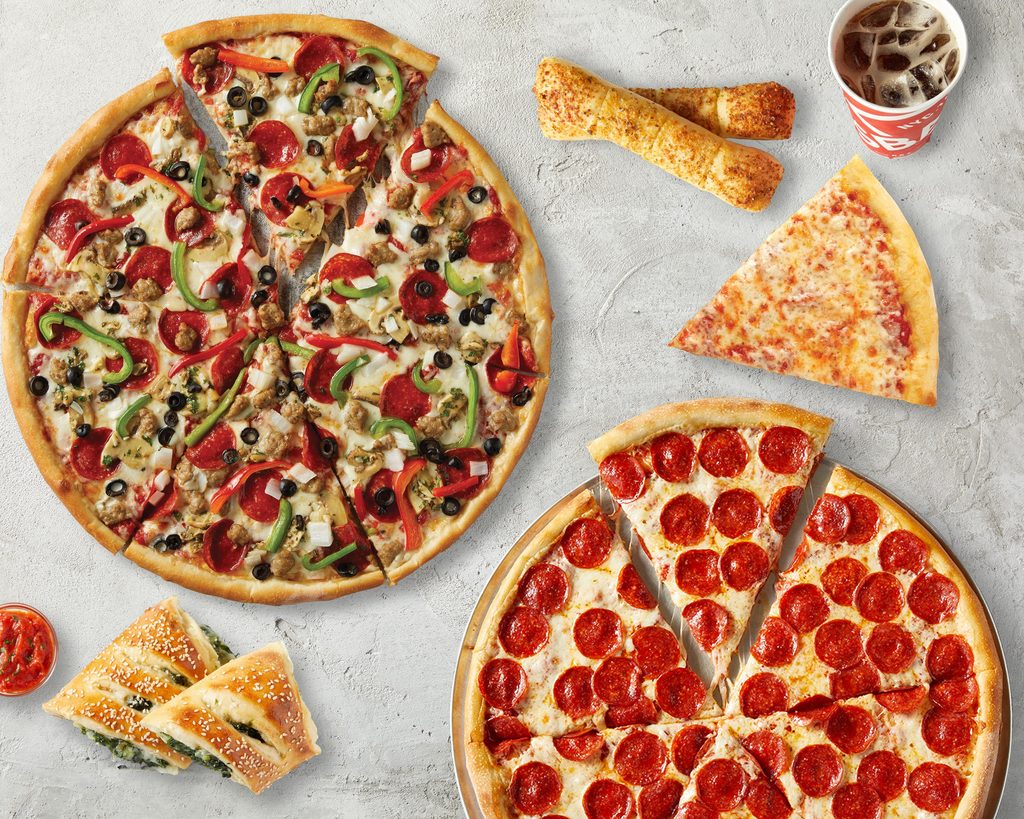
Pizza is the third-largest serving category—not only in the U.S., but in virtually every market around the world. In some markets, No. 1 is QSR hamburgers; in others, it’s QSR chicken. But virtually everywhere, pizza is No. 3.
So the challenge to the management team, once we had crafted that position, was, “Where can we open a store with this type of offering?” At the time, we were almost exclusively in malls and, to a much lesser degree, airports. But, at the time, there were maybe 1,200 malls in the United States; today, it’s down to about 900. And we knew that segment was really under stress.
We never felt we were going to exit the malls. We just recognized that it was not a growth platform. And so the team strategized about what venues we could open in, with that type of brand positioning. The key was diversification.
Today, we’re opening up restaurants in convenience stores and travel centers, in casinos and colleges and military bases; on roadways as well as airports, malls and train stations. And we have some other venues targeted, but that’s been the key to our growth and our turnaround.
The bulk of our new store openings today are not in mall food courts. We have a presence there, and we continue to open there, but we’re opening a lot of stores in travel centers, convenience stores—especially in the U.S., but all over the world. It’s been a really fulfilling journey for me and, I think, for our management team.
PMQ: How do you think Sbarro fits into shifting customer demands, as well as modern-day franchisee demands?
Karam: We’re very well-positioned, from a return on invested capital standpoint. Our investment is relatively low. Our volumes are pretty solid, based upon the pizza category. And our margins are very, very solid.
We make our dough fresh and use 100% whole-milk mozzarella that we shred by hand every morning in our restaurants. So there’s a pretty heavy labor component, and execution remains the biggest focus area for our leadership team, for our franchisees.
But those elements really add up to a brand that can deliver—in the right venue, with the right rent—a very, very healthy and robust return on investment. And I’ve been in this industry for 40 years—it’s a capital-intensive business. If the return on investment isn’t adequate, then, ultimately, the brand’s going to wither and shrink. I think you’re seeing that, not only in the pizza category, but way beyond the pizza category—any QSR industry.
So we’re very disciplined about that, and we’ve obviously got good sites. We have a lot of data analytics that we use to pick sites—not only for ourselves but our franchisees. The profitability is very solid.
We have 150 of our 850 stores as company-owned and -operated. In total, we have about 400 stores domestically and 450 stores in 27 countries around the world. So it’s not like we’re hugely penetrating by any stretch of imagination in the U.S., but we’re a solid presence.
And when we project returns and pick sites, we do so with a healthy amount of experience, given that we have so many company-owned restaurants. Over a third of our stores in the U.S. are company-owned and -operated, and we continue to open these stores every year.
PMQ: How does your strategy internationally compare with the U.S.?
Karam: It’s very similar. The venues I talked about are basically the same venues that we go into in most markets around the globe. We have a number of markets where we have a very healthy position and presence—a few markets where we’re No. 1, No. 2 or even No. 3 in the QSR pizza category.
Some markets are predominantly mall markets. One of our biggest markets internationally is Turkey, where we have 160 restaurants. A lot of those are in malls, but we’re starting to go into inline locations. Pizza Hut bankruptcies have opened up a lot of new stores and new sites for us in that market.
In other markets where we have a strong penetration, they have a very broad mix—for instance, Iceland. It’s not a huge market, but we have 13 stores in Iceland, with a couple more opening in the next few months. It’s a relatively small market, but we’re in the airport. We’re in convenience stores. We’re in inline stores in the city, and we’re in the malls. So it has a beautiful blend of venue diversification, and it’s led to a strong market share position.
And, of course, in 2017, when DoorDash and Uber Eats and Grubhub emerged, we jumped into that business right away, because we saw that as our pathway to competing in the mainstream QSR pizza category. It’s an important segment. In the malls, it might be 7% of our sales, but as we go into convenience stores, it can be as much as a 25% mix.
We have a strong mobile app. We have an online website where we accommodate either delivery or carryout orders. And then, of course, we work with all of these delivery companies—the ones I mentioned, and internationally, we work with the leading delivery companies in those countries, too.
We kind of dominate this impulse pizza occasion, which is the slice business. Then we’ve migrated into the mainstream carryout and delivery segment through these new technologies that have emerged. And that has led to venue diversification. We’re a small brand, but it’s given us a really nice position that’s enabled us to turn the brand around and also reinvigorate its growth. And we feel good about that.
It’s actually kind of a nice story, to see a brand that had a near-death experience and came back from the brink. Right before COVID, and for 2020, we hit a low of 566 stores. So now at 850, just in about six years (we’ll probably end this year at 878, 880), that’s 300 more restaurants in a six-year period, which I think is pretty significant.
PMQ: Are there any other factors that you would point to as being key to this turnaround?
Karam: I talk about this a lot to our prospective franchisees. A couple things, I think, are important attributes of our success.
No. 1, it’s a privately owned, family-owned business now, which allows for continuity of strategy and operational focus and execution. No. 2, especially given our history, with two bankruptcies, the company is almost entirely deleveraged now. We have almost no debt, and I think that’s really important, because that enables us not only to sustain the strategies that I’ve just articulated to you, and do so over long periods of time, but also to continue to reinvest resources in new store development and G&A [general and administrative costs], to support and enhance the operational performance of our brand.
A lot of brands get into trouble because they’re so focused on what they call an “asset-light model,” and they just chip, chip, chip away at all of the G&A, which provides support for their franchise system, as well as whatever company stores they have. And, pretty soon, the experience of the consumer deteriorates.
I think that’s so foundational to building strong brands, because you can have great advertising campaigns and such, but if you build a business and brand on the back of good food, for the target that you’re aiming for, and excellent operational execution, and you do that over a long period of time, then you’re going to have a brand that grows and builds brand equity.
I think that’s what you’ve seen with some of the top-performing brands in our industry, like In-N-Out, Chick-fil-A, Raising Cane’s or Culver’s. We kind of look at those brands as a model for us.
PMQ: Do you find that franchisees today are looking for something different than they were in the past—and are you looking for different things in franchisees?
Karam: Yes. For us, as we’ve ventured into these other venues, which have been a real source of growth for us—convenience stores, travel centers—we have to understand that what we bring to the table for these franchisees (who generally are the owners and operators of that c-store or travel center) is a complement to their other business activities in that operation. Generating revenue and profitability from a restaurant is where we come in. We complement the profit generation from both the fuel and the retail. These three pieces of business work together.
Historically, we’re used to working with franchisees who are focused only on Sbarro or the restaurant operation. But we have a complementary role for players in those other venues. That wouldn’t be true if we were to develop a franchise location in a mall, or in a college, or in a casino with a franchisee—or even in an airport location.
But for these travel venues, they really have three drivers of their business, so we have to play a supportive role. Part of my job, and our team’s job, is to help them understand just how important operational execution is, so that they can optimize the value of being a Sbarro franchisee in the context of those other businesses.
Oftentimes, we will point to the success of Casey’s. It has basically become one of the largest pizza chains in America—and has done so through the conduit of their convenience stores. They have kind of mastered that, and we try to encourage franchisees of these venues to look at that model and understand the value of focusing on a single brand. A lot of franchisees in those spaces want to have two or three or four, even more, different QSR brands. And my experience has been, it’s really hard to master one, let alone three or four or five.
For us, 19% of our stores today are in c-stores, and another 7% are in travel centers. You’re talking about 26% of our stores globally, so it’s a very important piece of business. Honestly, I think that segment of the QSR industry, the c-store/travel center space, is going to continue to grow.
I started working for Wendy’s when I was 14 years old, in 1972, at store No. 2 for Wendy’s, and that was the first restaurant in the QSR industry that had a pickup window. That was an innovation that Dave Thomas and Wendy’s brought to the industry. And I recall vividly, when I was a young kid, having to train the customers on how to use a pickup window—what the speaker was in the menu board, etc. Initially, the mix of sales from the pickup window was very low.
I built a large franchise business in the Wendy’s system. I sold that in 2017, and at that time, in the sales and transactions for the 350 stores I had, 75% was at the pickup window. Today, that’s dropped to 55% for the industry—and the reason is, the growth of online ordering, DoorDash and such, as well as people ordering on a mobile app and pulling into a designated parking space to pick up.
When you think about the convenience store industry, historically, they didn’t have the convenience of a drive-through window, which was very important to the consumer. But as the delivery and the mobile apps continue to grow, that historic disadvantage for the c-stores is neutralized. And I think it’ll continue to move in that direction, with drone deliveries and such. So I think the future opportunity and future market share gains for the c-store industry will grow.
PMQ: Where do you see the future of Sbarro?
Karam: I think great brands are built by following the right strategy over long periods of time. We believe that our success is validated, and with the strategy that has been crafted, I really believe we’re in the very, very early innings of the growth that the brand has in front of it.
We continue to evolve against the critical success factors—to find better, more effective ways to execute at a higher level, not only for ourselves but for our franchise system globally. We’ll continue to raise the bar from an operational execution standpoint and, frankly, just continue with the same strategy and continue to expand.
I mentioned that we have gone from 566 stores six years ago, to ending this year at, let’s say, 870. Over a six-year period, that’s 7.5% compounded annual growth in units. So if you start at 870, and you grow at 7% for another 10 years, that takes the brand to 1,500 stores. I think that we just need to keep our heads down and continue to execute on the strategies that have proven successful.
Tracy Morin is PMQ’s associate editor.