


By Steven Amlani
For decades, restaurants have relied on the same fragile operational model: Find a great manager. Hope they train correctly. Hope standards stay consistent. Hope operational knowledge doesn’t walk out the door.
That model is becoming harder to sustain.
Turnover is higher. Training consistency is harder. Most restaurant systems still rely heavily on verbal coaching, paper binders, scattered apps and information trapped inside individual people’s minds instead of embedded into the operation itself.
Most operators today juggle separate apps for scheduling, training, communication, HR, certifications and documentation—creating operational fragmentation instead of operational clarity.
After nearly 25 years in restaurant operations, I started asking a different question at Scratch Pizza: What if the system itself could help lead the restaurant?
That question led to Scratch OS.
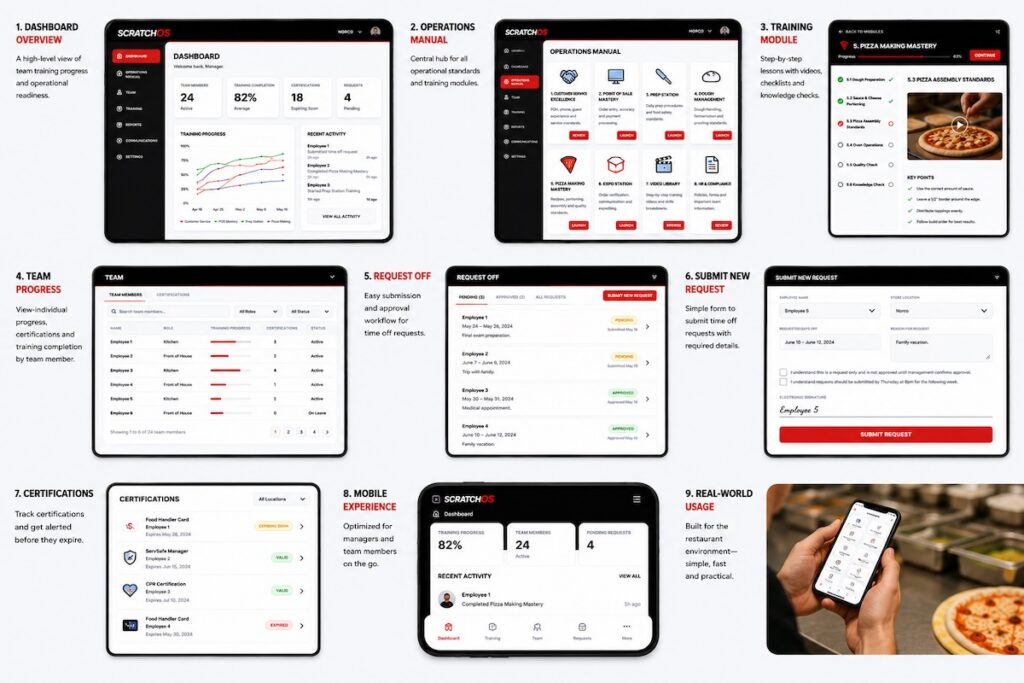
Built by an Operator, Not a Software Team
Most restaurant platforms are designed by software teams trying to understand restaurant operations. Scratch OS was built in reverse—by an operator building software around real operational friction. The system was developed inside active operating restaurants at Scratch Pizza during:
- Lunch rushes
- Staffing shortages
- Onboarding
- Customer recovery situations
- Inventory management
- Real-world operational pressure
Over the past several months, Scratch OS has been actively tested, refined and updated inside live Scratch Pizza stores during daily operations. Every module inside the platform was designed around one goal: Reduce operational drift.
The platform combines:
- Training systems
- Certifications
- HR tools
- Evaluations
- Communication logs
- Request-off workflows
- Operational playbooks
- Team tracking
- Video libraries
All of that has been built into a single mobile-first operating ecosystem.
Related: Think Smaller: Steven Amlani Explains What Actually Works for Indie Pizzerias Today
Why Traditional Training Fails
Most restaurant training still follows the same outdated model:
- Giant binders
- Verbal explanations
- Shadowing another employee
- Hoping people remember under pressure
But restaurants move too fast for that. At many restaurants, a new hire may be shown how to cut pizzas once during orientation and then expected to remember the process during a Friday dinner rush three weeks later.
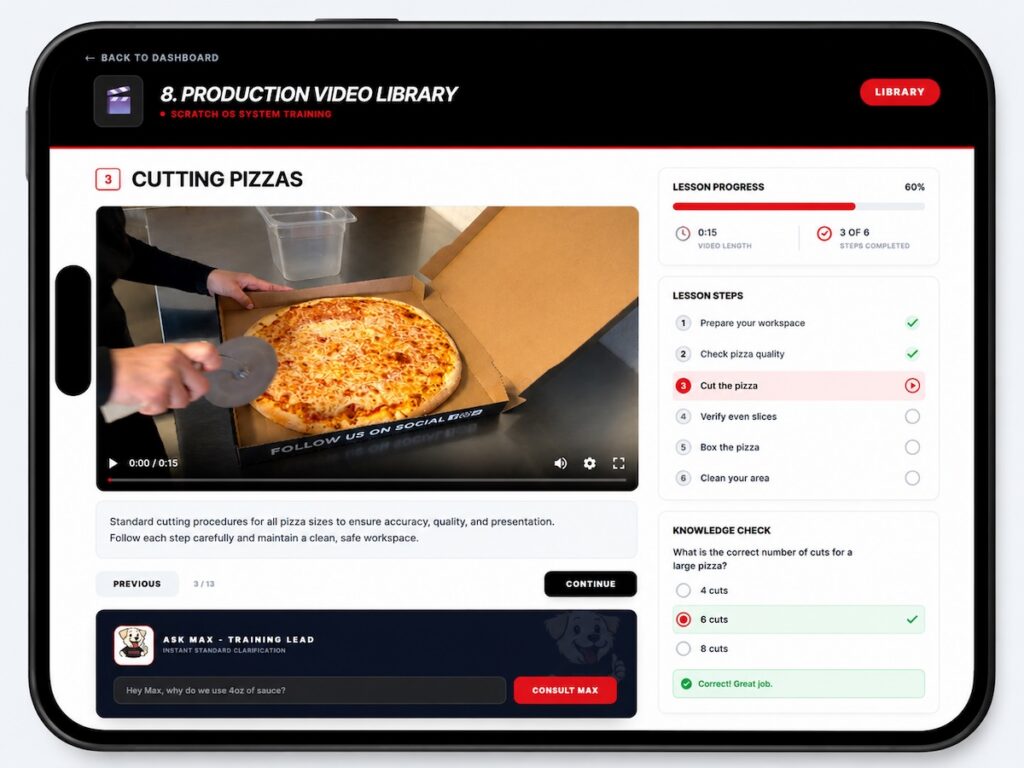
Inside Scratch OS, that same employee can instantly pull up a short training module directly from their phone, review the exact standard, complete a quick knowledge check, and return to the line immediately.
Instead of relying entirely on memory or manager availability, the operational standard stays accessible in real time. That changes consistency dramatically.

Mobile-First for Real Restaurant Environments
Restaurants do not operate behind desks. They operate:
- On the make line
- At the oven
- In the walk-in
- During rushes
- While multitasking constantly
That’s why Scratch OS was designed mobile-first from day one. The platform was intentionally built around:
- Speed
- Simplicity
- Visibility
- Usability under pressure
Training videos are intentionally short-form—often under 30 seconds—because younger employees learn through repetition and visual reinforcement, not hour-long seminars. The goal wasn’t to digitize paperwork. The goal was to create a living operational system that functions inside real restaurant environments.
Real-Time Operational Visibility
One of the biggest operational problems restaurants face is lack of visibility. Managers often don’t realize there’s a problem until:
- Food costs drift
- Standards slip
- Training gaps appear
- Employees become frustrated
- Turnover increases
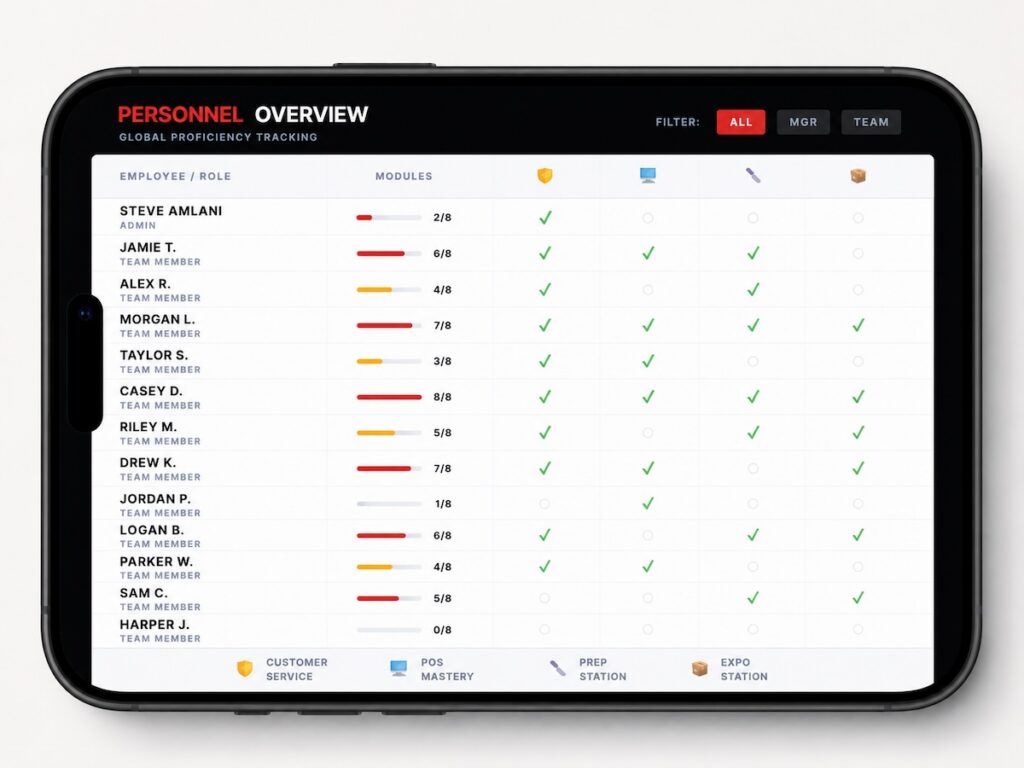
Scratch OS gives leadership a live operational snapshot. Managers can quickly view:
- Training completion
- Certification progress
- Station readiness
- Employee development
- Pending HR requests
- Operational gaps
Instead of relying on scattered paperwork or memory, the system creates clarity in real time.
Embedding Standards into the Workflow
At most restaurants, standards are explained once and then slowly erode over time. Scratch OS approaches operations differently. The system continuously reinforces:
- Portioning standards
- Prep procedures
- Oven flow
- Customer service expectations
- Food safety
- Communication standards
- Station execution
Operational knowledge becomes persistent instead of temporary. That creates stability.
The “Max” Training Concept
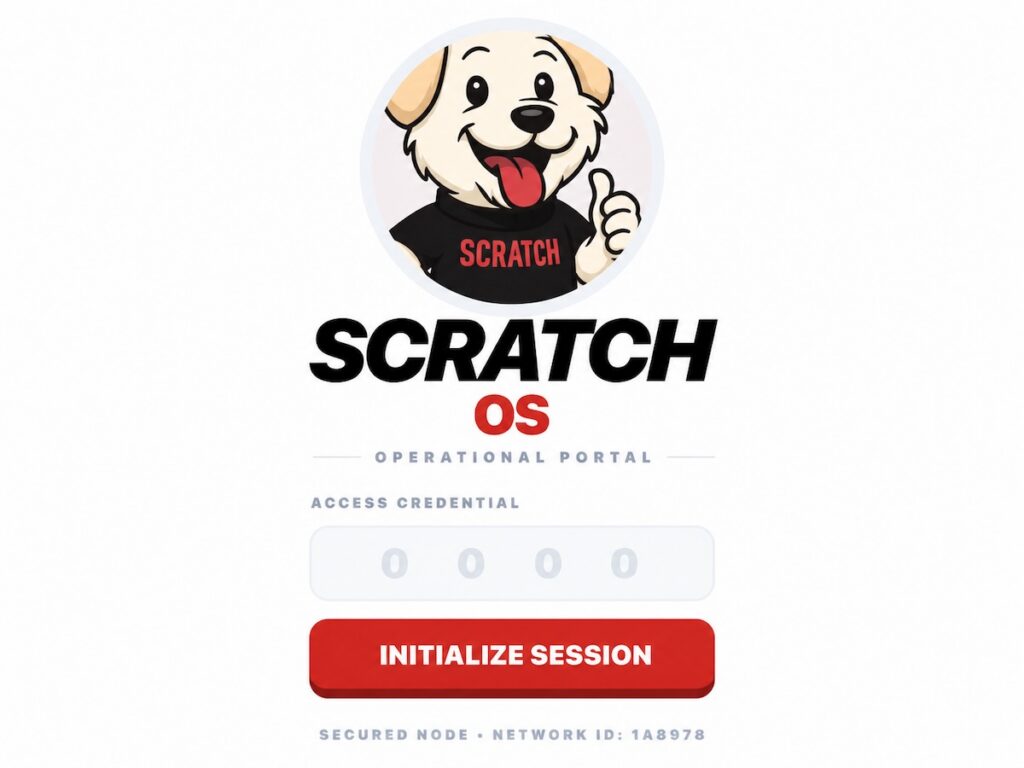
One unexpected feature inside Scratch OS became one of the most effective. “Max,” a training avatar inspired by my real dog, helps guide team members through modules and operational concepts throughout the system.
The original idea was simple: make training feel less sterile and more engaging. Oddly enough, team engagement improved significantly. People respond better when training feels approachable instead of corporate.
That lesson reinforced something important: Technology in restaurants should support people—not remove humanity from the experience.
Beyond Software
Scratch OS is only one part of a much larger operational vision. I believe the restaurant industry is heading toward:
- System-led operations
- Modular kitchen design
- Embedded operational intelligence
- Robotics-assisted production
- AI-supported forecasting and training
But none of those systems matter if they aren’t built around real operational understanding. Restaurants are living systems.
Training affects labor.
Labor affects throughput.
Throughput affects kitchen design.
Kitchen design affects consistency.
Consistency affects scalability.
Everything connects. That’s why operators have an advantage when building the future of restaurant systems—they understand where the friction actually lives.
The Future of Restaurant Operations
For decades, restaurants have depended on great managers to hold operations together manually. The future restaurant won’t rely on a single manager holding everything together manually. It will rely on systems that preserve standards, reinforce training, reduce operational drift and allow great leaders to operate at a higher level.
The next generation of restaurants will still need great leaders—but those leaders will be supported by systems that reduce chaos instead of creating it.
Restaurants won’t become less human. They’ll simply become more stable.
That’s the future Scratch OS was built for.
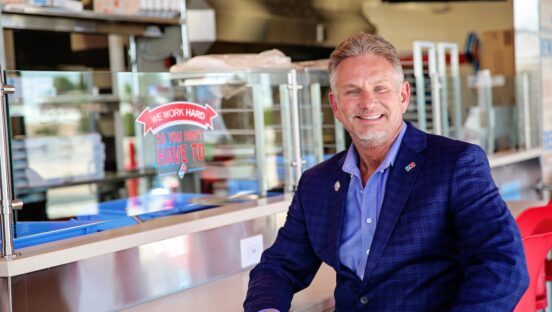
Steven Amlani is founder of Scratch Pizza, which is celebrating its 10th anniversary this year. Scratch Pizza has three locations in California: Norco, Riverside and Jurupa Valley.