
By Tracy Morin
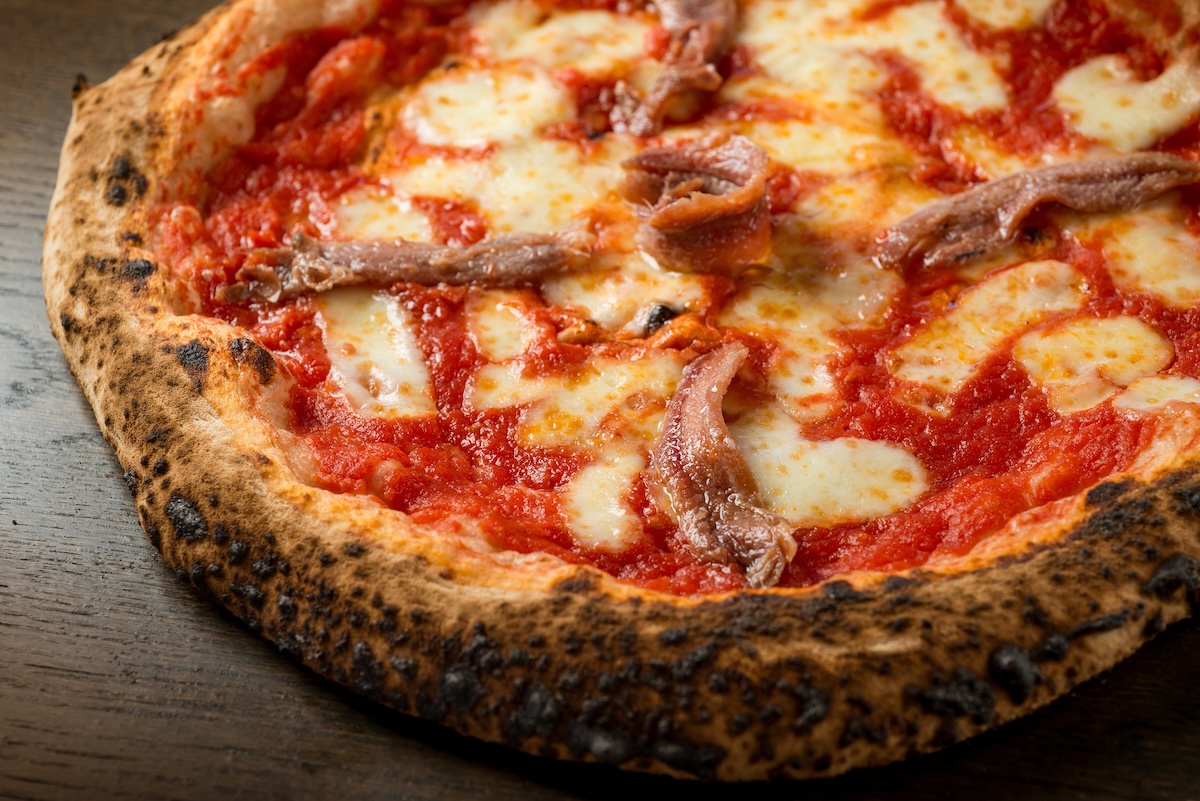
Once a must-have on pizzeria menus, anchovies now face a negative perception among much of the pizza ordering public. But that only means this classic ingredient is ripe for receiving a modern-day revamp. With umami richness, a long shelf life and versatile applications, anchovies may be your next secret-weapon ingredient for pizzas, pastas, salads and more. Here, three award-winning members of PMQ’s U.S. Pizza Team explain how.
David Jacobson, owner, Cheezy’s Artisan Pizza, San Francisco, CA
In our Caesar salad, we use anchovies in the dressing like everyone, but we use white anchovies as a garnish, too. For events with the catering arm of our business, we also wrap them around stuffed olives, tapas-style.
I’m especially a fan of Spanish boquerones. They offer a completely different sensory experience than the old-school oil-packed anchovy—the pickling process changes the protein structure, reduces harsh salinity, and creates a bright, acid-forward flavor profile. Pickled and brined flavors are having a major moment right now, and boquerones fit perfectly.
Anchovies also align with the premium tinned fish trend. When I developed the pizza program at Acre Kitchen & Bar in Oakland, one of the most popular orders was a curated selection of high-quality tinned fish served with housemade focaccia. Diners treated it like a premium experience. When anchovies are framed in that same conservas context—thoughtful sourcing, Spanish provenance, clean flavor—they stop being a polarizing topping and start being a luxury ingredient.
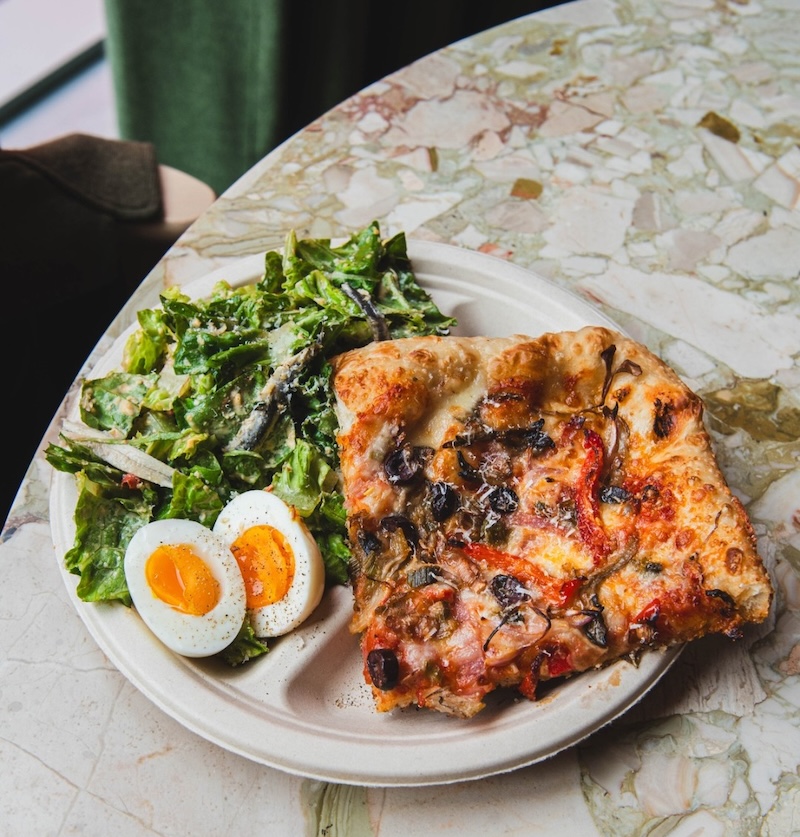
From a culinary science standpoint, anchovies are one of the most efficient umami delivery systems we have. When you emulsify them into something like bagna cauda, you’re dispersing glutamates throughout the sauce, which amplifies savory depth without requiring the guest to commit to a whole fillet. It’s a way to use anchovies as functional flavor rather than a visual topping.
Anchovies pair best with ingredients that either complement their umami structure or help balance their salinity. Anything acid-forward works beautifully—lemon, vinegar, pickled peppers, capers—because acid sharpens the anchovy’s brightness. Aromatics like garlic, shallots and caramelized onions are natural partners, because the Maillard reaction reinforces anchovy umami. Tomatoes, mushrooms and Parmesan are also ideal, because they’re glutamate-rich, so you get a layered savory profile instead of a single salty note.
For diners who do love the full salty canned-anchovy experience, I lean into it with a puttanesca-style pizza—garlic, tomato, anchovy, red peppers, oregano and a lot of olive oil. It’s a great example of how anchovies interact with acid, fat and aromatics to create a cohesive flavor system.
Honestly, anchovies are a polarizing ingredient. People are either pro-fish or anti-fish on pizza. You can’t persuade someone to like them—you can only create genuine excitement and give customers a way to experience anchovy flavor in a controlled, modern format. On the operational side, they’re incredibly practical. You can buy a few kilos, keep them for a long time, and use them across multiple applications without worrying about waste.
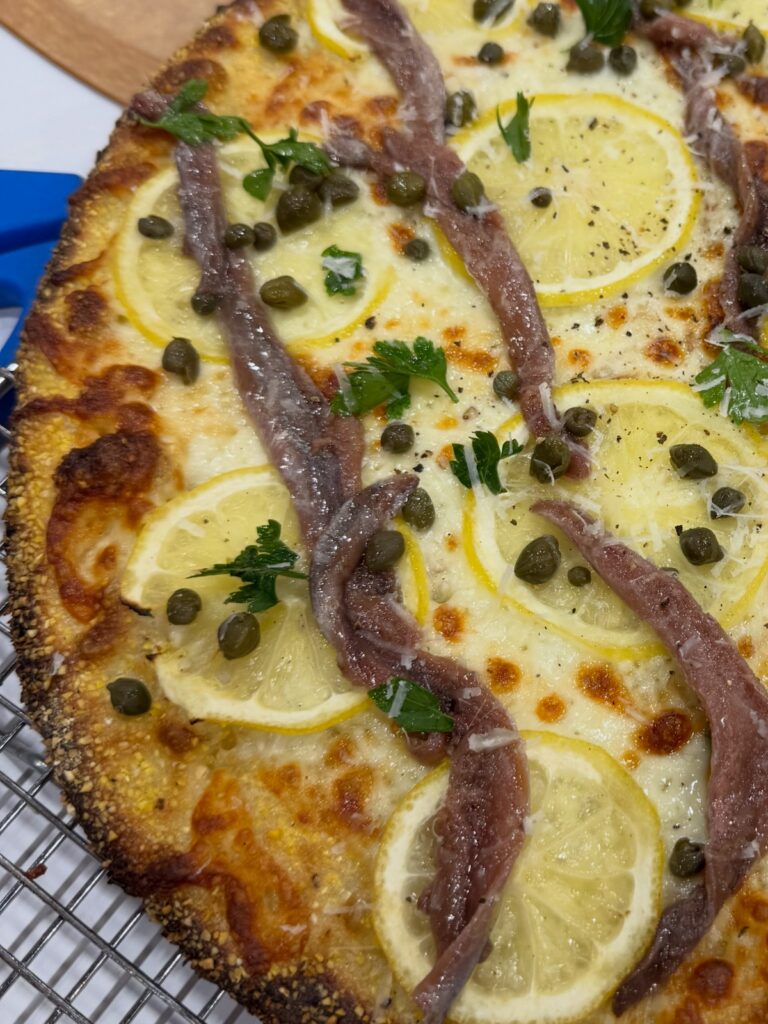
David Solum, general manager, Logan + Woodward, Watertown, SD
I competed [at an event] last year with a pizza that had anchovies, with a champagne cream sauce, lemon, capers, parsley and black pepper. For the most part, we don’t offer specific pizzas featuring anchovies at the shop, but I have suggested them as an upsell. By conversing with our customers, I can feel them out and figure out if anchovies would be something they would be interested in trying.
I keep about five cans on hand at any given time, just in case. Personally, I like them on pizza because of the added depth, umami and saltiness they add. A few customers come to us specifically because they know we carry anchovies. I’ve added them to red-sauce pies as well as white-sauce pizzas. The toppings we pair them with are widely varied, so I feel that those little fish can be very versatile, if people are into them.
Still, most people are hesitant to try anchovies on pizza. While working on my competition pizza that featured anchovies, I found that most people had not ever tried them. Luckily for me, my staff and other guinea pigs were open to trying—and often learned that they liked them!
Salvatore Trupiano, CEO, Mangia e Bevi, Oceanside, CA
Growing up Italian, I learned early how incredibly versatile anchovies can be. The key is to stop thinking of them only as whole fillets placed on top of a pizza. They can be blended into butter, sauces, dressings or spreads, where they melt into the dish and create a deep, savory flavor without overwhelming it.
One of our most popular dishes is angel hair pasta served with an anchovy-butter sauce. It is amazing. We also have some fun with our salad presentation—we garnish our salad plate with anchovies as a playful nod to the fact that many people do not even realize anchovies are a classic ingredient in Caesar dressing.
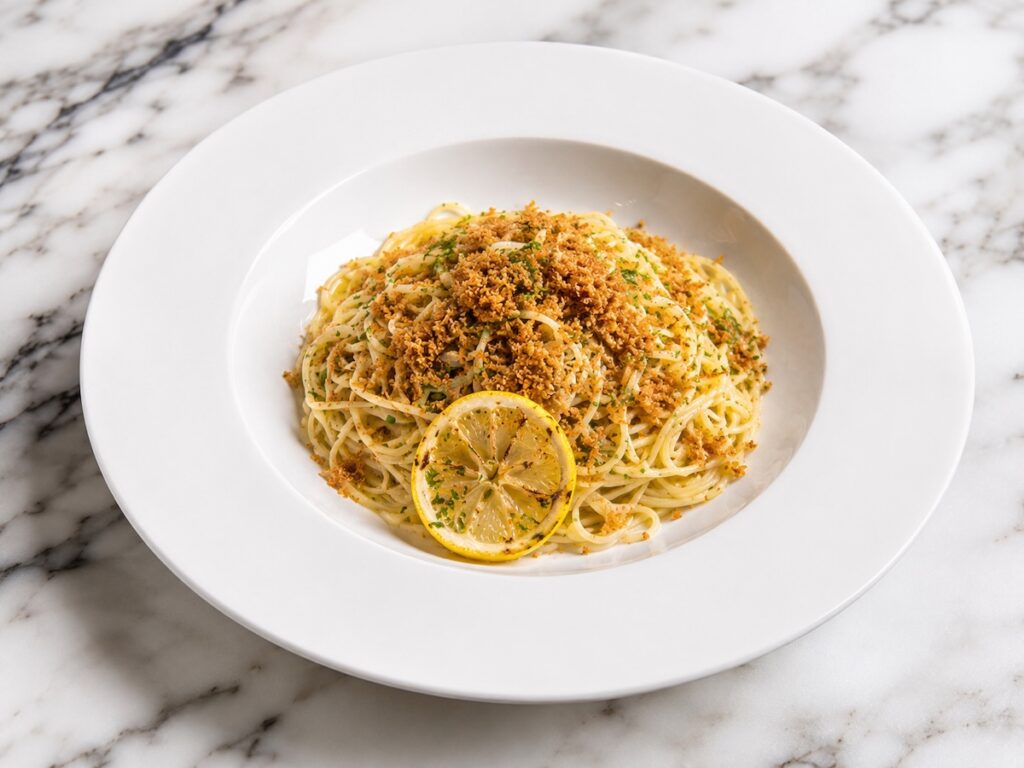
We also prepare puttanesca, a beautiful combination of garlic, olive oil, tomato sauce, capers, olives and anchovies. On the pizza side, anchovies appear on our quattro stagioni, or “four seasons,” pizza. They can be incorporated into tomato sauce, paired with vegetables or used sparingly as a finishing ingredient.
Anchovies are a wonderful way to add umami, saltiness and complexity. When used properly, they melt into sauces and enrich the other ingredients rather than making the entire dish taste fishy. Depending on how they are prepared, they can provide either a delicate, meaty texture or virtually disappear into a sauce while leaving behind tremendous depth of flavor.
They also offer nutritional benefits, including protein, omega-3 fatty acids, vitamin B12 and minerals such as selenium. Because cured anchovies can be high in sodium, however, the chef needs to balance the seasoning throughout the rest of the dish.
Anchovies work beautifully with garlic, olive oil, butter, tomatoes, capers, olives, lemon, fresh herbs, chili peppers and many vegetables. They are especially good with bold Mediterranean flavors. Their salinity also benefits from something bright or acidic, such as lemon or tomato, and something rich, such as butter or olive oil.
We use two different styles of anchovies. One is packed in olive oil and has a fresher appearance, with the skin visible on one side and the meat on the other. We also use the classic cured anchovy fillets packed with salt and olive oil. They have different intensities and should be treated differently in cooking.
True, many customers’ first reaction to anchovies is, “Ick!” They imagine an intensely fishy whole anchovy sitting on top of a pizza. In many cases, however, they have already enjoyed anchovies without realizing it—in Caesar dressing, puttanesca or another savory sauce. The challenge is usually perception rather than flavor. When anchovies are used with restraint and proper technique, they become a seasoning that enhances the entire dish.
Our anchovy dishes sell very well. The most important thing is knowing how to cook with them. Anchovies should be balanced with the other ingredients rather than added without thought. For modern-day diners, I recommend introducing anchovies in approachable preparations such as anchovy butter, a blended sauce or a small amount paired with familiar ingredients. Menu descriptions should emphasize words such as “savory,” “umami-rich” or “Mediterranean” instead of focusing only on fishiness. Once guests taste anchovies prepared correctly, they are often pleasantly surprised.
Tracy Morin is PMQ’s associate editor.