
By Brian Hernandez
I spend a lot of time studying and looking at pizzas. Between competitions, pizzeria visits and conversations with operators, I get to see what people are doing with dough all over the country. Lately, I’ve been encouraged by how seriously more pizza makers are taking the foundation of the pizza: the dough, the fermentation and, of course, the flour.
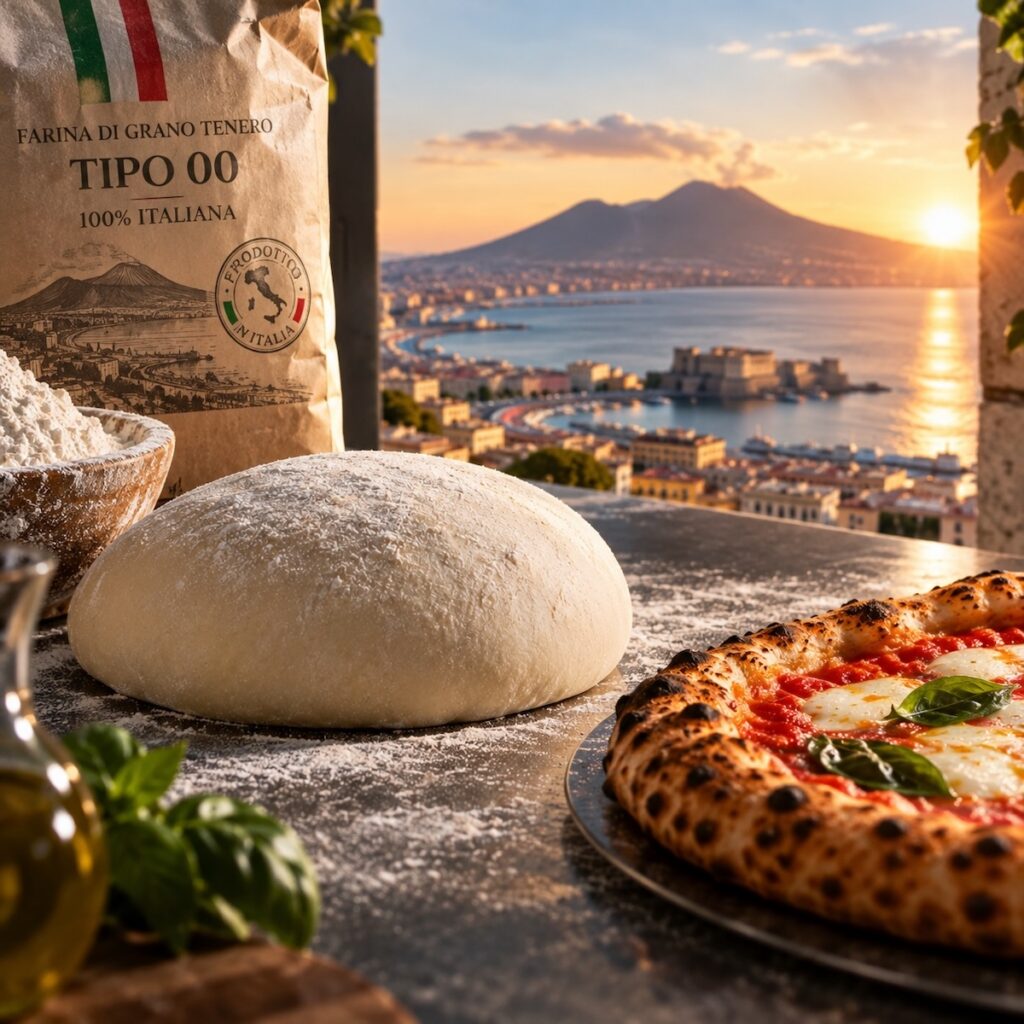
So when I saw the latest numbers from Italy, I thought, OK, this is pretty cool. According to a September 22 release from ITALMOPA, the Italian milling industry association, Italian soft wheat flour exports reached 202,654 metric tonnes during the first half of 2026, up 14.83% from the same period in 2025. Shipments to the United States jumped 38.42%, making America the leading destination for Italian soft wheat flour ahead of France, Germany and Spain. Total exports are on pace to reach 400,000 tonnes by the end of the year. Go USA!
Now, that doesn’t mean 38.42% more Italian flour is going into American pizza ovens. The report doesn’t tell us that. Flour goes to bakeries, pastry shops, food manufacturers, restaurants, home kitchens and plenty of other places. It doesn’t tell us why individual buyers chose Italian-milled flour, either. But it does put a pretty interesting number behind something I’ve been seeing for years.
Look at the pizzas coming through competitions. Look at what’s happening in independent pizzerias around the country. More pizza makers are paying attention to fermentation, hydration, flour specifications and how small changes affect the finished dough. They’re not just following a recipe and hoping for the best. They’re learning the ingredients.
Vitangelo Recchia is a great example. The owner of Bella Napoli Pizzeria & Restaurant in Port Charlotte, Florida, Recchia is also the U.S. Pizza Team’s culinary coach and an instructor at Pizza University & Culinary Arts Center. In his guide to Roman-style pizza, he identifies Molino Casillo Tipo 1 as the flour he uses in production and says, “Every morning at Bella Napoli, every class at Pizza University, every competition I prepare for, starts with the flour.”
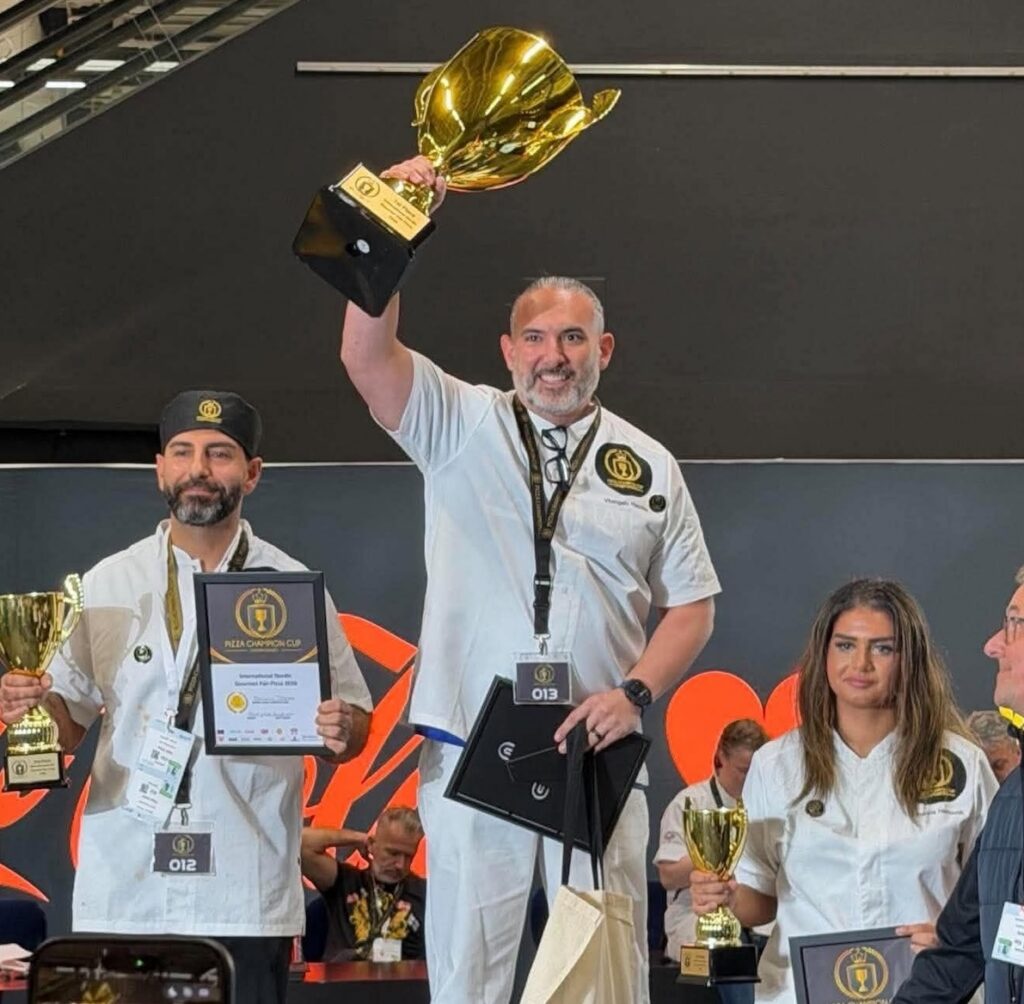
That’s a pretty good indication of how seriously he takes the ingredient. And Recchia’s approach goes beyond simply choosing a flour. Being a multiple-time world champion, including his mostrecent first-place win in the Teglia division at the Pizza Champion Cup in Sweden this September, Recchia (pictured below) has a lot of experience dealing with high-pressure situations.
“A recipe tells you what to do,” Recchia says. “Understanding tells you what to do when the recipe stops working. The dough doesn’t know what your recipe says the weather is supposed to be doing. Temperature changes. Humidity changes. Flour changes. You have to understand what you’re looking at.”
Anthony Mangieri takes that obsession even further. In a September 2025 SFGATE interview, the founder of Una Pizza Napoletana talked about continually changing his flour blend and experimenting with multiple Italian flours during his years in San Francisco. His comment made me laugh because it sounds familiar to anyone who has ever gotten a little too deep into dough: “I change the flour blend every single day, and I need to stop.” I guess recognizing you have a problem is the first step. But is it even a problem?
Dan Richer put that mentality into words in a previous PMQ interview about why “Cheaping Out on Ingredients Is the Wrong Way to Control Food Costs”: “There’s always more to learn,” he said. “There’s always more progress to be made as long as you stay interested in it.”
That’s what I see happening. The flour isn’t magic, and Italian flour isn’t automatically better simply because it came from Italy. A great ingredient still needs somebody who understands how to use it.
There’s also an important distinction in the phrase “Italian flour.” ITALMOPA’s release discusses wheat being selected regardless of its country of origin, so flour milled in Italy doesn’tnecessarily mean the wheat itself was grown there. Part of the expertise is in how millers select, blend and process that grain for different applications.
And American pizza makers aren’t simply copying Italy. We’re taking techniques, ingredients and ideas from around the world and putting them into our own ovens, doughs andpizza businesses. And slowly but surely, those little additions contribute to the fabric of regional traditions. Not usurped. Incorporated. That’s how food evolves. It’s how pizza takes that nextstep, sheds its corporeal limitations and ascends into something greater: unbounded, omnipresent pizza and everywhere you want to be.
Of course, a pizzeria can’t buy the most expensive flour available and just call it a day. The dough has to be workable, the pizza has to be consistent, and the numbers have to make sense.Customers aren’t necessarily going to care about your flour’s protein percentage, but they will care whether the pizza is good. If you’re going to invest in a different flour because you believe it can make your pizza better, you should also understand how to get the most out of it.
That might mean taking a class, spending time at a place like the North American Pizza & Culinary Academy or the Pizza University & Culinary Arts Center and learning from one of their seasoned master instructors, like Vito Recchia. The more pizza makers understand their flour and their dough, the better they can use those ingredients to produce the pizza they want, consistently and profitably.
The ITALMOPA numbers don’t measure how many batches it took to get a crust right or how many pizza makers are staying up too late thinking about their dough. They do give us another data point alongside what I’ve been watching from competition tables to pizzeria kitchens. American pizza makers are demanding more Italian flour, and I’m happy to see it because it reflects a pizza community taking the craft seriously, learning more about its ingredients and continuing to push itself. Honestly, that gives me hope for American pizza.
By Brian Hernadnez, PMQ Assoc. Editor, U.S. Pizza Team Dir.