
By Tracy Morin
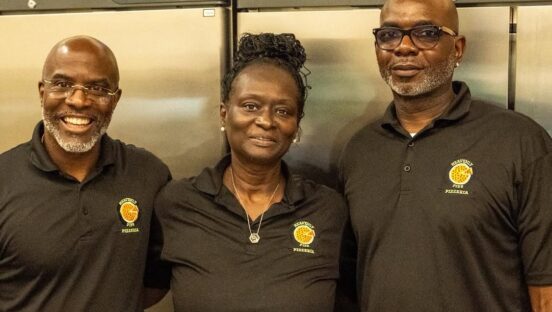
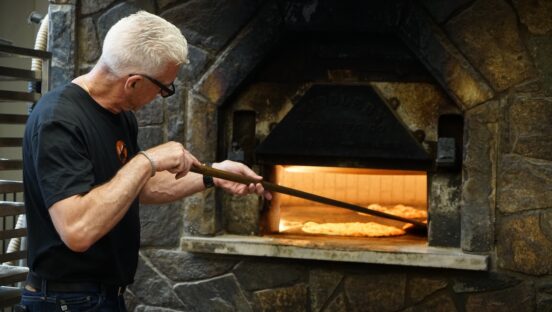
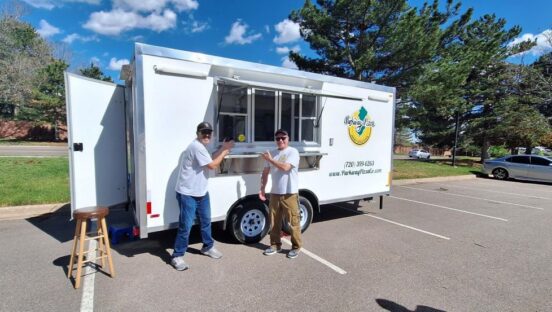
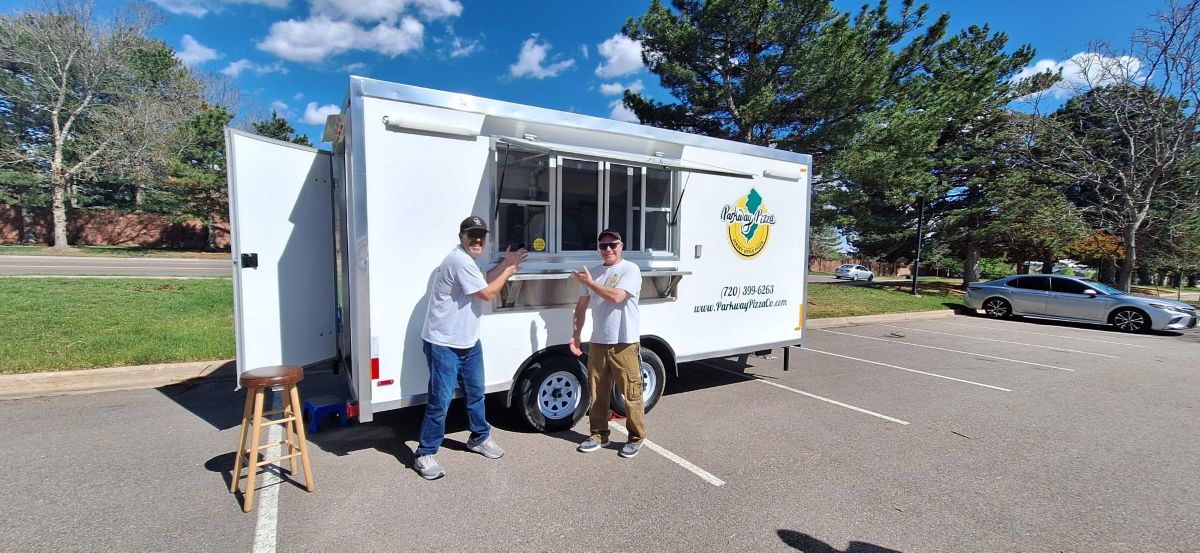
John Schultz and Ron Hurley, partners/owners of Parkway Pizza, aren’t unique for wanting to serve up the pizza they grew up eating as kids in New Jersey. The twist is that they’re serving those Jersey-style pies a long way from home—Littleton, Colorado—and from a roaming mobile operation to boot.
“We have known each other since fifth grade and have been friends ever since,” Hurley explains. “We ended up working in the same pizzeria, called Aljon’s (they are still in business!), through high school and college on breaks. We had great memories and times over the years, and we learned how to master the craft of our recipe, which is how we do it here now in Colorado. We never stopped making dough and making pizzas for our families.”
The lifelong friends were up for the challenge of opening their own pizzeria after they relocated West—Hurley in 1997, Schultz in 2000—but have endured many challenges along the way. They currently serve eight locations, at different breweries in the area, and have found a sweet spot of success while serving customers who may or may not know what a Jersey pizza even entails.
Fortunately, their past work experience provided crucial skills. Hurley has a background in video, while Schultz worked as general manager for a pay-per-view company before pizza punched his ticket out of corporate America. The two friends recently chatted with PMQ about their humble beginnings, what they’ve learned about the mobile business, and how they make technology—including video and AI—work for them to build priceless buzz for their pizzeria.
PMQ: Do any lessons from those early days working in a pizzeria together still influence how Parkway Pizza operates today? And what lessons have you learned in this process of having your own mobile operation?
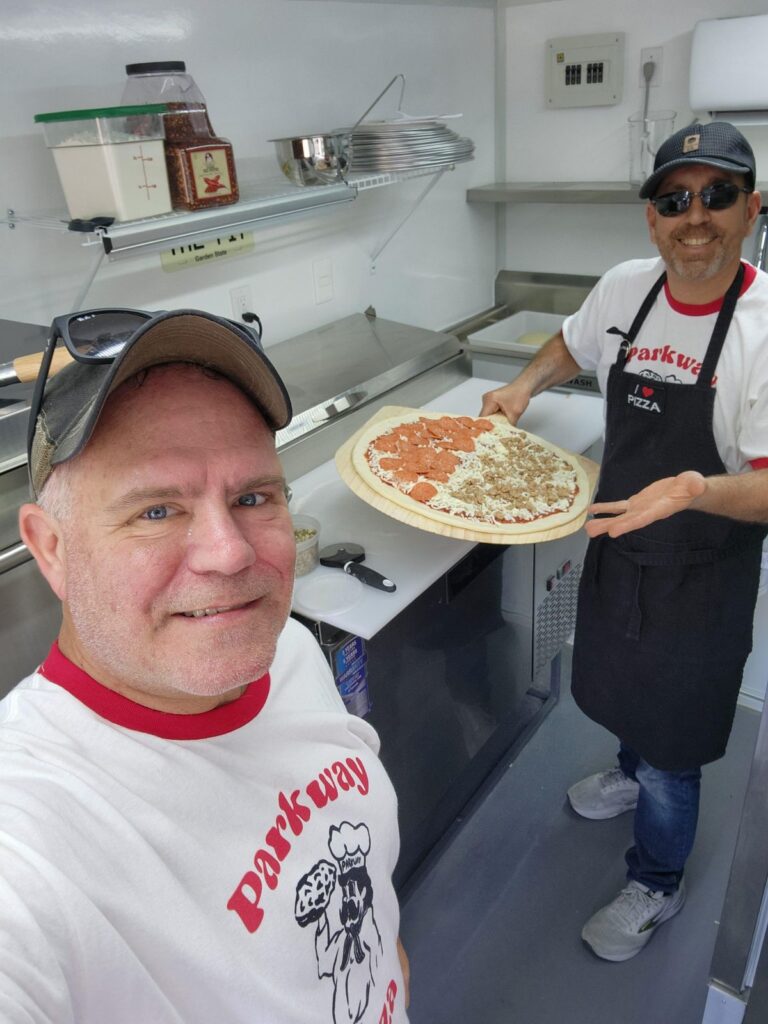
Hurley: We are using a lot of how we did things back then. For instance, when we take someone’s order, we just use pieces of cut-up printer paper and pens. We find this easier than all the technology, but, more importantly, it’s part of our schtick—to make it more personal, like a New Jersey pizza joint. We also make our own dough, pretty much how we made it back then—just making some adjustments for the higher altitude here in Colorado. Everything is still more or less the same, just in a different state!
We would tell someone new to launching a pizza truck: Have a great theme that draws them in. Make it yours and, most importantly, have fun with it. Always contact local breweries and events around your town and try out different locations. Some are great for business, and some are not. We keep a log as to which ones are busier than others, which helps us now determine how much product we need to have on board when we go. That just takes time [to assess].
PMQ: How did your New Jersey background inspire the menu and concept?
Hurley: We named a few things on our menu with New Jersey references. In New Jersey, there is a common saying about going down to the shore (the beach), so we have the Meat Me at the Shore pizza, which is an all-meat pizza.
We also have the Jughandle, which is an all-veggie pizza, named after the way you must make a left-hand turn while driving in New Jersey. Instead of simply turning left at a traffic light, you must make a right-hand exit and navigate through a jug handle, a loop, in order to make that left. When people ask us, “What is a jug handle?” we describe it to them and jokingly say, “A jug handle—stupid, just like a veggie pizza!” and they laugh so hard, because they are in on the joke.
PMQ: How do people so far from home, in Colorado, respond to the Jersey theme?
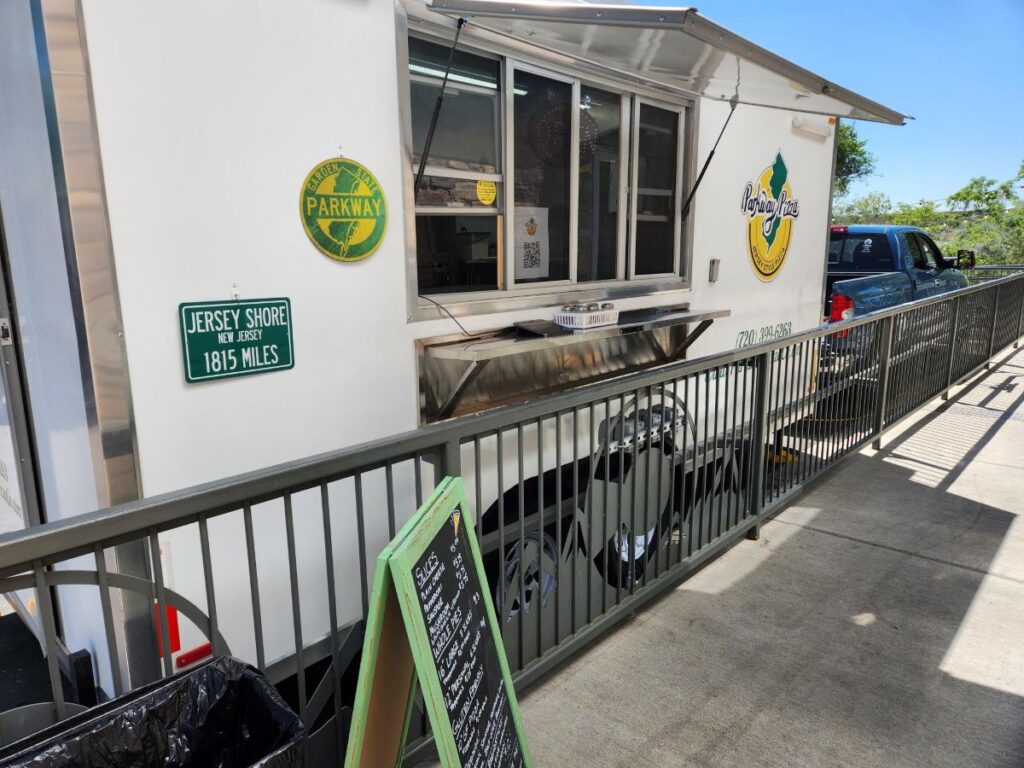
Schultz: So far, our customers love the New Jersey theme—but, even more so, our pizza. Most say they have not tasted anything like it in Colorado. A lot of fellow New Jersey people seek us out and jump in front of our window and shout, “What exit!” and we all erupt into laughter, as this is a common New Jersey reference—what exit on the main toll road in New Jersey where someone lives. We talk about the towns we lived in and how long we’ve been here, and we just have a great time. Customers also love the New Jersey-themed license plates and decor we hang on our trailer.
We don’t seek compliments, but we do ask for feedback. We truly appreciate it when a customer makes the effort to come back to us after they’ve eaten to thank us and ask how they can follow us.
In our opinion, what makes a good Jersey pizza is to just keep it basic—flavorful, but not too fancy. We don’t do artisan pizzas; we offer “Jersey style” with toppings that we used in our youth and that work well on an East Coast-style pizza: pepperoni, ground sausage, peppers, onions, mushrooms, black olives. We also offer a garlic white pizza, which people go through the roof for. We make an olive oil and garlic-based sauce, then add splats of ricotta on each slice. A lot of our customers claim they never had it until they found us!
People ask us if we will open a brick-and-mortar restaurant and, oh, do I have ideas for that—completely New Jersey-themed, with Sopranos posters, Bon Jovi, The Boss everywhere. But that is down the road.
PMQ: You also use a lot of videos in your marketing. Tell us about that.
Hurley: I currently work as a media producer/videographer for a local production company and use my creative background to create fun videos to promote the business. We created a series of videos showing the progress of Parkway Pizza, called Making Boxes, which is on YouTube and can be found on our website.
I do work like this every day at my job, so I brought those skills to Parkway Pizza. I have the GoPros, cameras, drones, lighting and everything we need—so why not have fun? I have also live-streamed the trailer for a few hours at a time for Facebook, so people can see the inner workings of making pizza live. That’s proven to be fun and well-received.
PMQ: How has storytelling and content creation helped build your brand and connect with customers? And, for operators who aren’t yet using video, how can they make better content?
Schultz: We came up with the Making Boxes series based off something we would playfully say to one another on birthdays over the years: “Happy birthday…make boxes!” This is in reference to folding pizza boxes—what our managers, back in the day, would tell us to do if we were standing around—so I thought that would be a fun name for a series.
Ron loves filmmaking, so he brings his cameras on-site and captures what I can do to tell the story [of our business], from our first talks to finding the trailer. We regret not filming the day we got the inspection, because that would have been fun and very helpful for other aspiring food truckers: shots of us running through the hardware store, having a plan in place, then executing it to pass.
Always try to capture something as you’re building up to the opening day. For your readers, even just on your phone, try to capture the startup process, because you can post it on social media in a fun way and let people know what’s coming, like a movie trailer. It creates buzz and excitement. Keep it short to hold viewers’ attention spans, but you could also make it a series.
PMQ: How else do you promote your business to customers?
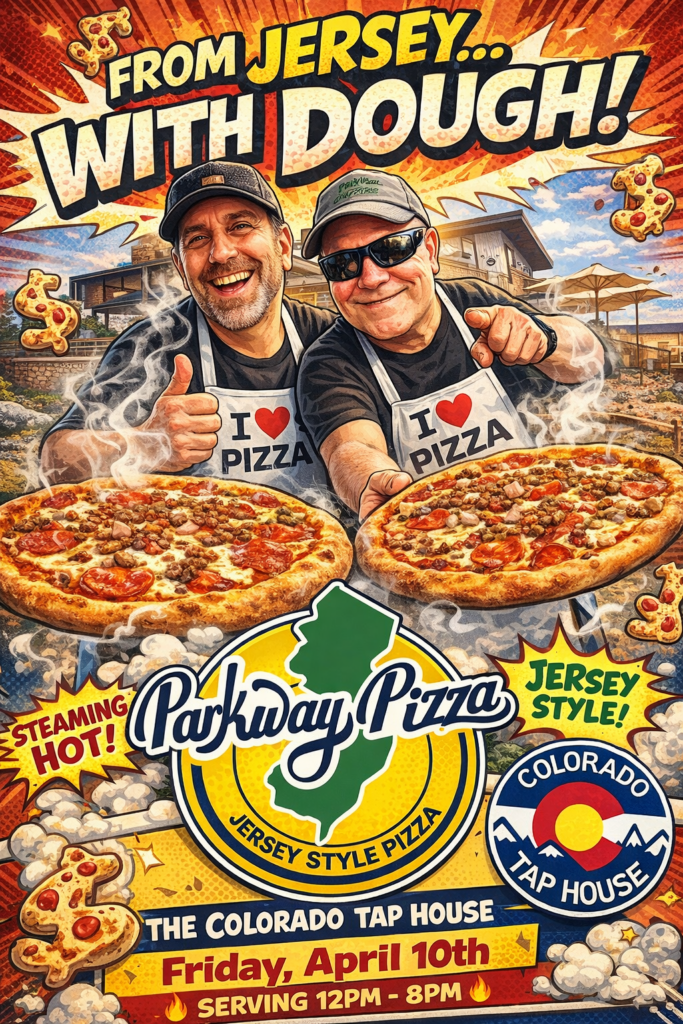
Schultz: We found that ChatGPT is a very good resource for creating fun banners to post that look like they were created by a professional graphic artist. We just upload our logo, perhaps photos of us, and tell it what we’re looking for and the location where we will be. Then I post on Instagram and Facebook, tag the brewery, and they repost it. I also have done the live streaming idea, where we stream live from the Colorado Tap House, and lo and behold, people see it and come! Also, having a graphic of the “YO, What Exit!!!” saying on the back door of our business and our website doesn’t hurt.
PMQ: What are some realities of running a mobile pizzeria that you’ve faced?
Schultz: There’s always going to be a hidden cost you didn’t think of—mostly from the state and town you operate in. All of them have different rules or permits, and you must obtain a business license or permit from each town you want to operate in before you roll out. Inspections cost more than I would think for the little sticker in the window!
We had our business all financed and built, then the last step was taking it to get inspected. We failed the first time because of a small oversight: Make sure areas/spaces between your equipment and counters are nicely covered so no food debris can fall between the equipment, which would make it difficult to clean later. The inspector gave us an hour to fix this, which allowed us to run to the local hardware store and quickly create something to fill those gaps. And we passed!
Make sure your water heater always works at the proper temperature; it can’t be intermittent, or you will fail. It needs to be a steady 100º to 110º and able to fill up half your sink. We also learned that if your hot water fails (or freezes during cold winter days) while you are serving, you must shut down. So choosing the correct system is a must.
Finally, make sure you use straps on your refrigerators and freezers so that when you’re mobile, the doors don’t open, or you’ll have the nice surprise of pizza sauce and product everywhere on the floor when you get to where you are going. Lesson learned: The doors don’t stay closed—you have to secure them!
PMQ: Is there any other advice you would share about running a mobile business?
Hurley: If you’re looking to start a pizza truck or trailer, I would say go for it. Just have a good theme to stand out and have a good recipe. A lot of people have different likes, so be flexible with your menu. Let them decide what they want on it, and don’t make a cookie-cutter menu.
We have this one venue, a brewery that is all gluten-free, so that is all we serve when we’re there. The day before we roll out, we clean the interior top to bottom to get out any flour that may have been floating around. That means cleaning walls, ceiling, oven, surfaces, floor—but it’s also a great way to keep the trailer in perfect condition and clean. We are very careful at this venue, and we also offer meatball Parmesan subs and breadsticks, all gluten-free! They love us there and keep bringing us back, so that’s a start. Offer gluten-free, dairy-free and vegan options, would be my final piece of advice—either by making the dough yourself or finding a vendor. You’ll be surprised. It’s well worth it.