

By Brian Hernandez
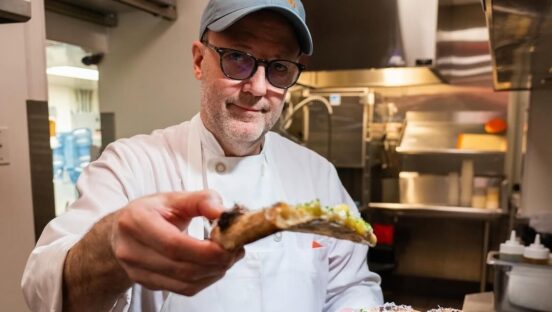
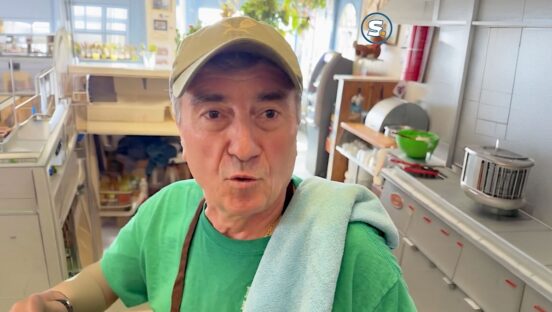
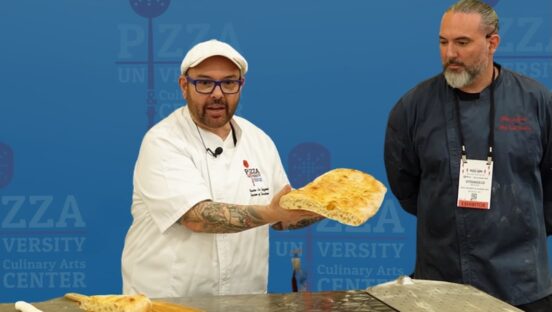
Roman pizza isn’t a passing trend. It’s reshaping how serious operators approach dough, fermentation, efficiency and menu planning. That’s why Master Instructor Chef Vitangelo Recchia, owner of Bella Napoli Pizzeria and Restaurant in Port Charlotte, Florida, is teaming up with Chef Leo Spizzirri, Pizza University’s director of education, for a Roman Style Masterclass at the Pizza University & Culinary Arts Center. The three-day class will be offered January 26-28 in Beltsville, Maryland, for a fee of $2,100.
Both chefs are known for elevating how students understand dough, workflow and consistency. Recchia, who also serves as the culinary coach of PMQ’s U.S. Pizza Team, puts it plainly: “I’ve been blessed to learn from some of the best—Michelin-level chefs, world champions, mentors who never let me settle—and now it’s my responsibility to give that back.”
Meanwhile, Spizzirri’s technical expertise and real-world teaching experience reinforce that same philosophy. Under their instruction, the class will become a focused dive into intentional, professional pizza-making—a direct, practical path for operators looking to strengthen their skills or build something new.
Click here to sign up for the class.
The Roman Mindset
Roman style demands awareness. It teaches precision and discipline in a way few other formats do, grounding the class in Recchia’s own training. “Michelin training teaches precision and respect for ingredients,” he says. “Competition teaches humility, consistency and how to perform under pressure.”
These aren’t abstract values—they guide every fermentation choice, hydration shift and bake curve that students learn.
Roman dough is honest; it exposes every rushed step and every overlooked detail. That honesty becomes the most effective instructor in the room. “Most people try to copy ‘Italian’ instead of understanding it,” Recchia says. “They chase a look instead of a process.”
The class will address that immediately, pushing students to understand dough behavior rather than mimic aesthetics. By the first bake, operators will already be reading fermentation signals and dough maturity with new clarity.
Tradition and Innovation
The Roman style sharpens instincts, encourages observation and teaches pizzaioli to recognize the physical language of a healthy dough. Those skills transfer across every pizza they make. Learning Roman style isn’t just about mastering a format—it’s about developing the mindset of a consistent, adaptable professional.
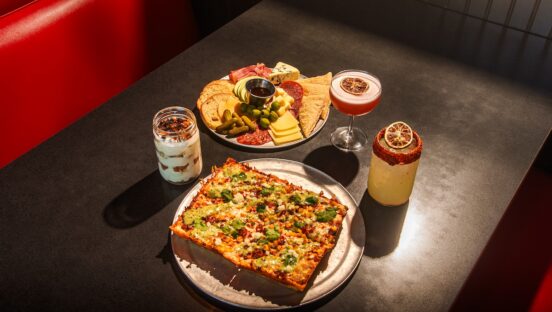
What makes Roman pizza so timely is how naturally it fits into modern operations. It works in fast-casual restaurants, artisan programs, ghost kitchens, slice shops and full-service dining.
In fact, Recchia and Spizzirri will show how Roman pizza’s traditional techniques adapt beautifully when paired with modern techniques like advanced fermentation methods, blended flours and targeted hydration levels. “I respect tradition like it’s family, but I’m not afraid to push,” Recchia says, and the curriculum reflects that balance.
Students also move well beyond dough, digging into menu flow, topping logic, efficiency planning and overall business strategy. “Anyone can make a good pizza once,” Recchia notes. “I teach you how to build a menu and a business that can do it every day.”
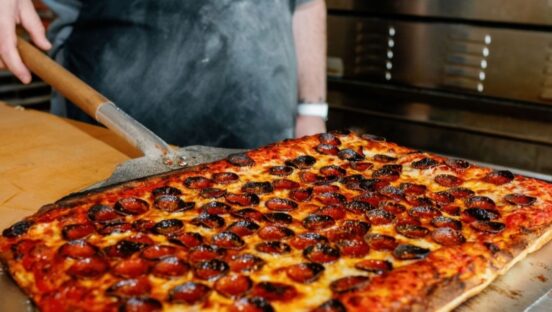
“Quality doesn’t change,” he adds. “How you present it does.” That principle guides how every style is adapted for different markets. With formats like Teglia, Pala, Tonda, NY-influenced hybrids and high-hydration variations on the table, the class will show operators how to choose the style that truly fits their ovens, staff and customer base—eliminating guesswork and ensuring their Roman-style program is built with intention, not imitation.
Technique and Mastery
The heart of this class will be hands-on skill-building. Students will learn enzyme activity, protein strength, hydration curves, fermentation behavior and W indexing. But they learn it by touching dough, shaping it, folding it and baking it. “You learn with your head, but mastery comes through your hands,” Recchia notes.
Under Recchia and Spizzirri’s guidance, students will learn how to read dough behavior, adjust on the fly, and make informed decisions on time, temperature and handling. These skills translate across every pizza style, and because the chefs train students on multiple oven types, operators will leave with techniques they can use in any kitchen. The result is a deeper skillset, a clearer perspective and the confidence to integrate Roman style with consistency.
Brian Hernandez is PMQ’s associate editor and coordinator of the U.S. Pizza Team.