By Rick Hynum
It was almost certainly Domino’s wildest promotion in decades: The world’s No. 1 pizza chain sent customers to lunchtime rivals like McDonald’s and Burger King in a clever bid to generate buzz for its new personal-size specialty pie, the Domino.
And it seemingly worked even better than Domino’s expected. Almost as quickly as the deal launched, it disappeared under a crush of demand.
In a word, it was spectacular.
NOW is the time to renew your FREE subscription to PMQ Pizza Magazine. Click here and never miss a single print issue!
At the end of August, Domino’s announced that it would give away $1 million worth of free Domino pizzas between August 31 and September 30—or until supplies ran out. But to qualify, customers first had to buy a Big Mac, Whopper or certain other iconic fast-food items and upload the receipt to the IsTheDominoWorthy.com website. Domino’s would then email the customer a coupon code for one free Domino.
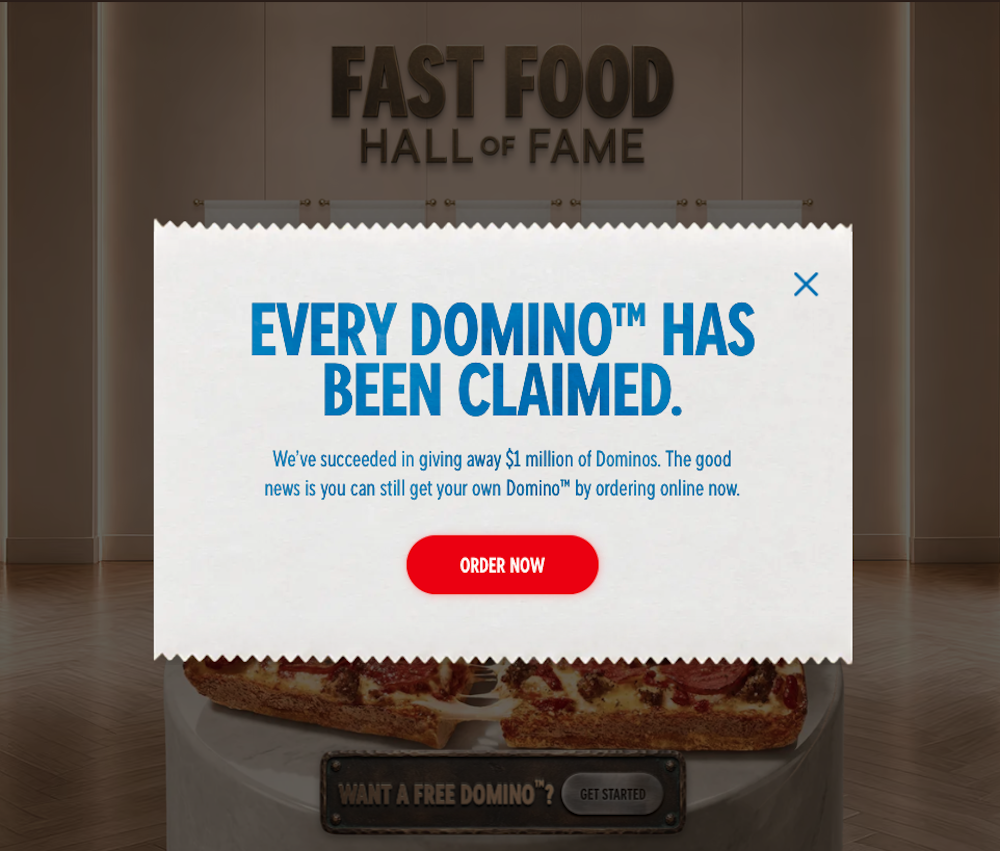
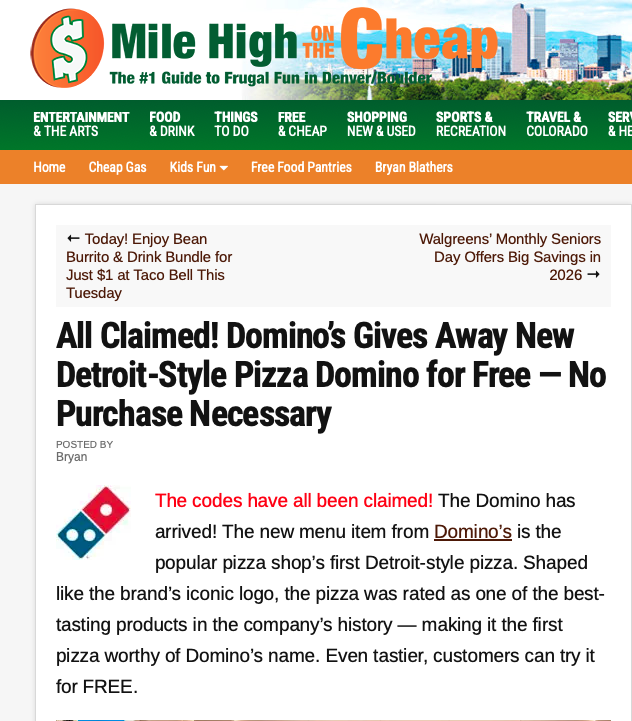
That website now reports, “Every Domino Has Been Claimed.” In fact, bargain-hunting sites like Jamie’s Daily Deals and Mile High on the Cheap pronounced it a dead deal in updates just one day after the promotion launched.
In other words, although the offer was scheduled to run as late as September 30, every free Domino had been claimed by the following morning.
Danielle Bulger, Domino’s public relations manager for external communications, confirmed the overnight sellout in an email to PMQ today. The offer created “tremendous excitement,” she said. “The response was so overwhelming that all available free coupon codes were claimed within 24 hours. If there was any question about the Domino’s status before, we think customers have delivered a pretty clear verdict: the Domino may just have earned its place in the fast-food hall of fame!
Talk about an audacious sampling ploy.
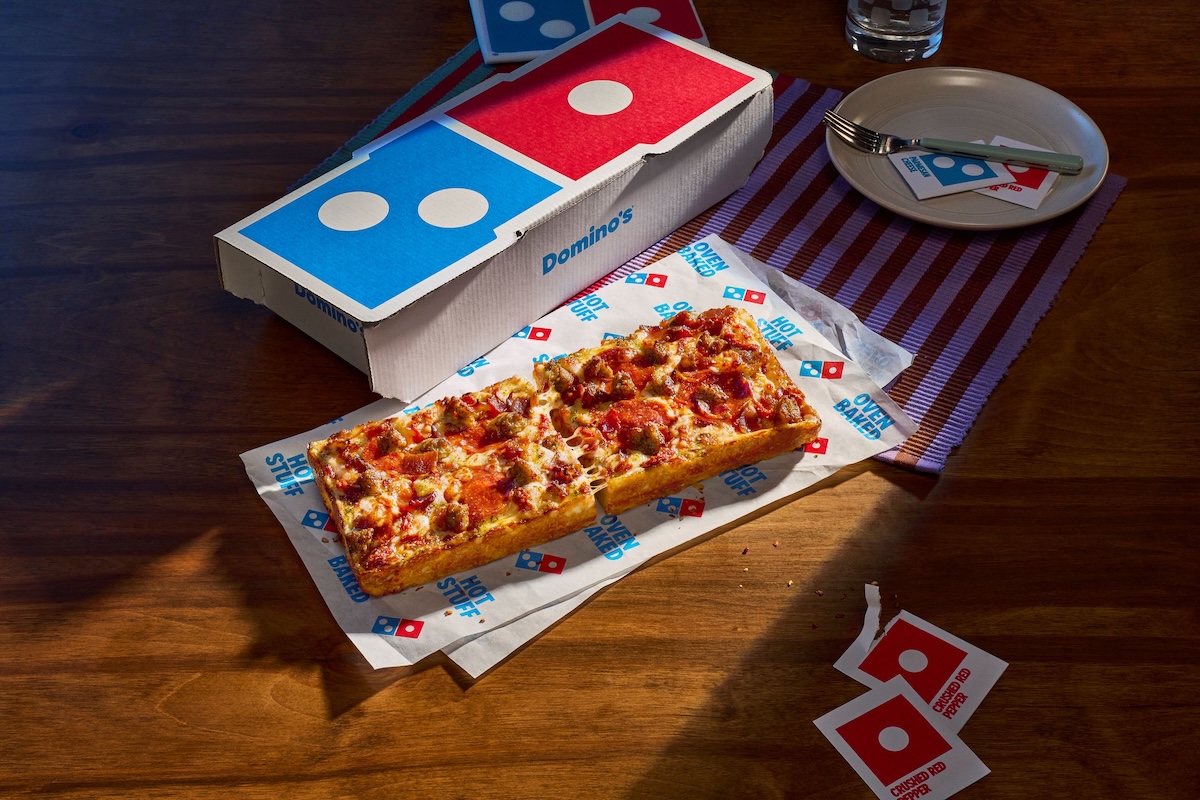
The Domino is the chain’s first menu item created specifically for solo diners: a rectangular, Detroit-style pizza made with Parmesan-encrusted pan dough, two layers of cheese, the customer’s choice of sauce and up to three toppings. Cut into two large pieces, it even resembles the company’s familiar domino-shaped logo.
Ever confident in both its product and its marketing savvy, Domino’s deliberately benchmarked the new pizza against iconic fast-food products rather than pizzas from, say, fast-casual competitors like Blaze Pizza.
The purpose is clear: Domino’s wants to compete more effectively for solo lunch and dinner occasions, when a Whopper, Chipotle burrito or Chick-fil-A sandwich has traditionally been the go-to choice.
“We think [the Domino] has what it takes to become an iconic menu item, and we want customers to try and decide for themselves,” Kate Trumbull, Domino’s chief marketing officer, said when the promotion launched.
Related: As Online Searches for ‘Cheap Eats’ and ‘Solo Dining’ Surge, Here’s How to Stay Competitive
The Domino, she added, was “created for the way people eat today, where a meal doesn’t always mean sharing the same pizza. It solves a problem traditional pizza never could: Everyone gets the toppings they love without having to compromise.”
Granted, personal pizzas are nothing new. Pizza Hut introduced its Personal Pan Pizza back in 1983 explicitly to capture the lunch crowd. But Pizza Hut was still primarily a dine-in brand in those days, whereas Domino’s built its business around delivery—and delivery strongly favors larger, shared orders.
That history might explain why it took Domino’s so long to develop a pizza expressly for one. It might also explain why the new Domino has been folded into the chain’s Mix & Match platform. Customers can buy a single Domino through a $7.99 carryout offer at participating stores, but the more attractive $6.99 price requires pairing it with at least one other Mix & Match item.
In fact, while Domino’s describes the Domino as a solution for solo diners, the concept works best for carryout rather than delivery. A customer ordering just one Domino will likely run up against the local store’s minimum delivery requirement. If that minimum is $19.99, for example, the solo diner must order twice as much food as the personal pizza itself just to qualify—and fork over the delivery charge and tip, too.
That leaves two practical choices: Pick up one Domino for yourself or add another item and turn that solo meal into a larger Mix & Match order. Either way, it’s a win for Domino’s.
So Domino’s has unquestionably solved the portion problem. The economics of delivering dinner for one is a different problem and likely not a top concern for Domino’s at this point. But if burning through more than 105,000 free pizzas in 24 hours is any indication, plenty of customers were eager to give the Domino a try—and they didn’t mind choking down a Big Mac first to do it.
Rick Hynum is PMQ’s editor in chief.