

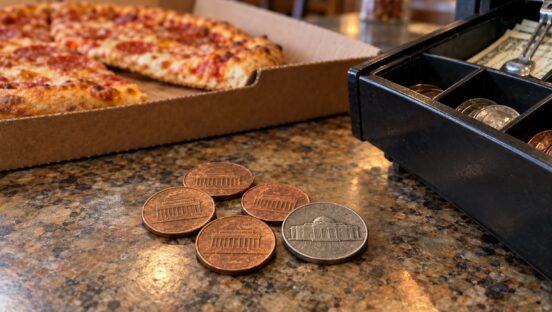
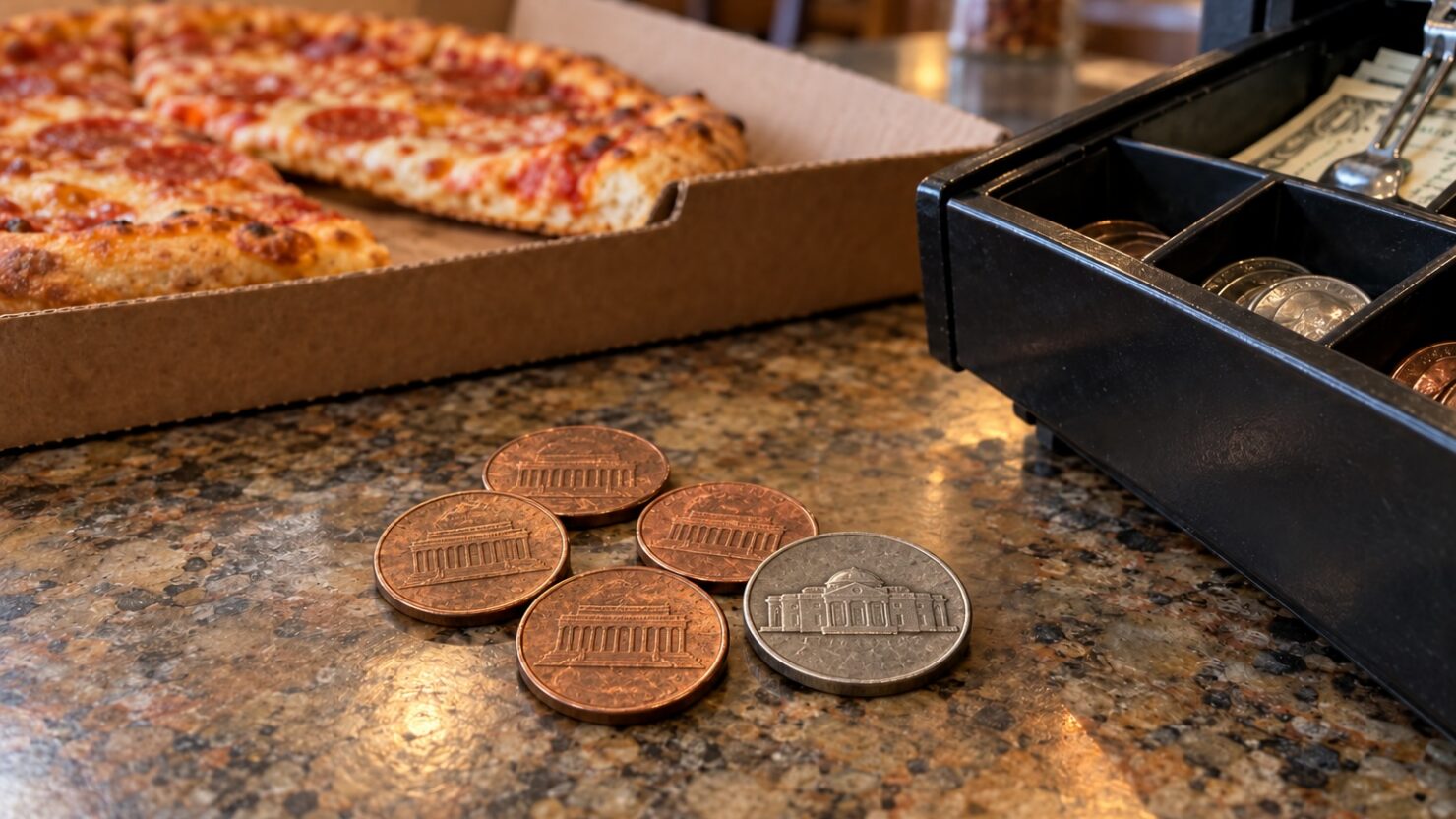
It costs four cents to make a single penny—literally—according to the U.S. Mint. Now as pennies slowly become a thing of the past, the U.S. Congress has passed the Common Cents Act to address concerns about the penny phaseout’s impact on consumers and business owners.
The National Restaurant Association backed the bill, which just passed the Senate this week and will be sent to President Donald Trump for his signature.
The bill establishes a set of rounding principles for when exact change isn’t available in a cash transaction. It also “provides a safe harbor from liability for business owners who follow those principals,” the National Restaurant Association says.
Finding a solution to the penny problem was particularly important to restaurant operators because more than a quarter of annual industry sales are made in cash.
According to the Associated Press, the bill allows restaurants and retailers to round transactions up or down to the nearest 5 cents so pennies aren’t needed in cash transactions. Meanwhile, retailers and consumers can still use pennies if they choose to.
“Now that penny production has come to an end, operators want to have confidence they are handling the transition in a way that works for their customers,” said Michelle Korsmo, president and CEO of the National Restaurant Association, in a press release. “The Common Cents Act provides clear principles and certainty, helping keep transactions simple and straightforward while allowing restaurants to focus on serving guests.”
The restaurant industry contributed more than $1.5 trillion to the U.S. economy in 2025, or roughly 5% of nominal gross domestic product. When operators cannot provide exact change, it can create operational challenges, frustrate customers and increase uncertainty for businesses already operating on thin margins.
The bill was sponsored in the House by Rep. Lisa McClain (R-MI) and Rep. Robert Garcia (D-CA) and in the Senate by Sen. Kirsten Gillibrand (D-NY) and Cynthia Lummis (R-WY).