
Every once in a while, I come across a word that sends me down an unexpected rabbit hole. Recently, that word was mofongo. I had no recollection of where I had heard it or what it meant. For whatever reason, my brain immediately connected it with gagoots, that wonderful bit of Italian-American slang for a goofy or foolish person. There is absolutely no linguistic connection between the two. That is just apparently how the filing system in my head works.
So I looked it up and discovered one of Puerto Rico’s most recognizable dishes: fried green plantains traditionally pounded with garlic, salt and chicharrón, often paired with meat, seafood, broth or sauce. That got my attention pretty quickly, and my pizza brain inevitably took over. What would happen if those flavors crossed over onto pizza?
What Makes Mofongo Mofongo?
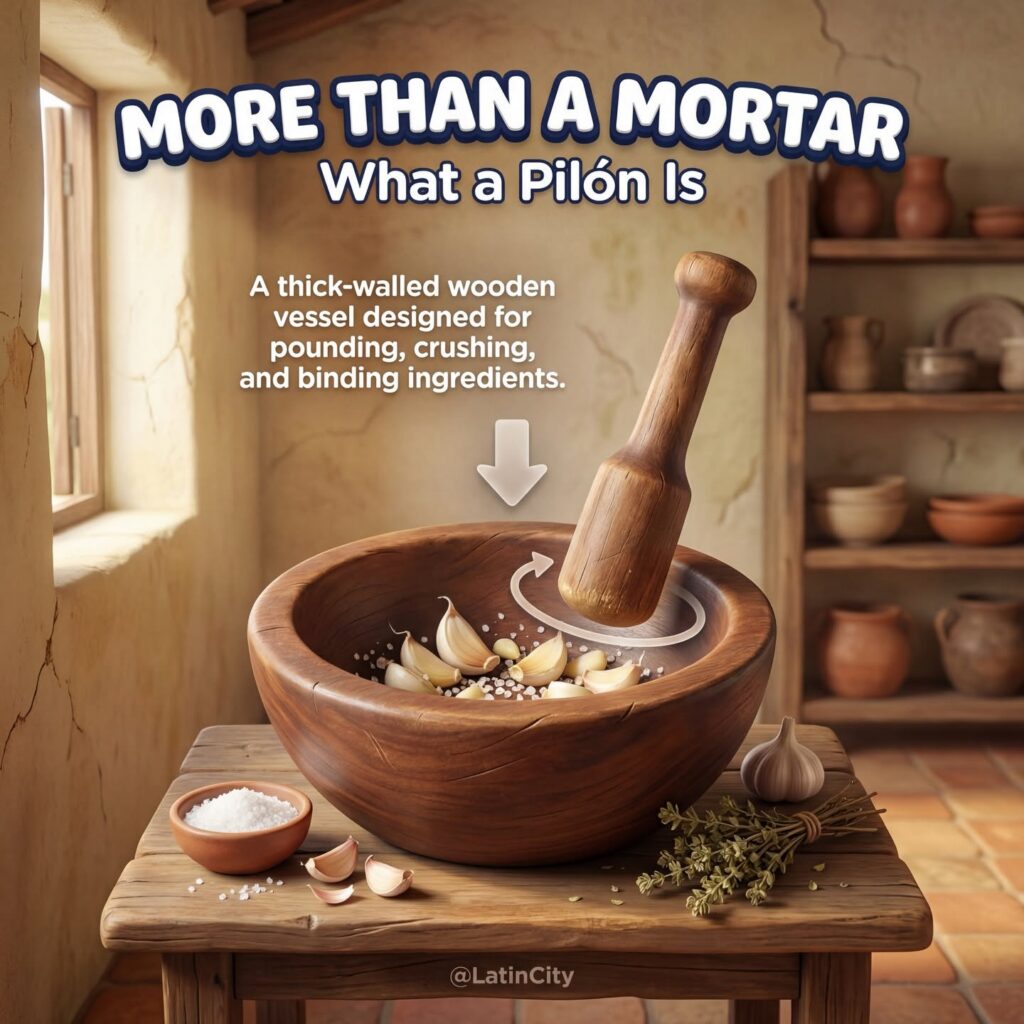
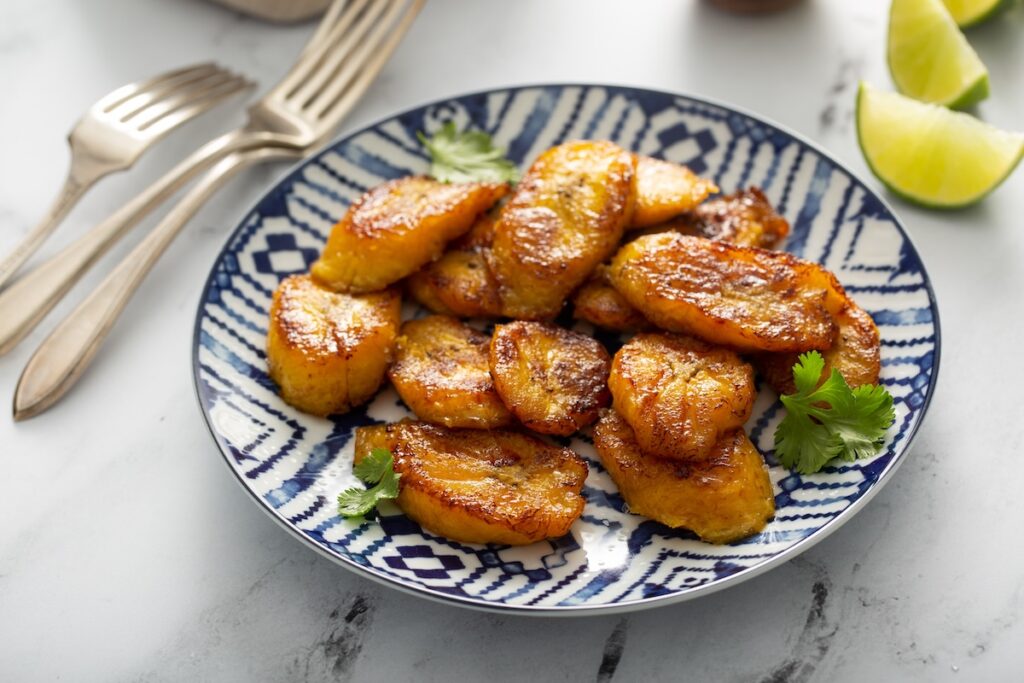
Calling mofongo “mashed plantains” doesn’t really do it justice. Green plantains are fried first, then traditionally pounded in a mortar pestle-type tool called a pilón with garlic, salt and often chicharrón. The mixture doesn’t necessarily become completely smooth, either, leaving rough pieces of fried plantain and crispy pork that cake together well.
There is also real history behind that pilón. Mofongo reflects several cultures that shaped Puerto Rican cuisine, including West African traditions of pounding starchy foods, Indigenous Taíno use of the pilón, and Spanish culinary influences. Over generations, those influences became part of something distinctly Puerto Rican. Say it with me: Mofongo!
I’m not Puerto Rican, and I’m certainly not presenting myself as a mofongo expert. I came across a dish I hadn’t explored before, started learning about it and recognized something that seemed remarkably pizza-friendly. And I’m not looking to reinvent mofongo. I just learned enough to start asking some pizza questions.
Before We Go Any Further, I Haven’t Made It Yet
If I’ve gotten anything wrong along the way, I sincerely apologize. I’m one guy researching mofongo from my home in Mississippi, approaching it with curiosity, respect and considerable enthusiasm for eventually eating these pizzas. Corrections are always welcome.
As of this writing, I was preparing for the Real California Pizza Challenge, so I haven’t had a chance to physically test these ideas. Consider what follows a pizza thought experiment. There’s a big difference between something working in my head and surviving contact with a hot oven.
As soon as I get back, I’m hitting the kitchen. We’ll follow up with what worked, what didn’t, photos and recipes.
For now, follow my thought process and see if any of this makes sense to you. Let’s begin with the obvious: make mofongo, put it on a pizza and give it the only name my brain was ever going to allow…
The Mofongo’Za
Mofongo’Za! …and suddenly there’s a 14” pizza on the table. Top of my class at Hogwarts, folks.
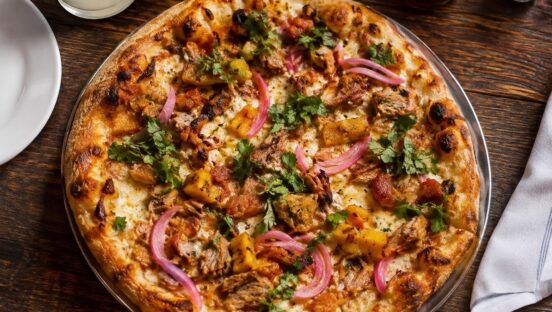
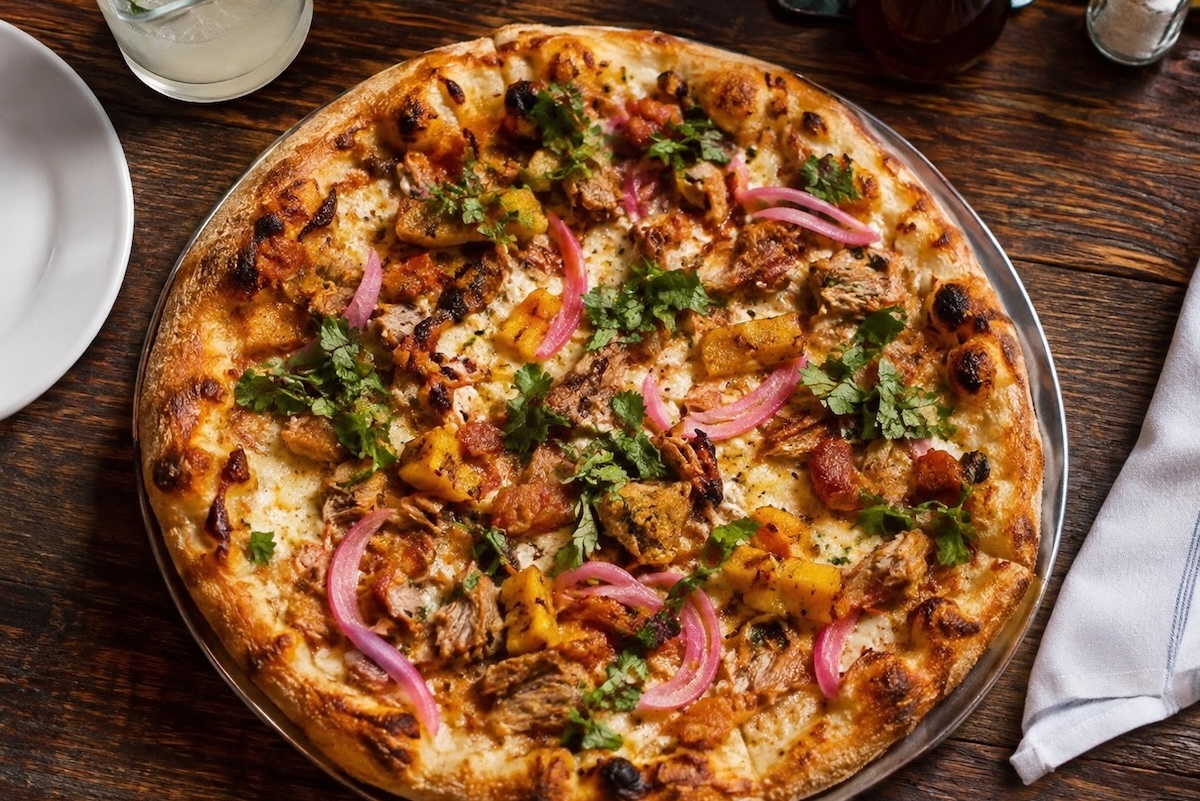
For the actual pizza, my starting point would be regular fermented dough with no red sauce. Instead, I’d use a thin layer of sofrito, a thick, aromatic saucy blend of chopped or puréed vegetables and herbs. I’d add a smidge of garlic-infused olive oil, followed by a restrained amount of low-moisture mozzarella and shredded pernil, a Puerto Rican slow-roasted pork shoulder.
Rather than spreading the mofongo across the pizza, I’d break it into small, irregular pieces and scatter them around the pie. Some could sit exposed allowing for possible crunch while others tuck underneath the cheese or pork, keeping a softer texture. This gives us a chance to see how differently each reacts in the oven.
After the bake, I’d finish with pickled red onions, cilantro and a light drizzle of mojo de ajo, a garlicky sauce brightened with fresh citrus juice, usually lime or sour orange. Operationally, this seems like the easiest place to start: make the mofongo ahead, portion it and treat it as another topping during service.
Mofongo Pockets With Shrimp al Ajillo
The second idea changes the presentation. Instead of scattering mofongo across the pizza, I’d portion it into small dollops, similar to ricotta, so each slice gets one or two intentional pockets. Start with a light sofrito and garlic-oil base, little or no cheese, and a crisp crust to mimic the bread customarily served with shrimp al ajillo.
Full disclosure: I don’t like seafood. In my youth, some bad fish let me know just how bad they were, and ever since then, if it swam, crawled or otherwise lived underwater, I can have no part of it. But I would try this. There’s enough going on to make properly prepared shrimp part of the bite rather than the star.
I’d cook the shrimp separately or add it late, then reduce the garlicky cooking liquid into a finishing drizzle instead of soaking the dough. Finish with cilantro, lime, maybe some pickled chile and a drizzle of reduced Mojo de Ajillo, a classic Latin-American garlic marinade. If this gets me past my seafood aversion, the experiment has already accomplished something. But I really hate fish, so who knows?
Deconstructed Mofongo, Constructed in Your Mouth
The third idea might be the one I’m most curious about because technically we wouldn’t make mofongo at all. Instead, let its components remain separate, building the pizza with a thin sofrito and garlic-oil base, modest cheese, fried green plantain and your choice of pernil or roast chicken. Finish with crumbled chicharrón, pickled red onion or peppers, cilantro and mojo.
You’ll notice the baseline flavors aren’t changing dramatically between these pizzas. That’s intentional. For this first round, I’m more interested in changing how the mofongo and its components are used and seeing what each presentation does to the final bite. After that, swap proteins, change the cheese, play with the finishes or take it somewhere completely different based on your own tastes.
Here, nothing has been pounded together and there are no mofongo dollops. But take a bite and everything comes together on its own: deconstructed mofongo, constructed in your mouth. Or, more simply, The Mofongo in Your Mouth Pizza.
I’d also be curious about sneaking in a little ripe fried plantain for sweetness against the salty pork and garlic. Traditional mofongo starts with green plantains, which themselves lean to the savory side, but that’s what a thought experiment is for. Switching things up.
The Gluten-Freefongo Crust?
The final idea throws pizza dough out entirely, and this one might have practical menu potential beyond our experiment. Mofongo pizza crust isn’t a concept I’m inventing, at least I don’t think so. But a base built around fried green plantain could give operators a unique gluten-free pizza rather than another premade crust. Seriously, if I invented it, I call TM!
Moisture and structure are the obvious hurdles. My instinct would be to make the mofongo slightly firmer, use only enough liquid to bind it and start small, probably around eight inches. Prebake the round until the exterior develops enough structure and crispness to support toppings while keeping some tenderness inside. Operators serving it as gluten-free would, of course, need to account for ingredients and cross-contact throughout prep and baking.
For the first test, I’d keep the toppings simple: a thin layer of sofrito, shredded roast chicken and a modest amount of mild melting cheese. After the bake, I’d finish with pickled red onion, because I love them, cilantro, avocado and a little pique, a vinegar-based Puerto Rican hot sauce. At this point we’re treading dangerously close to soft tostada territory, but we’re still within pizza’s gravitational pull.
More importantly, this could make gluten-free something customers order because they actually want this crust, not because it’s their substitute for the “real” pizza. If it works, the plantain isn’t apologizing for not being wheat dough. It’s the reason the pizza exists.
Will it hold together? Will the bottom crisp enough to pick up a slice, or am I eating plantain casserole with a fork? I don’t know yet, but if the answer lands on the right side of that equation, the Gluten-Freefongo might have some legs. TM!
From Brian’s Brain to Oven
At this point, the ideas are there. Now we see what happens when they meet the oven. Maybe scattered mofongo gets too dry, the dollops are too heavy, or the deconstructed version runs away with the experiment. I won’t know until flour hits the bench.
Once the Real California Pizza Challenge is behind me, I’ll tie on the apron and heat up the fryer. I wonder where I can get plantains in Batesville, Mississippi? Bet they’ve never even heard of pernil here.
We’ll come back with recipes, pictures, tasting notes and probably at least one idea that sounded much better from the safety of my desk, so stay tuned to PMQ.com. For now, I’ve got four pizzas living rent-free in my head. Soon, they’ll be making a layover in my oven on the way to their final destination in my belly. Mofongo’Za!
Brian Hernandez is PMQ’s associate editor and coordinator of PMQ’s U.S. Pizza Team.