
By Anthony Tortoriello
Across today’s pizza menus, the shift toward higher-quality, more diverse ingredients is hard to miss. Premium meats, specialty cheeses, plant-based proteins and globally inspired toppings are no longer niche offerings—they are increasingly central to how pizzerias differentiate themselves.
This evolution presents clear opportunities. Elevated ingredients can support higher price points, attract new customer segments and strengthen brand identity. But they also introduce a new layer of operational complexity that many kitchens are still adapting to.
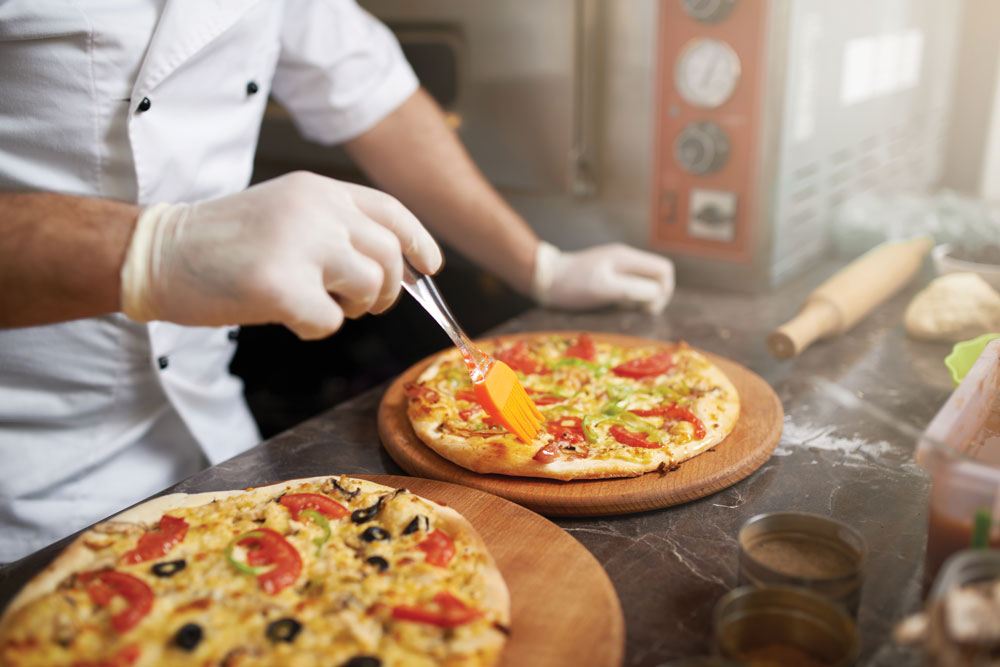
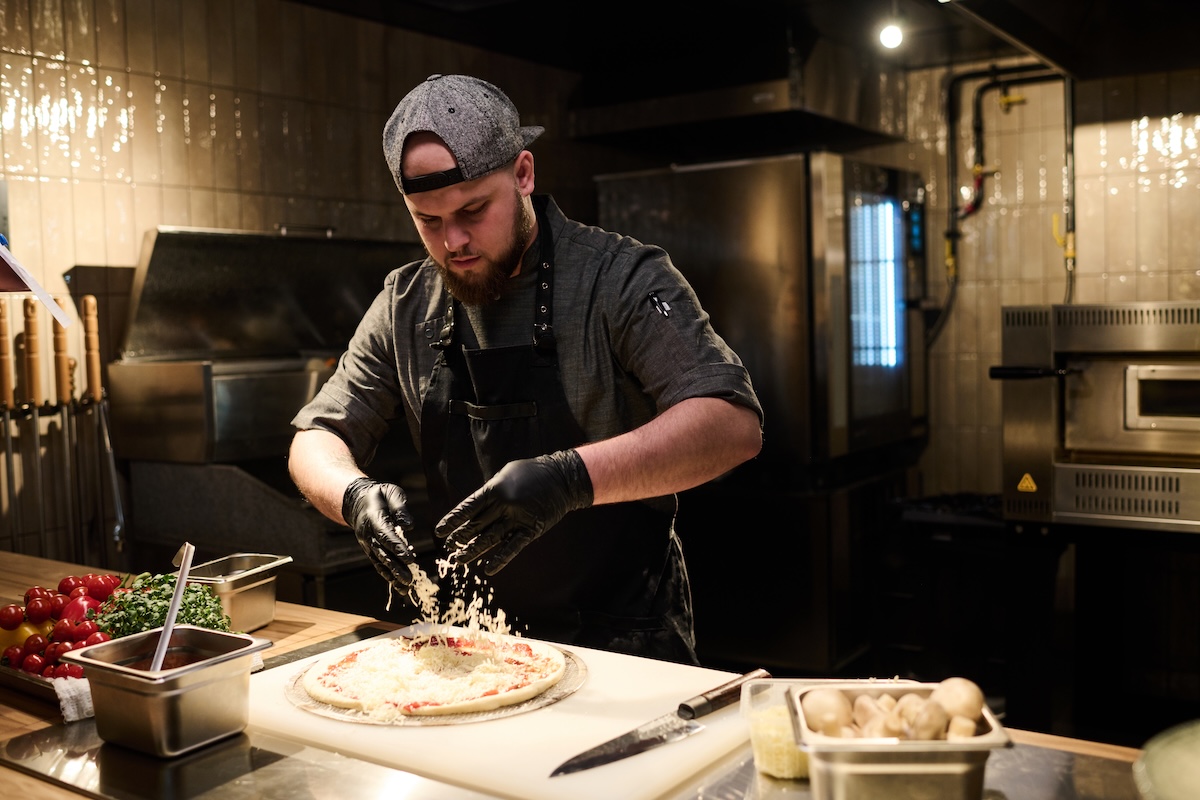
From an equipment and workflow perspective, the topping station is no longer a simple assembly point. It has become a critical control zone where portioning, storage and handling directly influence food cost, consistency and, ultimately, profitability.
For operators, the challenge is no longer just what goes on the pizza, but how those ingredients are managed behind the counter.
The Real Cost of Premium Ingredients
Premium ingredients bring higher expectations and tighter margins for error. Unlike traditional toppings, items such as artisanal cured meats, imported cheeses or plant-based alternatives often carry significantly higher per-unit costs and are typically less uniform in shape and texture. Thinly sliced prosciutto, fresh mozzarella or plant-based sausage, for example, can be more difficult to portion consistently during a fast-paced service. Even small inconsistencies can quickly add up over the course of a day or week.
This is where portion control becomes a critical operational discipline rather than a best practice. Equipment plays a key role in enabling that discipline without slowing down service.
Price computing scales and portion control scales allow staff to standardize serving sizes without relying on visual estimation, which can vary significantly between team members across shifts. For high-volume operations, features such as intuitive tare functions and fast stabilization times can make a measurable difference in usability.
Additionally, integrated foot pedal functionality allows operators to tare the scale hands-free, eliminating the need to press buttons and enabling continuous production without interruption. Operators should also consider capacity and sensitivity: lighter-capacity, high-precision scales are better suited for toppings like cheeses or sliced meats, while higher-capacity models may be needed for dough or bulk prep.
Equally important is how scales are integrated into the workflow. Placing compact, easy-to-clean units directly at the prep or assembly station encourages consistent use rather than treating portioning as a separate step. When the equipment is accessible and intuitive, adoption tends to follow naturally.
Similarly, equipment such as meat slicers enables operators to control thickness and yield when working with whole cuts or bulk ingredients. Adjustable thickness settings allow for consistent slices of deli meats while maintaining the intended texture and presentation.
When selecting slicers, factors such as blade size, motor power and ease of cleaning should be considered. A larger blade can handle a wider range of products—from firm deli meats like pepperoni or salami to more delicate items such as prosciutto—making it a better fit for operations working with varied or premium ingredients. A more powerful motor, on the other hand, supports continuous use during peak prep periods, which is especially important in higher-volume kitchens.
Features such as built-in sharpening systems and removable components can also help maintain consistent performance and support food safety over time.
The goal is not to slow down the line, but to produce repeatability. In a high-volume environment, consistency is what protects margin.

Storage and Prep: Where Waste Quietly Builds
While portioning is the most visible pressure point, storage and prep practices are often where the greatest financial losses occur. Premium ingredients tend to have shorter shelf lives, stricter temperature requirements and higher sensitivity to handling conditions. Without the right storage approach, spoilage and quality degradation can happen quickly, sometimes without being immediately obvious.
Refrigerated prep tables play a central role here, particularly those designed to maintain consistent temperatures across both storage wells and work surfaces. For temperature-sensitive items like soft cheeses or prepared proteins, even minor fluctuations during service can impact quality and shelf life. Operators should look for units with reliable airflow distribution and recovery times, especially in high-volume environments where lids are frequently opened.
For pizza-specific applications, some pizza prep tables offer enhanced flexibility with the option of both refrigerated and ambient ingredient bins, allowing operators to optimize ingredient storage based on product type. Combined with large-format cutting boards, these units are designed to maximize throughput while maintaining efficiency within a compact footprint.
Beyond prep, reliable food storage refrigeration is critical to maintaining ingredient integrity. Stainless steel reach-ins and storage units, available in a wide range of sizes and configurations, both refrigerated and frozen, ensure durability, temperature consistency and long-term performance in demanding kitchen environments.
Glass door merchandisers further extend functionality by serving as revenue-generating platforms. These units can be used to merchandise prepared meals, grab-and-go items, sauces, and desserts, creating incremental sales opportunities beyond the core menu. Dual-zone merchandisers allow operators to store both frozen and fresh products within a single, compact footprint, maximizing space efficiency while expanding product offerings.
Over-prepping is a common but costly habit, especially in anticipation of peak periods. Pre-shredded cheese, pre-sliced meats or pre-portioned toppings that are not used in time often end up as waste. Proper storage containers and disciplined prep planning become critical in extending shelf life and reducing spoilage without introducing unnecessary complexity.
From an equipment standpoint, the objective is to create an environment where ingredients are stored correctly, accessed efficiently and used in a timely manner. This reduces waste—not through restriction, but through better control.
Why Equipment Upgrades Are No Longer Optional
As menus evolve and ingredient quality increases, the equipment behind the line must keep pace. Advances in foodservice technology have significantly improved precision, temperature stability and overall consistency. Older equipment often falls short in these areas.
Modern refrigeration offers tighter temperature control, while newer scales and prep equipment deliver greater accuracy and ease of use. These improvements directly impact yield, reduce waste and support consistency across shifts.
Just as importantly, today’s equipment is designed to integrate more seamlessly into workflows. This helps kitchens maintain speed without sacrificing control. While upgrades require investment, the return is often realized through better food cost management, improved efficiency and fewer operational inconsistencies. In a kitchen where margins depend on precision, relying on outdated equipment can quietly erode profitability over time.

Balancing Creativity with Throughput
Menu innovation is often driven by the desire to stand out. But every new ingredient or topping—whether it’s adding hot honey finishes, plant-based proteins or multiple premium meats—introduces additional steps into the prep and assembly process. Without the right systems, this can slow down service, increase labor strain and create inconsistencies during busy periods.
This is where workflow design and equipment layout become just as important as the ingredients themselves. Pizza prep tables with integrated ingredient rails, for example, allow operators to organize toppings in a way that supports both speed and accuracy. Grouping high-use items like cheese and core proteins within immediate reach, while placing specialty toppings in secondary positions, helps maintain flow without overloading the station.
Similarly, dual-zone refrigeration solutions provide flexibility to manage multiple product types, fresh and frozen, within a single unit, supporting more complex menus without increasing equipment footprint.
For operations handling a wider variety of proteins, equipment such as meat grinders and tenderizers can support in-house preparation, offering greater control over product quality and cost. This is particularly useful when working with marinated or specialty proteins, where pre-processed options may be limited or more expensive. When selecting this type of equipment, operators should consider throughput capacity and ease of cleaning to ensure it can keep up with daily demand.
The key is not to limit menu creativity, but to ensure that the back-of-house is equipped to support it. When systems are aligned with the menu, operators can expand offerings without introducing operational friction.
Building a System That Protects Profitability
As ingredient complexity increases, profitability becomes less about individual decisions and more about how those decisions are supported by systems. From an equipment and workflow standpoint, several principles consistently emerge across successful operations:
- Standardization over improvisation. Relying on visual estimation or individual judgment creates variability. Scales, slicers and portioning tools introduce consistency that protects margins over time.
- Visibility over assumption. Clear storage solutions, such as glass-door refrigeration, help staff make informed decisions about prep and inventory. This reduces unnecessary duplication and waste.
- Integrated workflows over fragmented setups. Equipment should support a logical flow from storage to prep to assembly. When stations are disconnected, inefficiencies compound during peak service.
- Flexibility within structure. While systems should be consistent, they also need to accommodate menu changes. Modular prep equipment and adaptable storage solutions allow operators to evolve without overhauling their entire setup.
- Preventive control over reactive correction. It is far more effective to prevent waste and inconsistency than to identify and correct it after the fact. Equipment that supports temperature stability, portion accuracy and proper storage creates a foundation for this approach.
Ultimately, the goal is to shift from a reactive mindset, where issues are addressed after they occur, to a proactive one, where systems are designed to minimize those issues from the outset.
A More Intentional Approach to the Topping Station
As pizza menus continue to evolve, the operational demands behind them will only increase. What was once a straightforward topping station is now a dynamic, high-impact area of the kitchen—one that directly influences food cost, service speed and customer satisfaction.
For operators, staying profitable in this environment requires more than just careful sourcing or pricing strategies. It requires a more intentional approach to how ingredients are handled, from the moment they enter the kitchen to the moment they are placed on a pizza.
By investing in the right systems, supported by appropriate equipment, pizzerias can maintain control even as their menus become more ambitious. Precision in portioning, discipline in storage and efficiency in workflow are no longer optional; they are essential components of a sustainable operation.
In a market where differentiation increasingly comes from what goes on the pizza, long-term success will depend on how well that complexity is managed behind the scenes.
Anthony Tortoriello is the Director of Sales – Food Service North America at AeriTek.