
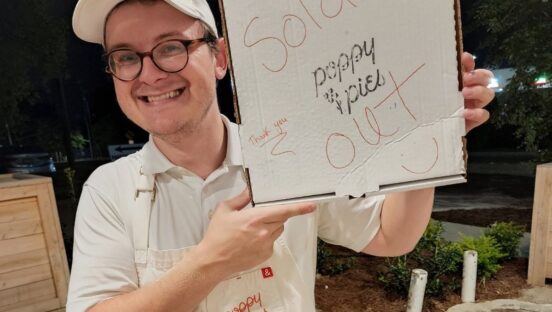
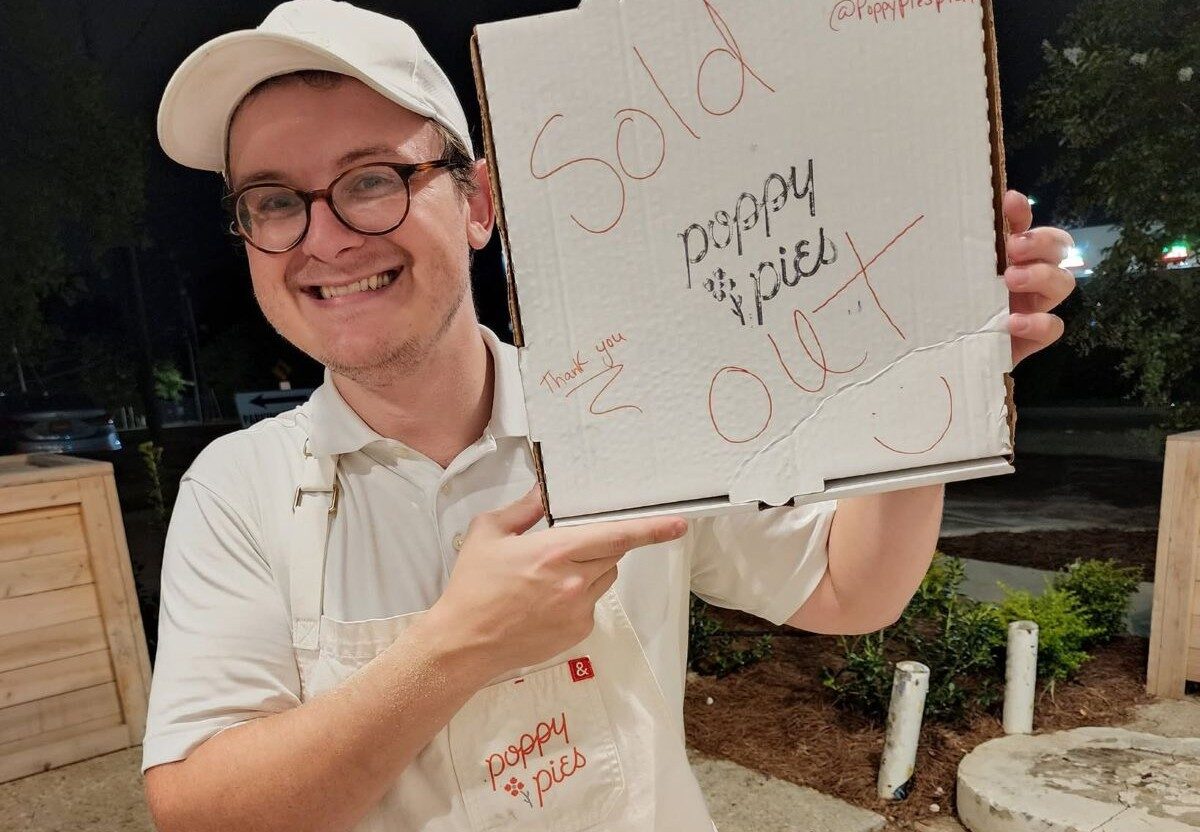
By Tracy Morin
In the second part of this two-part deep dive with Gray Welch, owner of Poppy Pies in Jackson, Mississippi, he discusses going viral on TikTok, what his success teaches other operators who are reluctant to get on camera, why intuition trumps numbers in his pizzeria, and why mobile can be the best (and most challenging) proving ground for opening a brick-and-mortar business.
See Part One of this interview here.
PMQ: You’ve had posts get major views on TikTok. Tell us about your approach to social media.
Welch: I’ve put a lot more effort into social media—which, I know, roll my eyes, cringe, shed a tear, whatever you want to call it, but we don’t do silly skits or anything like that. I think, honestly, social media has been the best thing [for our business].
For example, a year ago, I posted something that if anybody on Planet Earth watched, they’d be like, “I don’t understand why that got the level of viewership that it did,” and I still don’t, either. But for those folks who feel uncomfortable with social media, because they’re like, “Oh, I’ve got to be the dancing owner” or do whatever [for entertainment], no, you don’t.
I posted something where it was just, “I gotta get over this mental block of feeling like I’ve got to do something special. I just need to try to get myself in the habit of talking, okay?” And for those who want to try something like this, TikTok is very good at distributing locally. I don’t know if that’s their purpose, if that’s what they’re trying to do, design-wise, with their algorithm, or what. Instagram hates you talking to the camera, but TikTok really loves you just stepping over your words and mumbling a little bit, not being a great speaker. TikTok loves that.
So I just turned the 60-second thing on, hit the button to record, and it was just me in front of my house in a chair. I was like [bored voice], “Hey, my name’s Gray, Poppy Pies. We’re open Wednesday, Thursday, we do three pizza styles, Neapolitan, Detroit.” I didn’t say, like, “This is our secret sauce!” It was just a basic description of who we are and what we do. “If you haven’t tried us, come see us or don’t,” you know, that sort of thing. And I think at this point it’s gotten 170,000 views or something.
But the majority of that is local, which is crazy valuable. That was in December of 2025. And then that January, we saw a 70% increase in sales. Now, you’d look at January and say, “January is normally not very strong,” but 70% is still 70%. And this January was better than seven months out of the previous year. I’m going into January thinking, “Here’s the slog fest,” where I’m looking at sales, thinking, “What have I done?” January and February were, at least for us, the months in that first year when we were like, “I have made a huge mistake.”
And then I just posted one very simple TikTok that enough local people saw and they said, “Okay, I’ll try it.” There was a day that I came in here for lunch and all the tables were full and they were all like, “Hey, I saw you on TikTok.” Not every video is gonna magically have that sort of thing happening, but I think it’s really worked for us. This sounds so dumb, so I’m sorry for this, but I will be recognized in random places. Like, if I’m in Costco, the checkout guy will be swiping, looking at me out of the corner of his eye, and say, “Do I know you from somewhere?” The goal is obviously to not be known, necessarily, or like some sort of celebrity, but that has benefited us tremendously, because I feel like an owner’s role is to make the business known.
I personally am very bad at the sales part. Like, I’m not gonna go door to door, walk the halls of the hospital and be like, “Hey, here’s my card, here’s some cookie samples.” I tried that, hated it. Even though it kind of worked, it just makes me feel uncomfortable. And I was like, “This is not me putting my best foot forward.” But posting consistently on TikTok and Instagram, I think, has made a monstrous impact on people giving us a try for the first time. And obviously, if you have something that people seem to enjoy, the more people you can expose to it, the better.
PMQ: How did you learn the business side of owning a pizzeria?
Welch: Truthfully, I feel like, for anybody who’s interested in this sort of thing, if you’re a logical thinking person, it’s not gonna work. You need the delusion to think that no matter the issue that arises, you will figure it out. Because if you truly understood the magnitude of what you were trying to do, it would not happen. It’s more like, “Well, I’ve already signed on to the debt and I’m here, so what am I going to do? I have no choice but to figure this out.”
I think a lot of the best decisions that I have personally made were based on intuition. It’s kind of an integrity question: Is this right or is it not? If the answer is no, we don’t do it. And following intuition is kind of the only thing that you can do.
Business people say you really need to know your numbers—what’s the best selling? What’s the gold star, the one that’s the bestseller and has the highest profit margin?What’s the worst, which you should take off the menu? I don’t know. At the end of the day, when I look at a P&L, I don’t understand necessarily where certain spikes come from.
We have very, very, very strong margins. If they weren’t, I might feel the need to figure out where the problem is, but, for other people out there, they’ll look at that and be like, “This guy’s a stupid moron. He doesn’t even know where his money is going.” The things that I’m good at are: We treat people very well, employee-wise. I think they get paid more than they do pretty much anywhere around here. We’re extremely flexible, and I think the strong suit is the good food and people who are conscientious enough to care about a customer.
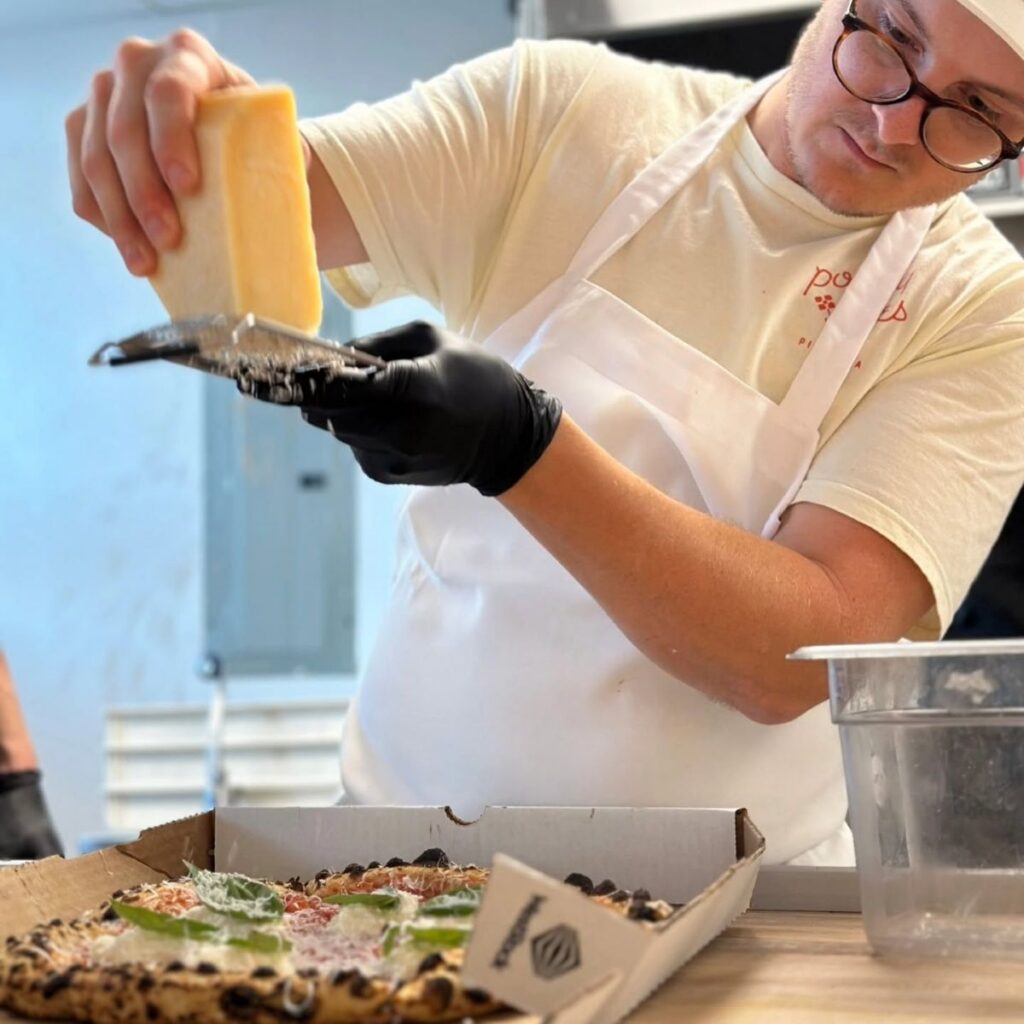
You know how people say, “If you wouldn’t serve it to your mother, don’t send it out”? But what does that mean? Very rarely do people understand that operationally. What it means is, if it’s not right, you are not going to have me breathing down your neck if you throw away 10 pizzas in a row. I don’t want you to do that every day. I don’t want you to make mistakes and every single pizza you make sucks. But you need to feel comfortable saying, “If it’s not right, just throw it away.”
Rather than villainizing mistakes, I condition people to understand that mistakes are okay, and that the line is serving somebody well, so anything that’s below that line is what’s not acceptable. Training probably isn’t the right word, because it’s not like we’re sitting there with a whiteboard; it’s behaviors that are instilled by example. There’s no anger; there’s no toxicity. You can feel comfortable to make mistakes, and you should feel that when put at ease, it leads you to making the right decisions.
PMQ: What about community involvement? How do you give back to the local area?
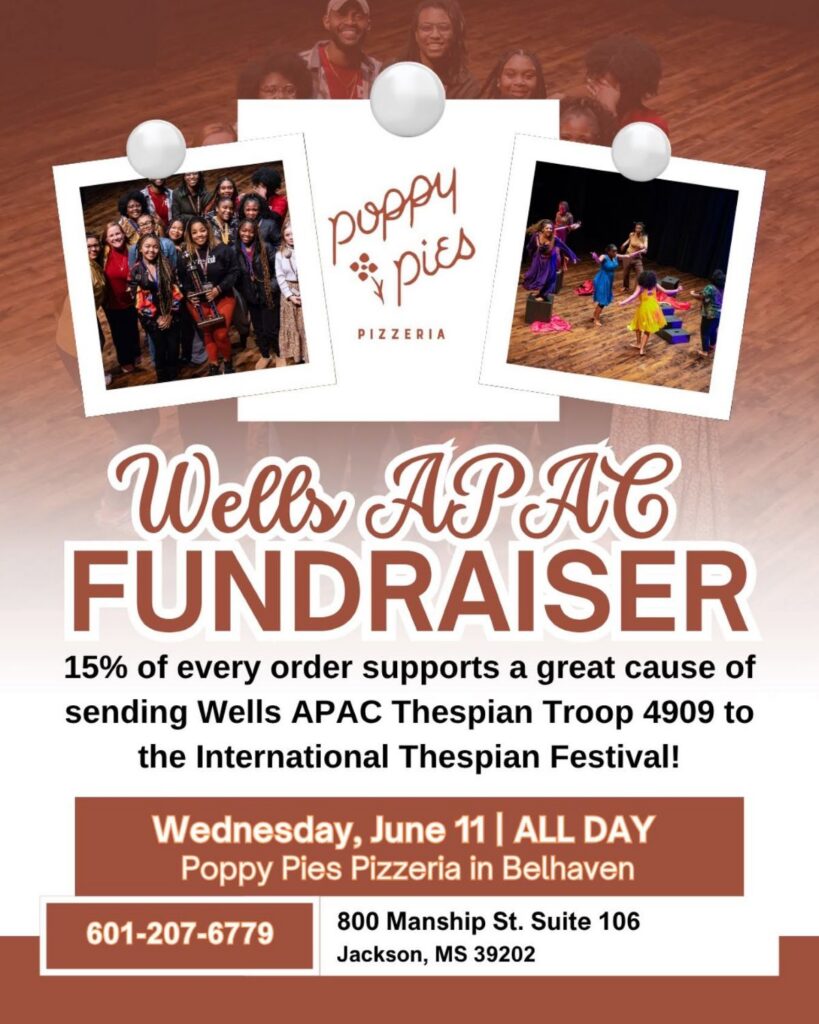
Welch: Sure, we’ve done spirit nights, where you give a percentage back to the school. We’ve done teachers’ celebratory lunches that were very heavily discounted. But I feel very strongly about bringing out the arts and more creative events.
We’ve been open two years, so for the first time, we had enough, let’s say, extra. You would argue it makes no business sense whatsoever for me to do this, but we sponsored a concert out here, where the street gets blocked off, there’s a big stage with a bunch of bands that I’ve never heard of, because I’m not hip, but people really enjoyed it. I come from a theater background, and so does my wife. So I feel very strongly about giving people not only a neighborhood pizza spot where people feel comfortable and eat regularly, but the responsibility that I feel is more like: How do we consistently make free events for people to attend?
Because, ultimately, that’s all you want. That sort of stuff is what impacts the community as a whole. I feel like, if you’re somebody who is capable of doing a good job at things, then you should do as many things as your bandwidth allows.
And we’ve done drives where for every sandwich sold at lunch, we match the same sandwich, and we’ll compile that in December, then do a large food donation later to a local food bank, and things like that. Which is all well and good, but I personally am more passionate about the taking some of the money that we have and using it to sponsor events so that people can go for free and enjoy live things. Since COVID, there’s a big deficit of stuff. Then all of a sudden, there’s this underlying yearning for more, and somebody has got to bring it back. And I want to be clear: I really wish I weren’t the person who had to take on that. The lazy part of me is like, “Can somebody else like do this?”
Because we start with pizza and, yes, we’re doing well with pizza. People are buying our stuff. We’re serving people well. But there’s got to be the next step: Pizza can facilitate a good time, and it just makes more sense to create as many of those things as possible.
So we started with one event, and we’re trying to figure out a cadence of maybe once a quarter. So, that way, when you look at the schedule of the year, people can be like, “There’s always something for me to do if I want to,” rather than feeling like, “Nothing ever happens here. I want to move to a big city.”
PMQ: Is there anything else you’d add about your pizza journey?
Welch: I’d give a nod to Gozney and Ooni—without that technology, never say never, but the path that we took is not possible without that innovation in oven technology. It’s not a $30,000 oven; it’s a $500 oven. So there’s really no excuse to not be able to prove yourself. It’s just a few thousand dollars to start a business that produces a lot of food locally. I mean, the barrier to entry has never really been lower. So not that they’ll ever hear my words on that, but thank you to them.
PMQ: Are you still doing mobile operations?
Welch: We still do—a lot less. We probably do 20% of what we used to do—weddings, birthday parties, the occasional festival that we know is good, because there are a thousand of them that aren’t. You get burned a bunch and then you learn: What’s worth your time?
Both things are hard, right? Running a restaurant is not an easy thing, but I can at least say, if you can run a food truck, you can run a restaurant. Because in a restaurant, you have walls. You have air conditioning, heat, consistent large refrigeration. You don’t have to worry about the fact that we have a private party where we’re in an uncovered area, and my awning isn’t designed for, like, tornado weather, and your boxes are getting blown off the table all over the place. Even with the Gozneys—if the weather was bad, the wind would blow hard enough that it would just blow the flames out of the oven. Doing mobile food is not for the weak.
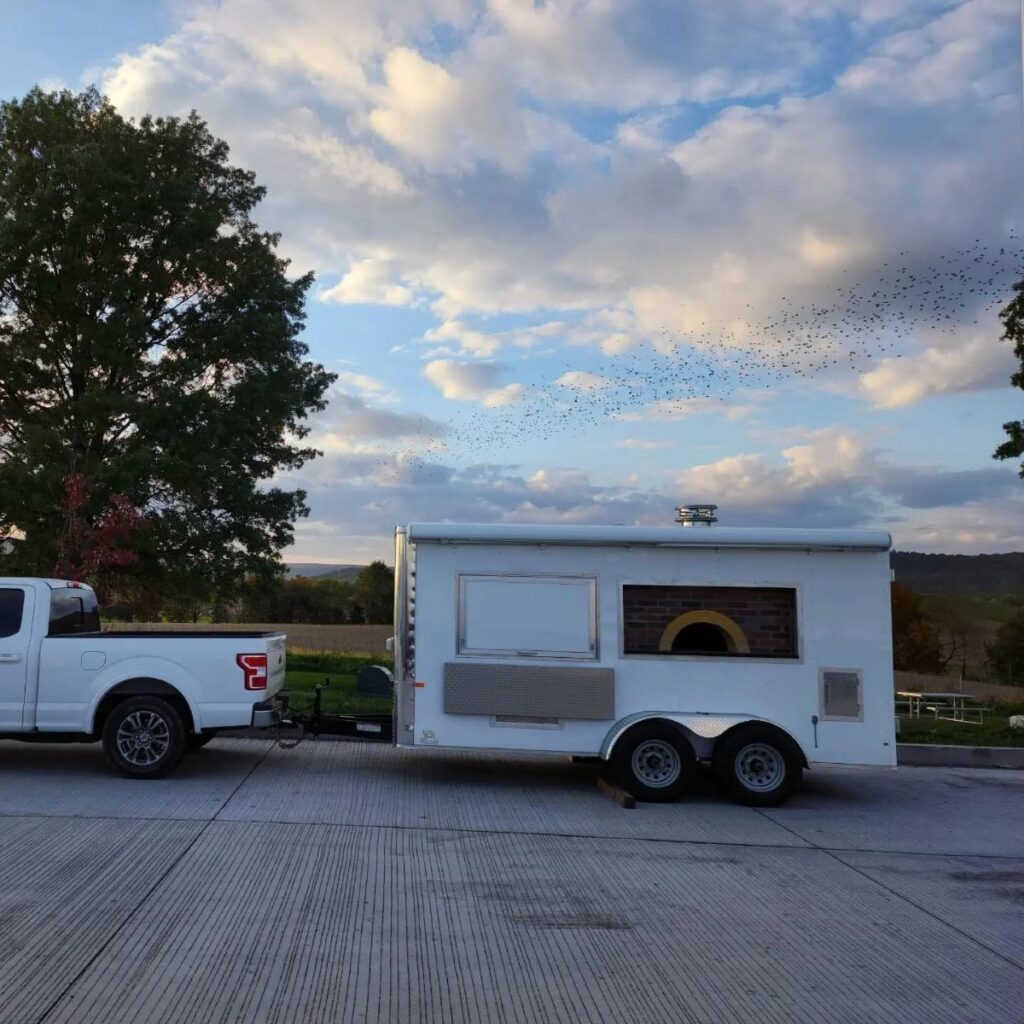
But I would honestly say it’s our strength, the mobile thing—because of all of those problems that can arise, you can find any excuse to cancel, and you’re going to want to. You’re gonna say, “Please, I do not want to go stand outside, because it’s 27º and raining really hard, borderline freezing rain.” You’d say, “We’re not going to sell a lot of pizzas today,” and you’d be right. We didn’t.
But what did happen is everybody who was there, all 20 of them, they knew, as they’re looking out the window and watching us suffering, [that they can trust us]. Any businessperson would say, “Just cut it, leave, come back later and make some money,” but it’s not just a money thing. It’s the integrity and people really having that intangible trust—because even when things are really hard, you’re still gonna show up. We’ve probably canceled five events, ever. It’s the showing up even when you really don’t want to. If you can learn that with food trucking, the rest of it will feel much easier.
Tracy Morin is PMQ’s associate editor.