
By Ben Coley
Papa Murphy’s is headed for more closures.
Parent company MTY Food Group told investors during the company’s Q2 earnings call that it expects to shutter 68 underperforming corporately owned restaurants over the next nine months. Of those, between 45 and 50 stores will be Papa Murphy’s locations.
Most of the shutdowns will occur in the third quarter, with the first scheduled to begin this week. The 68 closures represent about 1 percent of MTY’s systemwide restaurant base.
The move comes after MTY attempted to revive a collection of stores it took back from Papa Murphy’s franchisees about two years ago.
“After nearly two years of efforts and some successful turnarounds in those markets, we came to the conclusion that these markets are probably not appropriate for Papa Murphy’s at this time, and we chose to close a lot of these stores in these locations,” MTY CEO Eric Lefebvre told analysts.
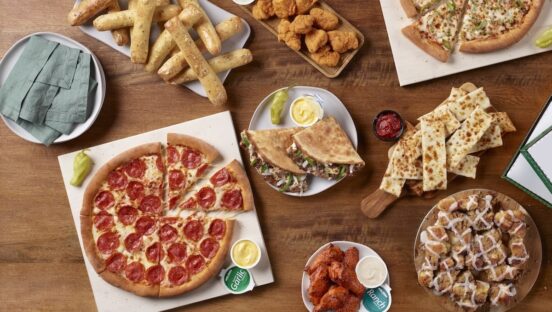
The take-and-bake chain is one of several pizza concepts struggling to gain traction in the U.S. Pizza Hut—which will be sold to LongRange Capital—and Papa Johns are both shuttering hundreds of restaurants. In the fast-casual category, Blaze Pizza switched CEOs, Pieology declared bankruptcy, MOD Pizza was sold to stave off bankruptcy, and Pie Five, which once had 100 stores, is now under 20.
Papa Murphy’s has seen a decline in U.S. store count for nine straight years. It shuttered 523 domestic restaurants between the end of 2016 and 2025.
Here’s how the brand’s U.S. unit count has changed. The figures below are end-of-year totals.
2016: 1,537
2017: 1,479
2018: 1,397
2019: 1,330
2020: 1,289
2021: 1,239
2022: 1,168
2023: 1,127
2024: 1,044
2025: 1,014
MTY’s overall closures announcement follows a comprehensive review of the company-operated portfolio. The locations collectively lost more than $10 million over the past 12 months, prompting management to take what Lefebvre described as a decisive step to improve the long-term health and profitability of the business.
The closures will cost between $10 million and $12 million through lease termination and related expenses. Even so, MTY believes the plan will improve future profitability by eliminating stores whose financial outlook no longer justified additional investment. The restaurants slated for closure were posting average sales declines of roughly 8 to 9 percent, significantly worse than the broader system.
“This was a store-by-store process where we evaluated the performance outlook and economic profile of each location,” Lefebvre said. “Where we saw a path to improvement, we chose to continue investing efforts into making our existing assets as productive as they can be. Where the fundamentals no longer supported that path, we made the decision to close the store.”
During the second quarter, MTY’s U.S. same-store sales declined 2.2 percent. Excluding Papa Murphy’s, comps in the U.S. were relatively flat. Lefebvre said the U.S. pizza market is intensely promotional and has become harder to navigate.
“We see that brand suffering a little bit more than the others,” Lefebvre said. “We run different promotions and we see that there’s very little loyalty in that market and the consumer will go where the pizza is the cheapest at any given time.”
Despite the near-term reduction in units, MTY continues to project strong franchise development across the remainder of 2026. The company opened six net restaurants during the second quarter and expects development to accelerate in the back half of the year, led by brands including Cold Stone Creamery and Wetzel’s Pretzels. Excluding the planned corporate closures, management said the company would have expected positive net unit growth for the year.
“We continue to operate the business with discipline and focus on the factors we can control,” Lefebvre said. “That includes driving strong cash generation, supporting our franchise network, advancing our new store pipeline, and taking action where we see opportunities to improve the quality and profitability of the business.”
Ben Coley is editor of PMQ sister publication QSR Magazine. This article was originally published on the QSR website and can be viewed here.