By Tracy Morin
Jeff Berman, a certified pizza judge and founder of Pizza Lovers of Florida, has strong opinions on how to balance sweet and spicy (“swicy”) flavors. In advance of PMQ’s forthcoming coverage on the now-established—but still red-hot—trend (keep an eye out for the full story in our January/February issue), he recently shared his thoughts on how pizzeria owners and chefs can best pull it off.
“’Swicy,’ the combination of sweet and spicy, offers plenty of creative possibilities,” Berman says. “Hot honey might be the most familiar example on pizza, but ingredients like ’nduja give pizza makers other directions to explore when developing that balance. And, when sweet and spicy ingredients enter the equation, balance becomes especially important. For me, the question is simple: Does the combination make the pizza more enjoyable from the first bite to the last?”
Berman’s favorite part of the swicy flavor pairing is the contrast it offers. For example, a little sweetness alongside salty pepperoni adds another dimension to a slice. “Heat brings a different sensation, while cheese, tomato and dough give those flavors something to work with,” Berman says. “Think about combining spicy soppressata, creamy ricotta and a restrained drizzle of honey. Each ingredient has a purpose. The meat contributes salt and spice, the ricotta adds richness, and the honey supplies a sweet finish. But the amount matters. I want to taste the ingredients individually while enjoying what they create together.”
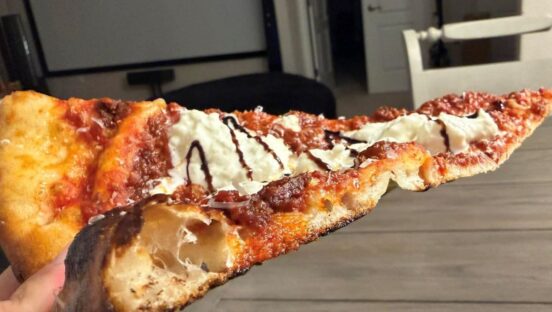
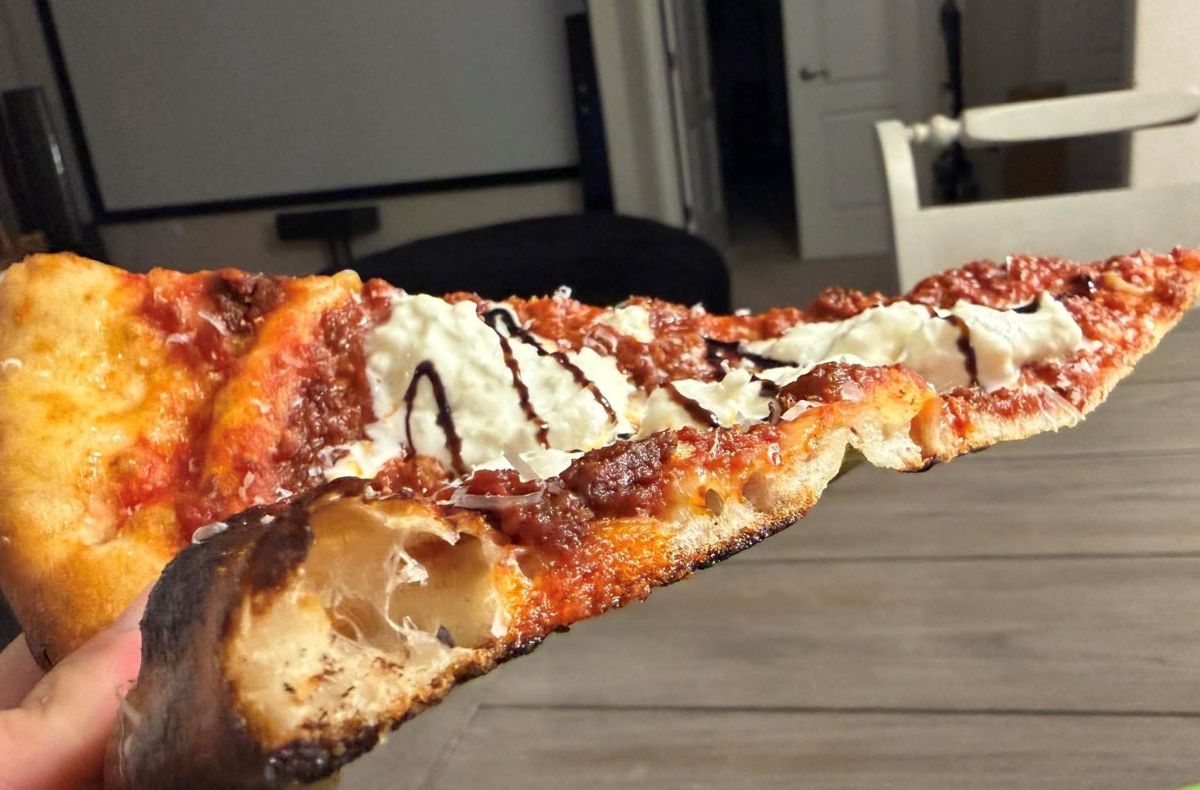
Recently, Berman experimented with a pizza that featured Tempesta Artisan ’Nduja, Bianco DiNapoli tomatoes, BelGioioso Stracciatella, Grande Romano and a finishing drizzle of balsamic glaze, cooked in his Ooni Koda 2 Max oven. “The ’nduja contributes heat and savory richness, while the stracciatella provides a creamy contrast,” he explains. “The tomatoes bring acidity and natural sweetness, and the Romano adds a salty finish. The balsamic glaze introduces concentrated sweetness and tang, completing the sweet-and-spicy combination.”
That pairing of ’nduja and balsamic glaze, Berman says, is a perfect way to approach swicy. It gives the heat a sweet counterpoint while adding a different flavor dimension than honey. “For me, the goal is to let those contrasting ingredients complement the tomato, cheese and crust,” Berman says. But apply judiciously, he warns: “A heavy application of honey or balsamic glaze can make sweetness dominate every bite. On the other hand, too much heat can make it difficult to appreciate the other flavors. Uneven application can also create an inconsistent experience, with one bite tasting balanced and the next overwhelming.”
Berman’s advice to operators: Begin with a clear flavor goal. Decide what the sweet ingredient contributes and where the heat should come from. Then test different measured amounts on the complete pizza. “Taste more than the first bite fresh from the oven,” he recommends. “Eat a full slice. Let another slice sit for a few minutes. If takeout is a major part of the business, evaluate how the pizza eats after spending some time in a box.”
You can also solicit taste testers for their unvarnished opinions—preferably those with different tolerances and preferences for levels of both heat and sweet. “I would ask the tasters specific questions,” he says. “Was it too sweet? Did the heat build as they ate? Could they still taste the sauce and cheese? Would they order a whole pizza?”
Then, for an operator testing a new combination, a limited-time special or featured slice promo can provide an opportunity to gather additional feedback. “I would watch repeat orders,” Berman says. “And listen to what customers say after finishing it.”
Keep an eye out for PMQ’s full coverage on the swicy trend in the January/February 2027 issue.