By Bill Zonios
For decades, the pizza business was built on simple routines and old-school hustle. Orders were written by hand on slips of paper. Delivery drivers memorized neighborhoods and unfolded paper maps to find houses. Customer relationships were built face-to-face, one order at a time. At Glenside Pizza, that was exactly how it started.
Founded by Greek immigrant family roots with more than 40 years in the pizza business, Glenside Pizza was built the traditional way; through hard work, consistency, and community relationships. Long before smartphones and online ordering, customers would call the shop directly, and every order was handled manually. We relied on strong food, strong service, and word of mouth to grow throughout the Glenside community.
But as I took over, representing the next generation of ownership, the business began evolving alongside technology.
I set out to modernize nearly every aspect of operations at Glenside Pizza. The old paper systems gradually gave way to a modern POS platform through online ordering, customer data collection, SMS and email marketing, and a website designed to feel like an extension of the physical storefront itself.
What was once a pizza shop using paper maps and handwritten tickets transformed into a business powered by digital marketing, professional food photography, and a website customers can browse for long periods of time.
Today, one of the most powerful tools helping drive that transformation is surprisingly simple: the QR code.
What Exactly Is a QR Code?
For those who don’t know, a QR code, short for “Quick Response” code, is a type of two-dimensional barcode that can instantly direct users to digital information when scanned with a smartphone camera. Unlike traditional barcodes that only hold a small amount of information, QR codes can store website links, menus, contact information, coupons, payment systems, and much more.
For pizza shops, the QR code has become more than just a convenience. It became a marketing tool.
Peel: A PMQ Pizza Podcast: How Bill Zonios Built a $2 Million Business With In-House Delivery
Make Ordering Effortless
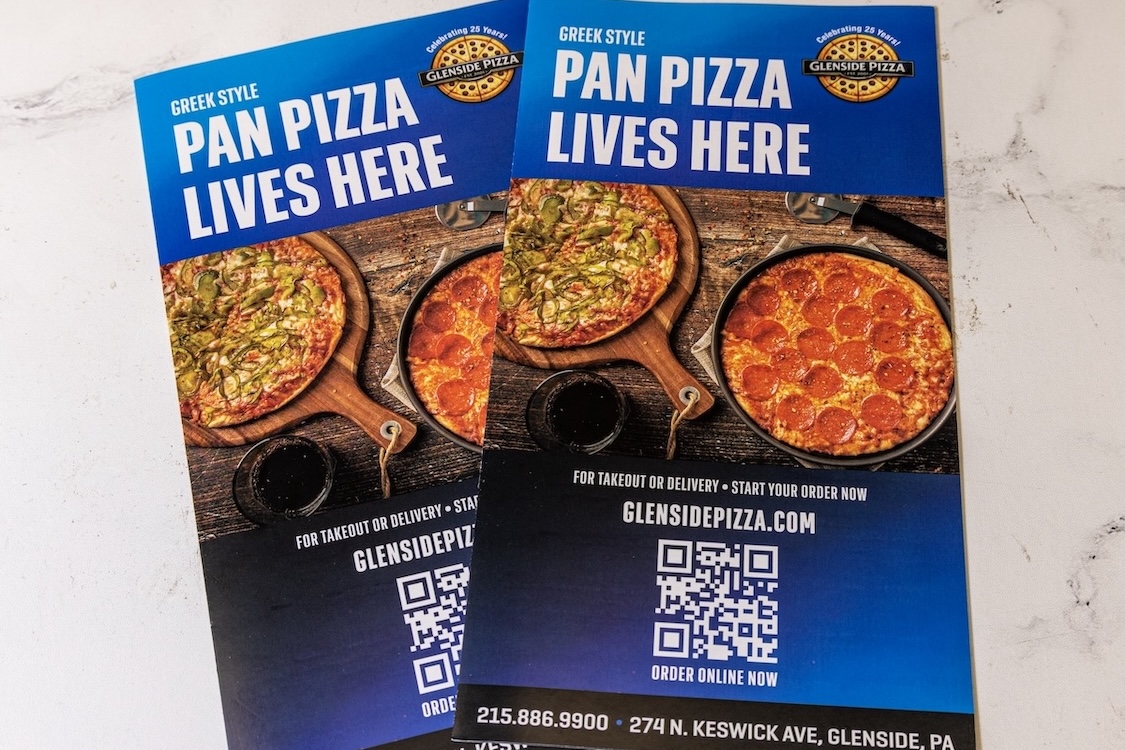
At Glenside Pizza, QR codes are now integrated into nearly every customer touchpoint. Sandwich wraps, menus, flyers and promotional materials all contain QR codes directing customers back to our website.
The goal is simple: Make it effortless for customers to interact directly with the business.
Here’s my philosophy: If you’ve built your website to be user-friendly and you’re proud of the aesthetics and functionality of your site, show it off. You’ll notice customers appreciate a clean, efficient website, just as they do a storefront.
That philosophy has become central to how the business operates today. Our website is no longer just a digital menu. It functions as a second storefront.
Restaurants traditionally focus heavily on maintaining the appearance of their physical location. Clean windows, polished floors, attractive signage and organized counters all influence customer perception.
I believe websites deserve the exact same attention. Your website is your second storefront. So cleaning up your store windows is just like making tweaks to your site. Sweeping outside your store is like adding more photos to your online ordering. It’s part of your store, so you should take care of it just like you do the brick-and-mortar.
That mindset has helped fuel a major shift in our customers’ ordering habits.
Today, roughly 50% of our orders now come through online ordering systems routed directly through the website. Importantly, those orders are not coming through third-party delivery marketplaces.
No third parties. In past interviews with PMQ, I have argued that many restaurants became overly dependent on them during and after the COVID-19 pandemic. I believe third-party apps brilliantly took advantage of the COVID situation and made a fortune off the illusion of convenience, hidden in fees.
Instead of relying on outside platforms, Glenside Pizza has invested in building direct relationships with customers through our own digital ecosystem using QR codes as one of the key entry points. All while building a business that grosses $2 million annually.
Related: How Bill Zonios Beats Third-Party Apps at Their Own Game
The Future of Pizza Marketing
As technology continues evolving, QR codes represent a simple but powerful reminder that even small tools can dramatically change customer behavior.
What once required a phone call can now happen with a single scan.
For independent restaurants, especially family-owned pizza shops like mine, the ability to instantly connect physical products to digital experiences creates enormous opportunity. A pizza box is no longer just packaging. A menu is no longer just paper. Every customer interaction becomes a chance to strengthen branding, improve convenience, and build direct customer relationships.
At Glenside Pizza, our evolution from handwritten tickets and paper maps to QR-powered digital marketing reflects a much larger story happening throughout the restaurant industry.
The tools may have changed. But the mission remains the same: serve great food, build relationships, and keep customers coming back.
Bill Zonios is the owner of Glenside Pizza, a 25-year-old single-unit shop in Glenside, Pennsylvania.