
By Tracy Morin
Customers will always appreciate the basics—memorable food, thoughtful customer service—but in these tough economic times, establishing points of differentiation is increasingly important. From social media-friendly gimmicks to over-the-top menu items, unique selling propositions (USPs) can make the difference between a sale and a skip (or a scroll-by).
“Different from branding or marketing, a USP is basically what you have that the other guy doesn’t,” says George Taylor, co-owner of Taylors’ Pizza House in Endwell, New York. “What are you selling that’s unique to you?”
Here, Taylor and two other creative operators share how their USPs attract customers and keep them coming back.
Reaper Roulette
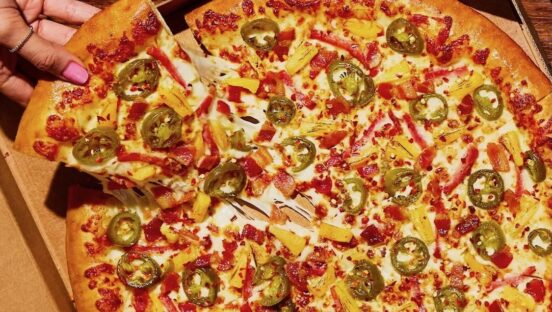
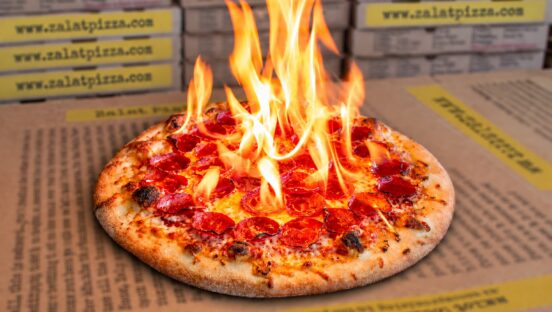
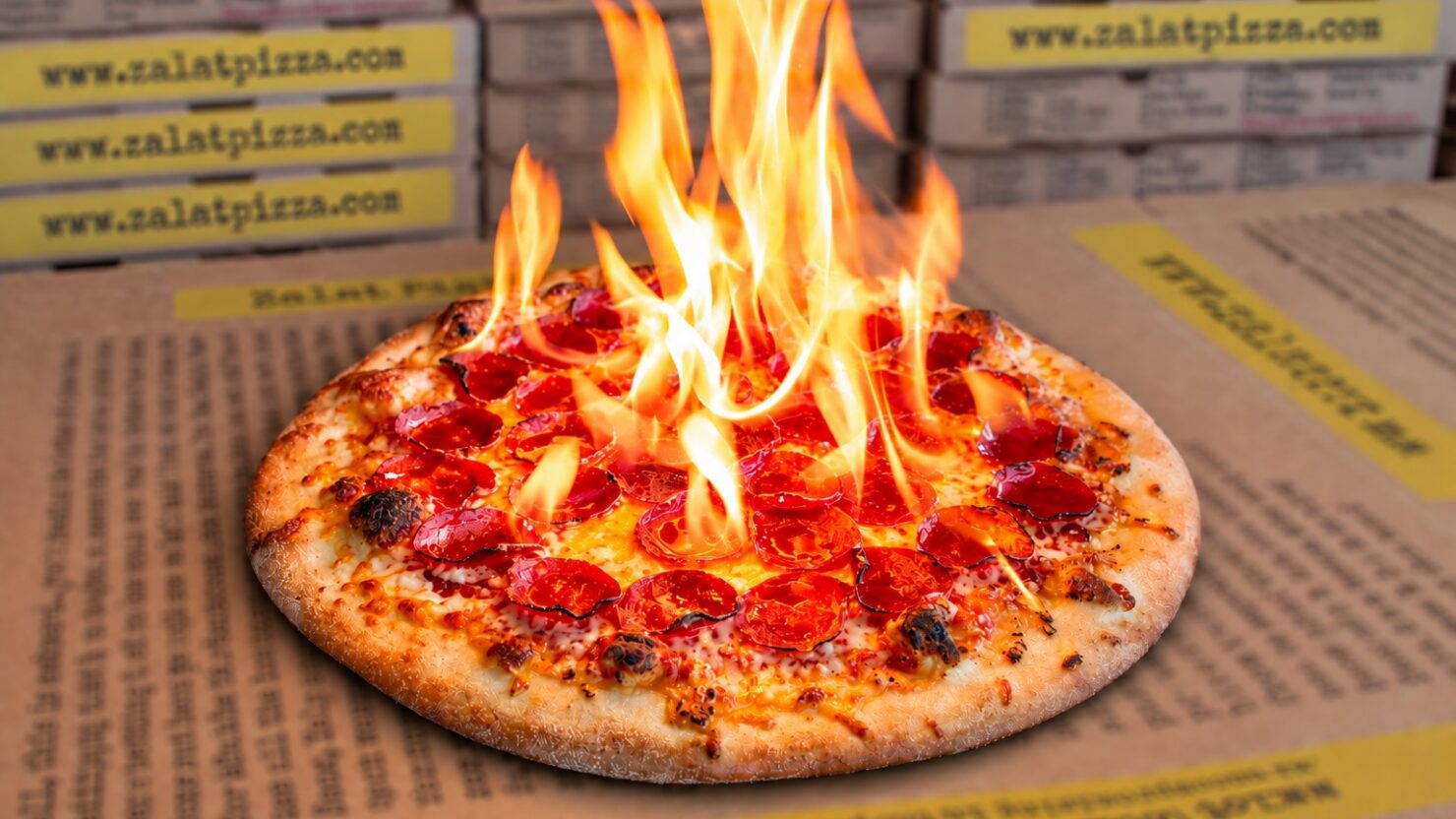
Grown to 30-plus locations since its 2015 launch, Zalat Pizza is on fire—in more ways than one. For CEO Khanh Nguyen, it was his Vietnamese pho concept, DaLat, that inspired his pizza brand’s Reaper Roulette challenge. “We put one drop of a 5-million-Scoville sauce into a bowl of pho—what we call a ‘transcendent’ spice experience,” he explains. “I wanted to bring that idea to Zalat, but pizza has no broth to dilute the heat, so we had to dial it back. That eventually became Reaper Roulette, which we developed in 2020 during COVID as something fun for people stuck at home together.”
Nguyen put a team member in charge of the program, and the group tested about 50 hot sauces over six months. “I remember those tasting sessions—imagine a room full of people tasting 10 nuclear-level hot sauces in one sitting and then trying to rationally discuss flavor and heat,” Nguyen says with a laugh. “They were unforgettable and a lot of fun. I insisted it be authentic: If we say it’s hot, it has to actually be hot. One customer described Reaper Roulette in a Google review as ‘licking the surface of the sun.’ That told me we got it about right.”
Logistically, it’s an easy add: For $2.50, the customer can request Reaper Roulette on any pizza. The staff member hides drops of Reaper sauce on a single slice (after cutting the pizza, so the heat stays contained to that slice). “We’ve developed some tricks over the years to make it difficult to spot,” Nguyen says. “Everyone grabs a slice and finds out who loses.”
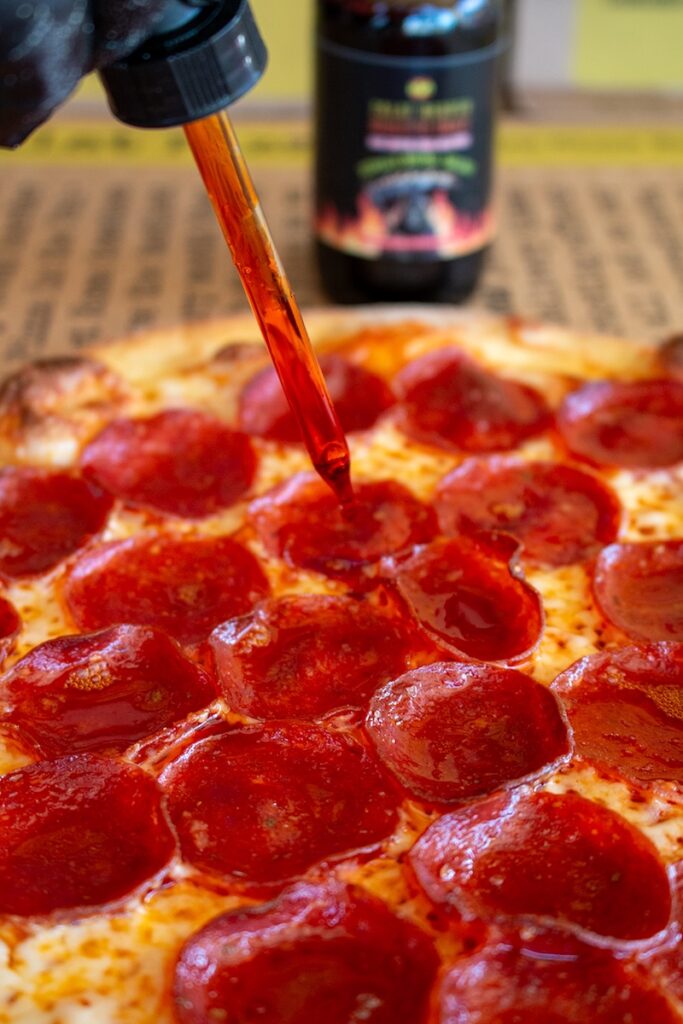
This popular offer no longer requires a constant marketing push, but about once a year, Zalat will run a promotion around the challenge. Last January, for example, courageous customers could add the option for free. And now it’s customers themselves who spread the news like wildfire. “Since we’re primarily delivery and takeout, people do it at home or work with friends, family and co-workers, and we’ve seen tons of customer videos over the years,” Nguyen says. “Six years in, we’re still selling about 2,000 Reaper Roulettes a month, systemwide.
“It’s just cool,” he adds. “We’re very serious about our pizza, but we don’t take ourselves too seriously. We’re irreverent. We want our customers to have fun with our brand. Reaper Roulette turns ordering a pizza into a shared experience—everybody grabs a slice, somebody gets blown up, and everyone else gets to laugh.”
House of Style
Taylors’ Pizza House complements its USP—offering three different styles of pizza, using toppings that customers can’t find anywhere else in the area—with memorable branding: a ’90s grunge-themed restaurant built in a former house. “It’s funny, I would not call having a dining room a USP, but I think that it won’t be long before it will be,” says George Taylor, co-owner with his wife, Patti. “Many pizzerias are choosing to downsize and get rid of their dining rooms, which allows for better labor costs and margins. But, at some point, things are going to swing so far the other way that you might be the only person in town with a dining room. Then it becomes a unique selling proposition!”
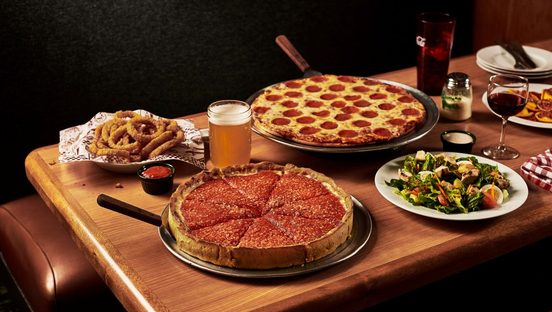
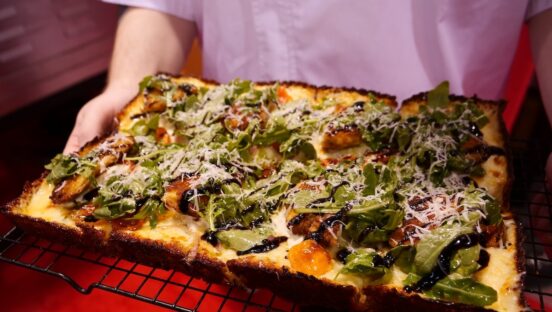
On the menu, the Taylors offer New York-style, Detroit-style and tavern-style pizzas. Specialty pies use ingredients such as Peppadews, juices and artichoke hearts, and they’re all named after ’90s grunge and alternative bands. “We tie everything together in our social media and direct mail marketing,” Taylor says. “Our dining room is filled with band posters from that era, and we play ’90s grunge music in the restaurant. One might say that exclusivity could be a USP as well. The USP is what you have that the other guy doesn’t; the branding is how you project that image; and the marketing is how you get that message to customers.”

Most other pizzerias in the area offer only New York-style pizzas. Only one offers Detroit-style, and no one else is tackling the tavern style. “If we can get them hooked, especially on the Detroit and tavern pizzas, then they have to come back to us,” Taylor says. “If we can get them to come in for what they know they like—New York-style pizza—and then offer great food and service so that they want to come back and try the other styles, then we’ve done our job. That’s why we have different styles and ingredients: It helps us stand out. The branding of our pizzas and restaurant theme as a ’90s grunge and alternative place adds to the vibe. I am selling the experience, and it does become a part of the USP in that sense.”
For other operators seeking a standout USP, Taylor recommends looking for a gap in the local market—what will give you an edge over the competition? “And the competition isn’t just pizzerias anymore,” Taylor says. “With the advent of DoorDash Grubhub, Uber Eats, etc., you have to compete against a lot of other different types of food, so having something that they can’t get anywhere else is imperative. And just having a USP isn’t enough—you have to let people know that you have it. Social media is a great way to do that, and cheap as well, especially if you can find a way to get not just followers but get your actual customers to follow along with you and translate it into sales.”

Legions of Regions
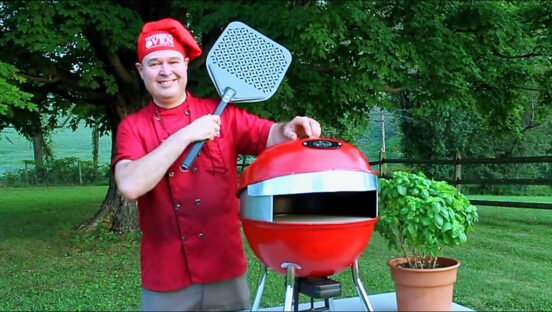
Working from a remote location outside Fairbanks, Alaska, in a nontraditional format (a mobile operation), Mike and Diana Wagner, owners of Wagner’s Pizza Bus (pictured above), are used to doing things differently. Their pizza journey started in 2007, when they decided to leave their home region of Northeastern Pennsylvania for a major life change. “We sold most everything we had, packed up our three little kids—our youngest was only two years old—and our nine husky sled dogs, and drove to Fairbanks, Alaska, chasing snow,” Mike recalls.
After a successful run in a brick-and-mortar shop—“selling pizzas, hoagies, wings, milkshakes and 16 flavors of ice cream, all foods we knew growing up in Pennsylvania,” Mike says—the building owner decided to sell to someone else. “We took our last bit of savings and bought a school bus I spotted sitting along the road that just had an old sign on it that said ‘pizza bus for sale,” he continues. “With the owner’s permission, we set up shop about 10 miles down the road at another empty, out-of-business store. Over the next couple of years, we did all the local events, fairs and carnivals. At that time, there were only a few food trucks in the area.”
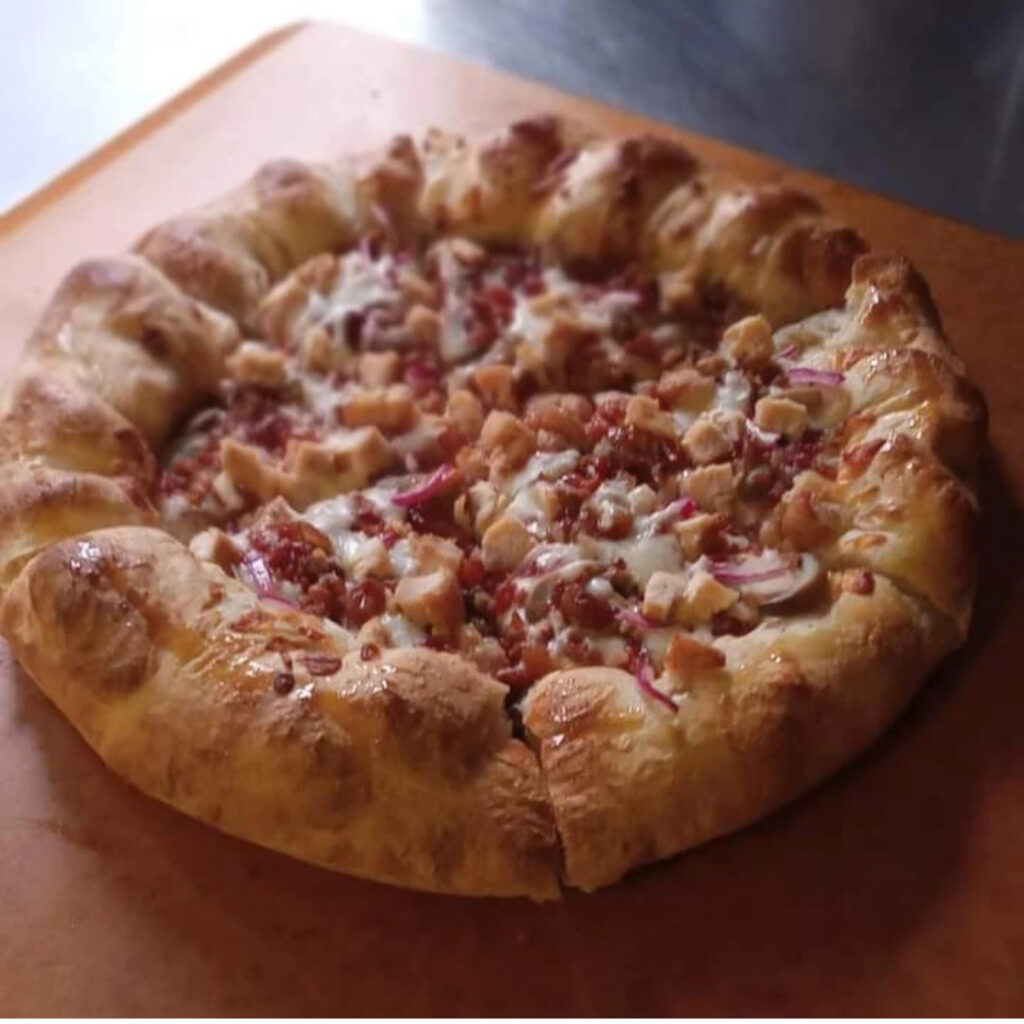
While Diana home-schooled their three kids, she hand-stretched every pizza. Eventually, the Wagners realized there were few regional styles sold in the area, so they added Chicago deep-dish and Detroit-style pizzas, then the Sicilian and pan-fried styles they grew up with. Soon, Pennsylvania’s Old Forge pizza made the menu. “My interest in other regional styles of pizza was growing,” Mike says. “So, with a lot of research and trial and error, we grew to 10, then 20, then 30, different regional styles of pizza—even one of the most controversial pizzas, known as the Altoona Hotel pizza from Altoona, Pennsylvania. We have brought more than 60 different styles of pizza to our customers.”
Unsurprisingly, such an approach has spread the word about the Wagners’ operation far and wide. “Tourist customers come in, telling us they heard about us at their airport in Texas or California, or in a travel brochure in London,” Mike says. “What we do works for us and might not work for others, but if you stand behind what you do and are happy, that’s what matters. We were the first to bring most of these styles of pizzas to Alaska.
“We’ve never claimed to be perfect or the best, but since so many people living here are from all over the lower 48, it only makes sense to offer a comfort food that, even for a little bit, reminds them of home,” Mike adds. “When people are missing a taste of their home, they can come to us for the pizza they remember.”
Tracy Morin is PMQ’s associate editor.